Showing posts with label Tasmania. Show all posts

21 March 2026

Lutana Garden Village, Hobart


a Lutana Arts and Crafts house, c1922

Britain’s company towns were settled by giant companies for their workers. In 1887 for example, Lever Brothers Co. began looking for a new site on which to expand its soap-making business, build housing and develop services for their factory workers. They bought 56 acres of flat unused marshy land near Liverpool, well located near a railway line. The site became Port Sunlight, where William Lever built his industry and his model village. Lever wanted a healthy, happy and productive work­force.

The garden city movement was a contemporary but slightly different British approach to urban planning, founded in 1898 by Sir Ebenezer Howard. Garden cities were planned, self-contained communities surrounded by green belts. They included carefully balanced areas of residences, industry and agriculture. Howard’s book Tom­or­row: A Peaceful Path to Real Reform came out in 1898, followed by Letchworth /Welwyn Garden Cities, both in or near London.

View of the Valley
over the top of the gardens

Reformers before WW1 were concerned with town planning, sanitation, building regulations and slum clearance, influenced by the Garden City Movement in Britain and City Beautif­ul ideas from the USA. I have described planned towns in Australia in this blog, especially Colonel Light Gard­ens in Adelaide, an excellent example of town plan­n­ing. It had radial street pattern, reserves and gardens, wide avenues, useful laneways, street frontages and a park-like setting. This post-WW1 Adelaide suburb adopted a consistent architectural style: Californian bungalows.

But I had not heard of Lutana Garden Villa in Tasmania. There had certainly been state government initiatives to build garden cities in Tasmania. In fact Charles Reade, the visiting English town planner, designed a scheme for Lutana, but all hopes were defeated by conservative politicians. Instead the next Tasmanian government negotiated the establishment of a private corporation, the Electro­lytic Zinc Co., on the site. Herbert Gepp was the General Manager.

This zinc company did indeed plan a garden suburb complete with com­munity and health services for its workers, but economic diff­ic­ult­ies resulted in only a section being completed. The lasting legacy of this compromised vision was a low density suburb with individual houses and gardens; but without the associated overall planning.

Built between 1918-21, and designed by architect and town planner William Butler, Lutana’s prime goal was to build a most beautiful and healthful site just over the hill from the recently established zinc works. Since this suburb was remote from the centre of Hobart, the Company had to provide access to shops and transport. Two railways services daily allowed families to travel and shop.

Unlike the Colonel Light Gardens with its exclusively California Bungalow architecture, Lutana had excellent Arts and Crafts style houses that formed coherent street­scapes. The Garden City approach to housing development was further acc­en­tuated in the curvilinear street pattern and the arrangement of buildings. The strong visual quality of the open spaces and semi-rural land was loved, as was the development of the river.

I've no doubt that providing good housing at an affordable price by a major Tasmanian industry was to attract quality staff at a time of staff shortages. As was the company’s early C20th philosophy of Welfare Capitalism.

Before the village started, all the surrounding countryside was open farm land. Once the locality started to become the centre of the zinc working com­munity, some workers would be living in the village and some would be building around the village. The roads were professionally organised and footpaths were laid down.

In 1922 General Manager of the zinc works, Herbert Gepp, set a first task in Lutana Village of planting special trees with his own silky hands. In the first 2 years, 6 dozen horse chestnut trees were imported to the village and planted.

The houses and facilities were not the private property of the people in the village, but were to be rented. Once the village started, more homes were built by the comp­any and more were rented out to workers. Then the village got their first shared community facility, Lutana’s village hall. Opened in 1924, the hall was surrounded by fine grounds, where the village children could play games. The interior of the hall was compact, but it had plenty of open floor space and an excellent stage at one end of the building.

The hall became the home for the village kindergarten. The parents were asked to assist the kindergarten teacher, if they were going to make it successful for the youngest children (a la kibbutz). A Sunday School was opened in the hall, to save the kiddies a long walk on Sunday afternoons.

The town's kindergarten 
in Lutana's Village Hall

See the outside of the hall as it was orginally built. A gate and fence were built, later to be replaced with a higher fence and more security for the hall and garden. The wooden boxes were built at the front of the hall to protect the horse chestnut trees. Then the co-operative shop was opened, to provide the necessaries of life (once again a la kibbutz). It was a beautiful building, both the exterior and interior.

A mutual assistance tenants' committee of tenants was formed to promote social cohesiveness and to run a scheme of improvements. Many ideas were considered to improve the village, and to pro­vide pleasure for the residents. For example the postal authorities installed a public telephone and opened a letter clearance. A Lutana Xmas Tree was placed in the Hall, for a children’s party. In addition to a bus service from Lutana to central Hobart and good sanitary conditions, Lutana gained its own gas supply, greatly appreciated by the villagers in Tasmania’s cool winters.

The houses, which had 4,5 or 6 rooms each, were fitted with modern con­veniences, including sewerage, water and electric light. The company planned for 180 homes on the site, but they stopped at 42. These 42 houses were rented to employees at very fair rentals: a 4 room house cost only 20 shillings per week. Tenants were selected and the houses were allotted by a sub-committee of the Co-operative Council, Workers HAD to have a high moral character, and men with large families were given preference.

advertising for the Lutana co-operative shop 
that also promoted social cohesiveness

The gardener/workers laid out their own gardens spaces in attractive flower beds, lawns and vegetable plots. The vegetables ensured fresh table supplies of onions, cabbages and beans at a minimum cost, and providing healthy exercise. The houses’ beauty was enhanced by pot plants and garden seats; creepers appeared on trellis work.

Re the interior of the homes, the colours were charmingly done and handy cupboards and shelves were built in. The baths have been made from our own rolled zinc sheets.

The views from the verandas revealed some of Tasmania's finest scenery, including the Derwent Valley beyond Prince of Wales' Bay and the lofty Wellington over Hobart. A beautiful panorama of green past­ures was visible, dotted with splashes of colour, orchards, trees and shrubs.

Clearly the zinc workers’ houses were built on ample blocks, were sewered, well drained & fitted with modern facilities. So why did the company not start the second tranch of home building? And why did the Company write to the Co-operative Council advising there were very substantial reductions in the rents of Lutana homes? In 1926 house rentals were dropped to 14 shillings/week for four rooms! Workers were even advised that the very low rents provided an opportunity for them to start a Savings Bank Account.

Now called Nyrstar, the company still advertises the strong themes it's held since starting in 1917 on the site formerly called the Hobart Zinc Works. The strong relation­ship the smelter created with the community was forged early and continues today via community meetings, sponsorships and partnerships. A engineering heritage marker cerem­ony at Lutana was unveiled by the state Govern­or in Ap 2013

Lennox Avenue, Lutana 2024
Real Estate

Quotes come from Lutana Village - Historical Website


15 November 2025

special Melbourne architecture: 1848 ->

John Smith's home, Queen St
built late 1840s
Served as Treasury and Gold Office from 1859

Melbourne was founded in 1835 as a commercial venture. Tasmanian settlers, frustrated at diminishing opportunities in their own col­ony, sent an expedition to Victoria to test its viability for farm­ing. Project leader John Batman created a modest colony on the Yarra River and negotiated a land purchase from local ind­igenous men. The first city buildings were wooden, presumably to be rebuilt permanently.

John Smith arrived from Sydney in 1840 and began teaching local In­digenous children at a Melbourne government mission. Then Smith op­ened a grocery and later owned hotels. With this money, he built himself the first really lovely home in Melbourne in 1848, and added a third storey later. Smith was soon elected to the City Council, then elected Lord Mayor, then to the State Legislature for years! The Government used Smith’s renovated premises for different purp­os­es in the C20th eg State Treasury Offices.

Bourke Street looking west, 1858
Lovell Chen

Meanwhile, a row of shops was built in town. A large shop and a residence above went up in Crossley St in 1848-9 by an English migrant butcher, William Crossley. The premises were histor­ic­ally used as a meat-preserving works, with the land behind used as a slaughter yard. It was here that our story began, with the wide shop and residence in Crossley St.

Suddenly life in Melbourne changed forever in 1851; gold was disc­overed in rural Clunes, triggering the Gold Rush. As money and people poured in, the city stretched in every direction, requir­ing rebuilding in a much grander fashion.

The second part of the Crossley Building, the adjoining shop and its residence above, was designed by architect Joseph Burns. The comp­l­et­­­ed building extended from Crossley St (ex-Romeo Lane) and Liv­er­pool St (ex-Juliet Lane). The butchers expanded into the newer shops, over the top of the original cellar. The walls were of blue­stone and the ceilings were brick barrel vaults. The inter­iors sh­ow­ed relics of openings, vents, shelving, enclosures and fix­tures. At ground level, an 1847 cast iron column was visible in a later brick wall, separating the two retail sides.

Later shopkeepers included the famous butcher family Sir William Ang­liss. Since then, shops were us­ed for shoes, drapery, café, gro­cer, fruit­­erer, photographic studio, wine mer­ch­ant, tailor and dry goods.  Eugene von Guerard, a won­d­erful landscape artist in the late colonial era, occupied #56 in 1857-8, just when he was estab­lishing his career. The building had also housed the notorious Bourke St Rats gang.

Job Warehouse, as it was called, was still in a simple Victorian Georgian style. The external render was ruled, there was a simple parapet above, and the corner shop had a splayed cor­n­er. Each of the two storey shops had a residence behind and above them. Externally the building kept much of its original form, except for alterations to the shop windows and the parapet. But the inter­iors retained few original features; even the internal stairs which once led upst­airs were all rem­oved and new stairs were added.

The Job Warehouse was of architectural and historical significance to the State of Victoria, satisfying these 3 criteria for inclusion in the Victorian Heritage Register:

A] The building’s cultural history was among the ol­d­est surviving buildings in Melbourne, forming an important link to pre-Gold Rush Melbourne. The various businesses occupying the shops reflected the residential nature of central Mel­bourne then, and the everyday goods and services local resid­ents needed. It dem­on­strated the old pract­ice of people living close to their businesses.

B] It has rare historical aspects surviving from a pre-Gold Rush commercial building, and of an early shop-row, once common in the city but now almost completely disappeared.

C] It has the architectural characteristics of the austere Georgian style buildings typical of pre-Gold Rush Melbourne. This style was the basis for most architecture in Australia from the time of Eur­o­pean settlement until at least the mid C19th but rarer in Vic­toria because there was no convict settlement here. In any case, gold wealth in Victoria led to the popularity of more ornate styles.

Job Warehouse, Bourke Street
Lovell Chen

These shops were occupied from 1956 by Jacob Zeimer, a post-WW2 European migrant. He later owned the whole building, becoming well-known in Melbourne for fabrics for haberdashers, dressmakers and theatres. Since then the terrace housed many tenants and underwent extensive alter­at­ions. For 56 years Jobs Warehouse remained a magnet for dress­makers, its windows showing a lively business crammed to the ceiling with enormous rolls of cloth.

The people who owned and occupied the row told the story of the evolving city. The terrace at the top of Bourke St, on a site flank­ed by laneways, clearly held special significance for older Mel­b­urn­ians. Own-ed by one family for decades and still the home of the Paperback Bookshop today, the terrace was a rare survivor in the city streetscape. The site’s history and development resembled many early commercial and residential buildings once commonplace in Melb­ourne’s Central Business District-CBD, but not now.

The restoration of this, one of Melbourne’s CBD’s oldest buildings, is urgently needed. Neglected since the shops closed in 2012, the Her­it­age Listed prop­erty in Bourke St will form part of a new hosp­it­ality venture, bec­om­ing a 673-patron bar and restaurant Juliet’s Terrace. This will honour the laneway once home to Mel­b­ourne’s red-light district 160 years ago. The Lord Mayor said the group’s $50 million project would gen­er­ate 500 jobs during const­ruc­t­ion, and 350 hospitality jobs after­. But due to the building’s age, the time needed to restore it will be longer than normal.

George's Collins St, c1890
Facebook

By way of comparison, compare the Georgian architecture with a building designed by architects John Grainger and Charles D'Ebro some decades later (1880) in the grand classical revival style. Brothers William and Alfred George were retailers in the UK. They emigrated to Melbourne in 1877, and soon found work at Robinson’s drapers in Collins St, in the most fashionable retailing area in the city. In 1880, the opportunity came to take over the business as George's Emporium, perhaps the most beautiful commercial building and business in Australia.


04 November 2025

Myer: great Russian-Australian retailers

Russian Elcon Baevski (1875-1938) was born in Krichev to Hebrew scholar Ezekiel Baevski, went to a Jewish primary school, then high school and later managed his mother's drapery business. In 1896 Elcon migrated to Australia, working in Melbourne with a relative, Lazer Slutzkin. Simcha Myer Baevski (1878-1934), the youngest of the 11 siblings, attended the same schools as his brother, then he too managed his mother's store. Simcha fled poverty in Belarus and joined Slutzkin's business.

Sidney and Elcon took the family name Myer, moved to rural Bendigo and in 1901 established their drapery store. Sidney ran a rural trade in fabrics, on foot then on horse-cart. The brothers formally became partners in new premises in Pall Mall Bendigo, and in Mar 1902 Elcon married Rose Marks. 

Myer evolved from a drapery to a Bendigo department store
ABC News

Bendigo’s 1856 synagogue was replaced later by a larger, solid brick synagogue, so families had a religious centre. But the brothers’ partnership struggled because Elcon opposed Sabbath trading. He returned to Melbourne, opening clothes production in Flinders Lane. Sidney bought him out and remained in Bendigo, but they were still close. In 1905 Sidney married Hannah Flegeltaub at Ballarat.

In the Bendigo drapery, Sidney followed new fashion trends and presented stock attractively. He also advertised boldly, appealing to women's shopping habits. By 1907 Bendigo's busiest drapers had 60+ staff and expanded its premises. In 1908 Sidney bought Craig Williamson Drapery for £22,000, and a fast sale of its stock repaid his creditors.

Late 1909 Sidney travelled overseas to study British and European merchandising methods and to establish contact with exporters. In 1911 he purchased Wright & Neil, a Bourke St drapery, paying £91,450. He raised staff wages and closed up for a fortnight's stocktaking and ordering! In June, full-page newspaper ads promoted the long Myer sale.

Soon Sidney took over more Bendigo shops, then opened other Melbourne and Adelaide shops. Then Elcon rejoined his brother and managed 2 Bendigo shops. Modelled on San Francisco's Emporium, the new £70,000, 8-storey building opened in July 1914 with a popular gala sale. Myer grew the business, occupying a broad City area between Bourke and Lonsdale Sts. The area included 10 buildings built by Sidney, designed by commercial architects HW & FB Tompkins.

When war tragically erupted in 1914 and damaged trade, Myer opened a London office to deal with suppliers, sourcing more products locally and even manufacturing. It aided Sidney's plan to maintain imports in WW1. Elcon travelled to London again, to organise shipments of cloth. He joined the Army Service Corps, serving in UK and then at the front. In 1915 he built a clothing factory and bought Doveton Woollen Mills in rural Ballarat in 1918.

Myer Emporium, Bourke St, 2007
The retailer evolved from being a drapery into a department store in Bendigo, Wiki

The success of their retailing was also due to their classy window displays. The new Bourke St windows attracted customers, using theatrical sets and models to display goods. Designed by famous commercial buildings architect Nahum Barnet in 1892, two extra buildings were bought by Myer.

In mid-1919 Sidney visited U.S, getting divorced in Nevada and converting to Christianity. In Jan 1920 he married young Margery Merlyn Baillieu and had 4 happy children.

By 1920 Myer Emporium had 200 departments, famous for its motorised delivery vans! Myer's Australia Ltd brought together all firms solely owned by Sidney, with a capital of £2 million; and the London subsidiary was unified. In 1921 warnings of a post-war slump overseas prompted Sidney to predict the collapse of import prices and cut his losses with a Million Pound Master Sale. It cost £500,000+ but, by restocking the cheaper imports, he traded out of crisis.

Sidney offered 73,000 staff shares of £1 each, and 200,000+ shares among his managers (plus paid vacations, access to a sick fund, holiday homes were built) and a free hospital went in-store. He ran annual staff balls, football & cricket matches, a Christian Fellowship and choral society shows.
 
From 1925, a separate section was devoted to display design and installation. The Lonsdale and Little Bourke St building facades showed Classical and Beaux Arts styles while the Bourke St facade had an Inter-war Art Deco style. The present Bourke St façade (8 storeys) was completed in 1933. By 1925 the Bourke St front increased with the first section of an 11-storey Lonsdale St store opened with £3 million capital. In 1926 Myer opened Melbourne's first Cash and Carry grocery, plus self-service cafeterias.

Sidney was managing director, with a large committee. In 1927 the Co's net profit was £328,000 and shareholders received dividends of 17%. In 1928 Myer took James Marshall department store of Adelaide, placing Myer Emporium SA Ltd under his nephew Norman. Furthermore Myer bought out Webb Table Ware Merchants 1930, then WH Rocke smart furniture dealers 1931!

Sidney had ethical employment beliefs, and in times of financial strain here, instead of reducing worker numbers, he lowered wages and increased worker numbers! With the terrible Depression, he launched a £250,000 rebuild of his Bourke St shop in 1931, to increase employment. He’d already anticipated Scullin government's tariff embargoes and import restrictions, so reduced his overseas buying and started a Made in Australia Week. He limited profits to 5% so no retrenchments were needed!

The objects of his philanthropy were sometimes cultural, rather than charity. In 1926 he gave 25,000 Myer shares worth £50,000 to Melbourne Uni! Then he formed the Melbourne Symphony Orchestra in 1932, and created a trust fund for them with 10,000 Myer shares. Sidney was on Royal Melbourne Hospital’s management committee; in 1933 he was chosen for the executive committee of Victoria's Centenary Council and raised £20,000+; and he gave an ambulance to the Victorian Civil Ambulance Service. What a great man.

Sidney died of cardiac failure in Sept 1934 and his will placed 1/10 of his wealth in trust for the charitable, philanthropic and educational needs of his community. The business was left to nephew Sir Norman Myer and Baillieu Bails Myer’s brother Ken Myer.

New windows were installed to Bourke St in 1955, the Myer Christmas windows commencing with 1956’s Olympic Games, and each year, a new theme was created. The Bourke St Myer Christmas window displays were visited by generations of children as their Christmas holiday ritual.

One of the Christmas windows for children after 1956
Mother's Little Explorers
 
Myer Mural Hall used a Streamline Moderne dining room for 1000 people, completed in 1933 on the 6th floor. It is a large space with a décorative plaster ceiling, balconies and wall panels. At one end the mannequin stairs led down from 2 balconies to the landing for fashion parades. The Hall was decorated with 10 murals by famous neo-classical artist Napier Waller (1893-1972)

half the Myer Mural Hall, completed in 1933 on the 6th floor
wedding reception, Tripadvisor

He donated to: Shrine of Remembrance, Melbourne Uni and Yarra Boulevard, roadwork for unemployed men. And when the Children's Hospital had to close wards, he donated £8000. His love of classical music meant he gave £1000 annually to concerts by Melbourne Symphony Orchestra.

He was succeeded by Elcon, with Norman Myer as managing director. Elcon presided over the completion of the modern Bourke St shop. Elcon was also active in many charitable causes eg the Alfred Hospital board and St Kilda Synagogue Board. Alas Elcon died in 1938 of cancer, and was buried with Jewish rites in Boxhill cemetery. His estate was probated at £114,353. Elcon left 2 sons of his first marriage and by his 2nd wife Myrtle Fisher (married 1929).

Bails Myer, born in San Francisco in 1926, was Sidney and Merlyn’s youngest of four children. Bails followed dad in the retail trade, after being a WW2 officer in Royal Navy. When Sir Norman died in 1956, Bails and brother Ken started an ambitious expansion strategy for the company. In 1960 they set up in a giant shopping centre, Chadstone. The brothers believed that the future of retail depended on bringing shopping to the masses, in the suburbs. Correct! Myer store became the retail heart of country’s largest mall!

Myer Chadstone, 2025
Tripadvisor

Bails was also involved in Myer Emporium’s acquisition of the Lindsay’s retail chain in Geelong. That business re-emerged as Target under Myer’s ownership and became another famous Australian retail brand. But in 1983, Bails went back into Myer’s management as a recession strangled Melbourne’s retail trade. This was just when Myer was in a corporate tussle with Grace Brothers. Myer won, securing ownership of the significant NSW department store owner in 1983. Bails led the group’s merger with GJ Coles and Myer Emporium, to create Coles Myer in 1983-5, the ?biggest deals in Australian corporate  history.

In 1994 Bails retired to focus on his interests in the arts and philanthropy, as a trustee of Victoria’s National Gallery. He also worked with the Myer Foundation, a trust that had started in 1959 by Sidney’s sons; it had distributed $300+ million since then. Re scientific studies, Bails became president of Howard Florey Institute and executive member of CSIRO. He also played a key role in the early 2000s in the refurbishment of the Sidney Music Bowl, built to honour dad’s legacy. He died (96) at home in 2022. My grandfather was correct; of all immigrants, Russians added the most to Australian culture.

Sidney Myer Music Bowl summertime venue
has been wowing crowds opened 1959.
Visit Victoria


06 May 2025

Hobart Town Hall fine architecture 1866.

When Hobart Town Hall had its 150th birthday, spouse and I sailed on the Spirit of Tasmania, from Melbourne to Devonport, to join in the celeb­rations. Joe lay on the bunk, seasick, for the ent­ire journey – I went to a concert, a film and a restaurant on the ship, and had a great trip. After he rejoined the human race, we drove to Hobart, to inspect the Town Hall and other significant 19th century architecture. Thank you for Municipal Magnificence by Peter Free­man, a great book docum­enting the history of Town Hall and its place in the City’s life.

Front portico and columns, Town Hall

Henry Hunter (1832-1892) was born in Nottingham, younger son of architect Walter Hunter. Educated at a parish school in Wolver­ham­pton, he studied at the Nottingham School of Design. Henry and his siblings migrated to South Australia in 1848 with the parents and, after their parents died, to Hobart. Next Henry went to the Bendigo goldfields and then back to Tasmania to work in the timber trade. He moved to Hobart to work in a shop but in 1856, encouraged by the Catholic Bishop Robert Willson, he began to practise as an architect. Hunter was one of the few Roman Catholic professional men in Hobart.

The architect’s admiration for Augustus Pugin, leader of the English Goth­ic revival movement, influenced his work in the many chur­ches he designed around Tasmania. The architect for the new St David’s Cathedral was George Bodley, a British leader of Gothic Revival in church architecture. So in Hobart itself, Hunter became the supervising architect for St David's Cathedral.

Hunter's commission came in Sept 1860 when Bishop Willson laid the foundation stone of St Mary's Cathedral Hobart, adapted from British architect-Melbourne resident William Wardell's design . Bishop Murphy opened the cathedral in 1866, but the con­struction was faulty - the pillars of the central tower moved, and stone fell from the ar­ch­es. Hunter examined the work and recommended that the cathedral be rebuilt. A public meeting in Feb 1876 decided that the central tower, aisles & walls be demolished and rebuilt according to the original plan. Hunt­er, now Hobart's Town’s most successful arch­itect, supervised the demolition and later laid the stone for the cathedral’s new incarnation.
              
   Long gallery, Town Hall  
             
By 1862, Hunter was very busy. He designed and built Derwent & Tamar Assurance Offices, Masonic Hall, Australian Mutual Provident Society's Building, and Hobart Museum. He planned wards and offices for the General Hospital, designed schools for the Board of Education, warehouses, Marine Office and Elwick race-course grandstand.

And now, his master piece!  The Municipality of Hobart held the early Council meetings in temporary premises and the streets defining the site of the Town Hall were completed following demolition of the old Government House in 1858. Henry Hunter prepared plans and was awarded an hon­our in a compet­it­ion conducted by the Hobart Municipal Council for their new home. His Gothic design was acclaimed as “a fine composition of unusual breadth and unity of line” yet his first plan was not accepted. I am assuming that Gothic architecture was either too Catholic for the good public servants, or was too old-fashioned for a new, modern city. 

So Hunter was given 6 months to submit a new Italianate model, this time based on the Palazzo Farnese in Rome. Construction on Hobart Town Hall created part of the now-historic Macquarie St stretch of sandstone. The found­at­ion stone was laid in April 1864, a day that was de­c­l­ar­ed a public holiday and celebrated with a parade. It was completed two years later in Sept 1866, complete with its large windows and symmetrical portico with columns. Once again the day was celebrated with another public holiday and a gala ball.

From the start, the Town Hall was designed to house the City’s coun­cil chambers, police offices,  municipal court and State Lib­rary of Tasmania. And the organ has been in use since 1870. In 1871 a stone wall was erected around the boundary, with trees obtained from the Botanical Gardens for landscaping.These facilities remained in use for c50 years after the town hall first opened.

WW1 Honour Roll, Town Hall

Macquarie Manor was originally built as a home for surg­eon Dr Richard Bright. In 1870 Dr Bright commissioned Henry Hunter to design and oversee the construction of a residence perfect for a gentleman. It was!

On a visit to Queensland, Hunter formed a partnership with his son and a former pupil, and settled at Brisbane in 1888. Although spec­ial­is­ing in domestic architecture, his firm did design some larger Queensland institutions. Henry was still in Brisbane when he died, in 1892. 

By 1925 the state of the Town Hall’s prominent portico had degener­ated to the point it was declared unsafe and major restoration work was re­quired. Only then were the building's famous chandeliers instal­led in the ballroom,  each having 84 gas jets that were imported from the UK.

Macquarie Manor, Hobart
Architect: Henry Hunter built 1875
On the Convict Trail

Henry Hunter had left behind one of the nation's oldest council build­ings, in Australia's second oldest city. Today Hobart’s Town Hall is an ideal venue for exhibitions, balls, concerts, large meetings, citizenship ceremonies and cocktail func­t­ions. The main hall now seats 600 and the gallery seats 675 more. On The Convict Trail is excellent.
                                             
jam factory built 1869
now Henry Jones Art Hotel, Victoria Dock Hobart
Walk Into Luxury


17 December 2024

Saving Tasmania's aboriginals: Truganini

Truganini in shell necklace, 1866 - jpg
in The Australian

Truganini (1812-76) was born on Bruny Island Tasmania near the mouth of the Derwent River, in her tribal territory. Truganini was a daughter of the leader of the Bruny Island peoples, Mangerner. She grew in her people’s traditional culture, even though Aboriginal life had been disrupted by the British colonists arriving in 1803 in Van Diemen’s Land/Tasmania.

Sir George Arthur, the Lt Gov of Tasmania, arranged a plan to deal with the growing conflict between European settlers and Tasmanian Aboriginals. In 1824, Sir George made it a crime to resist British colonisation! He told soldiers and police to raid Aboriginal camps and take them as prisoners; bounties were paid for each capture. Thus Aboriginals were considered as the colony’s open enemies. As the fighting and resistance continued, Arthur suspended ordinary law and declared martial law. The Black Line Military Campaign removed to 200 aboriginals to Flinders Island in 1830 and the Black War was a period of violent conflict (1824-32) between British colonists and Aboriginals in Tasmania.

The tribes were devastated by European sealers, whalers & timber men. When her family met missionaries at Bruny Is in Mar 1829, the soldiers killed her mother and uncle, her sister was taken by sealers and her fiancé was killed by timber men. Only Truganini and her father survived. This Black War conflict saw the near annihilation of Tasmania’s indigenous population which was reduced from c5,000 to c100 people. And it caused immense grief for the survivor Truganini.

The black war
blackwartasmania
 
Yet she laboured to unify what was left of Tasmania’s indigenous communities, working with British authorities to protect other survivors of The Black War. In 1830 George Augustus Robinson, a Christian missionary and Protector of Aboriginals (sic), was hired to move the other 99 surviving people and to settle them on Flinders Island. Robinson might have had his own financial gains but Truganini hoped to resettle and protect the Aboriginals from further violence. Unfortunately the forced resettlement, and the unsanitary state people lived in, proved fatal. The last indigenous people died due to hunger and disease.

She married Woorraddy at Bruny Is Mission. They worked with all the missions that Robinson and his sons conducted inTasmania in 1830-5; the couple acted as instructors & guides in their languages and customs, which were recorded by Robinson in his journal. This was the best surviving ethnographic record of Tasmanian Aboriginal society.

The clash of 2 disparate cultures and the resistance and survival of indigenous Tasmanians was shameful, but Truganini was the faithful companion of Robinson, and assisted in bringing in her friends because she wanted to save them from the British killers.

Truganini, Woorraddy and others from Robinson's mission arrived at the Flinders Island settlement in Nov 1835. With some captured Aborigines still alive, they were to be Christianised, Europeanised and taught to be farmers. She was given a British name by Robinson, but held to her traditional ways. In March 1836 the couple returned to Tasmania to search for the one surviving N.W family, but failed. By July 1837 when they returned to Flinders Is, many had died there and Robinson's programme had failed. Even the island houses built for survivors were not finished. The grim life at Flinders Is was tragic for her.

In Feb 1839, with Woorraddy and 14 others, she accompanied Robinson to Port Phillip. She and 4 others later joined a party of whalers near Portland Bay. where a similar settlement was attempted with mainland nations, again with failure. In 1841 all 5 Aborigines were accused of murdering 2 whalers and in Jan 1842, the men were hanged. Having learnt from the Tasmanian experience, Truganini joined with the Port Phillip people when they resisted Robinson’s plans but she was captured and sent back to Flinders Island. Sadly her husband Woorraddy died en route.

In 1847, Truganini travelled to Oyster Cove with the other Aborigines where they tried to resume their earlier lifestyle. She lived with the Aborigine Alphonso until Oct 1847 when, with dozens of others, she moved to Oyster Cove in her traditional land. She resumed much of her earlier lifestyle, diving for shellfish, visiting Bruny Island and hunting in the nearby bush.
                                    
Residents at Oyster Cove, 1858
National Portrait Gallery

Within 25 years, almost all of the people taken to Oyster Cove had died such that she and William Lanney were the only fullbloods alive. The mutilation of Lanney's dead body in March led Truganini to grieve, for William and for herself.

In 1874 she moved to Hobart with the Dandridge family. She died in their Macquarie St house in 1876 aged 64 with no known descendants, and was buried at the old female penitentiary at Cascades Female Factory. Even in death there was no peace. Her body was exhumed in Dec 1878 by the Royal Society of Tasmania, authorised by the government to take her skeleton on condition that it be not exposed to public view. It had to be decently deposited in a secure resting place accessible by special permission to scientific men for scientific purposes. Yet her skeleton was placed on public display in the Tasmanian Museum from 1904-47.

In 1976, a century after Truganini died, the Tasmanian community wanted her remains be cremated and scattered in the Derwent River. This was a moving occasion that helped Tasmanians recognise the ongoing existence, rights and cultural responsibilities of native peoples.

Tasmania and its islands
Flinders and Bruny Islands marked in yellow

Truganini: Journey Through the Apocalypse by Cassandra Pybus (Allen & Unwin, 2020) is excellent. But be warned; white Australians will feel mortified after reading about their great great grandparents' behaviour.


16 April 2024

Arts & Crafts Tassie: Markree House 1926

Cecil William Baldwin (1887–1961) was born in Melbourne and trained at the Burnley School of Horticulture, working as a landscape gar­d­ener until the outbreak of WW1. Cecil enlisted in the 40th Battalion of the Australian Imperial Forces and served as a lieutenant in France and Belgium. He was wounded and repatriated home in 1918.

Following the end of the war, Cecil Baldwin worked in the Repatriat­ion Department in Hobart where he was the officer in charge of voc­at­ional training. He also became active in community associations est­ablished for the welfare of ex-servicemen, and became president of the 40th Battalion Association. Objects from Cecil Baldwin's military service and work with returned soldiers are on exhibition at the Tasmanian Museum and Art Gallery.

Cecil married Ruth Maning (1878–1969) in 1918 at St George’s Church, Battery Point.

Front of the house

Markree stands on part of the c1820 Heathfield Estate located in Battery Point in inner city Hobart; the land and its sandstone wall were not sub­divided until the 1920s. Fortunately the sub­division created a small enclave of finely detailed houses and one of them, Markree, was built in 1926 for Cecil and Ruth Baldwin. It was designed by Bernard Ridley Walker in the Arts and Crafts style. [The firm Hutchison and Walker were prominent Tasmanian architects who were also responsible for other important structures around town. Walker had spent 1911–13 in London and was particularly influenced by the Arts & Crafts Movement].

Many years earlier, when the Arts & Crafts Society of Tasmania was founded in 1903, young Ruth Maning had gone to evening classes to study wood carving. Three of the pieces she created herself - an Art Nouveau bookcase, a blackwood desk carved with gum nuts and a picture frame carved with stylised firewheel tree branches can be seen in Markree's sitting room. Other pieces of furniture came from Ruth’s parents. The furniture is the finest part of the entire home and garden complex.

    Furniture made by Ruth Maning Baldwin

Hallway

Dining room

Markree has 4 bedrooms including a nursery. It is set on 3 levels with a broken back tiled roof and prominent eaves with exposed timber panelling underneath. The roof has 2 tall simple brick chimneys with terracotta pots. It has timber double hung sash windows and painted timber louvred shutters. The front entrance is enclosed in a brick portico with a wide, detailed brick arch and wide doorway. The interior is in near original condition with 3 ms high ceilings, and features such as the original picture rails, original brass hardware on doors and windows, solid doors, timber detailing and intact original wallpapers. There are portraits and family heirlooms from Ruth Baldwin’s ancestors who had come to Hobart in the 1820s as merchants and professionals. The nursery holds many of Henry Baldwin’s original toys.

Some of the objects were not originally from the family. There are ceramics, wooden carved furniture and silverware of the period that have been brought in to the house since eg the 1920s Tasmanian oak and blackwood furniture was made by local cabinet-makers Coogan and Vallance & Co.

There were a few changes over the decades. The Baldwins had a small room added and enclosed the open balcony on the ground floor in the mid 1930s. Son Henry installed new carpets, lights, curtains and wallpaper. However the dining and sitting rooms have been restored to their 1920s decoration through a grant from the Copland Foundation e.g the original 1926 wallpaper, a damask paper with an Art Deco leaf border, has been copied from a surviving panel. 

Their Arts and Crafts garden

The garden also reflects the Arts & Crafts influence. It was laid out by Cecil Baldwin himself. The leading Australian garden designer, Edna Walling, had studied at Burnley at the same time as Cecil, so it is possible that the two of them had worked on projects together. Today the garden is long and narrow with a central gravel path that leads from the house to the bottom of the garden. The elements typical of Arts and Crafts gardens are the roses, ponds, low stone walls, winding pathways and naturalistic plantings. There was no rigidly planned formality in this garden!

Cecil and Ruth Baldwin lived at Markree until their deaths when the property passed to their unmarried son, Henry Baldwin (1919-2007). It was Henry who bequeathed the house, contents and an endow­ment to the Tasmanian Museum and Art Gallery. This was one of the largest single bequests ever received by an Australian gallery.

Because of its design, location, original condition, history and ability to show the pattern of urban infill that occurred in Hobart in the first half of the C20th, Markree has been provisionally entered in the Tasmanian Heritage Register a couple of years ago and was permanently registered in 2023.

The house and gardens are open Saturdays (Oct-April) from 10am to 4:30pm. On the other days, visitors must pre-book at the Tasmanian Museum & Art Gallery; the guided tours start at 10:30 am and 2:30 pm.

The Baldwin family
Facebook

Many thanks to Lynne Merrett for sending this material.


06 May 2023

Royal penguins have fantastic fathers (Australia)

850,000 pairs of penguins during the breeding season
Doug Gimesy, Weekend Australian

Ever since holidaying in Phillip Island Victoria (see map below), I've loved Fairy Penguin colonies. They parade each night on the beach where visitors see thousands of penguins make their way from sea to shore, to tend to their burrows.

Now different penguins.. on a different island. Macquarie Island is in the Southern Ocean, SE of Tasmania and halfway to Antarc­t­ica. Macquarie Island has outstanding universal value. Firstly it pro­v­ides a unique opportunity to study geological features and proc­esses of oceanic crust formation. Sec­ond, its remote and wind­swept lands­cape of steep cliffs, lakes and dramatic vegetation provide wild, natural beauty plus great wildlife.

The island lies in Furious Fifties latitudes, called that due to the VERY strong winds and stormy seas. A coastal terrace supp­orts vast waterlogged and vegetated areas which vary from lush gr­ass­land to sparse­ness within metres. This is fram­ed by steep escarp­ments which rise to a pla­t­eau dotted with lakes.

The vast wildlife communities, mainly Royal Penguins in the breeding season, are special. Their populations on Macq­u­arie Island and nearby Bishop and Clerk Is­lets, have climbed back up to c850,000+ pairs, one of the best communities of seabirds in the world. On the nearby islets, another c1,000 pairs breed. Peng­uins at Macq­uarie Island live in very large colonies, on rocky or pebbly beaches, for half the year.

Royal peng­uins are named for bright yellow plumes on their heads that resemble crowns. It takes several years for the pl­umes to fully meet so old­er penguins have lusher plumes.

Royal penguins have bright yellow plumes on their heads that resemble crowns
Australian Antarctic Programme

Royal penguins reach sexual maturity at a year. The breeding cycle is highly synchronised and st­arts when the males arrive in late-Sept to create small hollow nests in the rocks. The fem­ales ar­r­ive a fortnight later when males can begin their mating dis­pl­ays. They form monogamous breeding pairs and lay two eggs each in mid-Oct. One of the eggs is push­ed from the nest and mostly dies, and the other is in­cub­ated by both parents for a month. Why does this action happen?

Royals were heavily exploited in C19th; human impacts st­art­­ed on Macquarie Island in 1810, causing ma­jor changes to the reserve. The commercial exploit­ation of seals and penguins, tog­et­her with the introduction of alien sp­ecies, resul­ted in major de­clines, or the extinction of some native species.

Before hunting start­ed there were 3 million penguins. But then between 1870-1919 the Tasman­ian Govt iss­ued hunting licen­ces, with 150,000 penguins taken each year for their oil. At the industry’s 1905 peak, the plant establ­ished on the Island was pr­oc­essing 2000 peng­uins at a time, with each pen­guin yielding .5 litre of oil.

Active management programmes since the 1960s aimed at stop­ping or reversing these trends. Some program­mes have resulted in very rapid changes eg the eradication of feral cats from the island. However the recovery of natural ecosystem processes may take ages. Thankfully Macquarie Island  is remote and well managed.

After the chick is hatched, parents take it in turn to care for it
Pinterest
     
Macquarie Island, its islets and surrounding wat­ers, are man­aged as a nature reserve by the Tasmanian Parks and Wild­life Serv­ice, guided by the Macquarie Island Nature Reserve and World Herit­age Area Management Plan 2006. By law, any action that has a significant impact on the World Herit­age values must be re­f­erred to the resp­on­sible Australian Min­ister, and large pen­alties apply. However the island is still vulnerable to climate change and introduced pests.

Royal penguins breed only on Macquarie Island and, like other pen­guins, spend much of their time at sea. They nest on beaches or on bare areas on veget­at­ion-covered slopes. Partners of incubating birds travel 600+ km from Macquarie Island and back again in 3 weeks. Incubation lasts c30-40 days and chicks start to hatch in early late Nov/early Dec and is looked after by the loving father while the mother fo­r­ages for food at sea. At about one month old, the chicks be­gin to group together for warmth and safety in crèches, freeing both parents to forage. When they are 2+ mon­ths old, they’ve grown their adult plumage and leave the colony to go to sea to forage themselves.

Map of SE Australia and New Zealand, including Macquarie Is
Antarctica Travel Centre 
 
The adults moult/drop feathers in Mar-Apr and then leave the is­land for c6 months over winter. It’s not known where they go dur­ing this time, although there’ve been sightings from Tas­mania to the Antarctic sector of the Sou­thern Ocean. Is their food supply stable in their second habitat?
 
Penguins hunt for krill, small fish and small crustaceans, diff­ering marginally between the island’s colonies. The penguins in turn may fall prey to eleph­ant seals, which themselves have notable colonies in the breeding season.       

Populations are almost stable today, but because plastic pollution and overfishing are still problematic in their habit­at, royal peng­uins are listed as Near Threat­en­ed. And climate change effects may severely impact the penguins’ food supply.          


28 March 2023

Australian prime ministers post-Federation


I asked my students if they knew all 29 Australian Prime Ministers since Federation (1901). Everyone knew the first two P.Ms, but no-one knew the rest, until Menzies in WW2.

The gallery of portraits of past Prime Ministers (top image) 
Parliament House Canberra

So I referred students to The His­tor­ic Memorials Collection, the Australian art programme founded by Andrew Fisher in 1911. It was guided by the Historic Mem­or­ials Committee, chaired by each P.M. The Committee comm­issioned official port­raits of the Governors-General, P.Ms, Senate Presidents etc. All of the 25 portraits of Australian P.Ms are dis­played in order in Parliament’s Members’ Hall. Some portraits hang in King's Hall between the House of Representatives & Sen­ate cham­bers, Canberra. From 1927-88 it was the heart of Old Parl­iament House.

1. Edmund Barton (1849-1920). Barton was sworn in as leader of the new Commonwealth of Australia on 1 Jan 1901, after being in the NSW Parliament. A leader of Federat­ion movement, he help­ed draft Australia’s Constitution and later became a judge of our High Court. Was P.M 1901-1903. Artist: Norman Carter. 

2. Alfred Deakin (1856-1919) This Member for Ballarat Victoria held the office of P.M three times after Federation. Deakin built on Aus­tralia’s constitut­ional foundations, introd­uced legislation for a site for a new national capital and estab­lish­ed the High Court. Was P.M: 1903-4; 1905-8; 1909-10. Artist: Frederick McCubbin. 

Robert Menzies
by Ivor Hele

3. John Watson (1867-1941) Member for a NSW electorate 1906-10, Watson was considered the world’s first national Labour government leader. Appointed as P.M at 37, he remained Australia’s youngest. Was P.M 1904-1904! Artist: John Longstaff.

4. George Reid (1845-1918) Reid was NSW Premier from 1894-9. He led the Free Trade Party, and was the Federal Oppos­it­ion Leader for 6 years of Parliament, then as PM from 1904-5. Artist John Longstaff.

5. Andrew Fisher (1862-1928) A Labor member in Qld, Fisher was one of only two Australian P.Ms to have held office on 3 occasions. Fis­h­er established the Commonwealth Bank, found­ed Canberra and created the Royal Aust­ral­ian Navy. Was P.M: 1908-9; 1910-3; 1914-5. Artist: E Phillips Fox.

6. Joseph Cook (1860-1947) Member for Parramatta, this NSW Liberal man was P.M from 1913-1914, until he prov­oked a double dissol­ution election and was defeated by Fisher. Artist: Norman Carter.

7. Billy Hughes (1862-1952) A member for Labor Party NSW. He joined the Nationalist Party and was the longest continuous House of Repres­entatives member, 51.5 years. During the hardest years of WWI, The Little Digger was P.M 1915-1923. Artist: George Lambert.

8. Viscount Stanley Bruce, (1883-1967) was a Nationalist Party member in Vict­or­ia. During his term, the government was transferred from Melb­ourne to the new capit­al. Bruce was the first P.M to work in Canberra’s Old Parliament House and to live in the P.M’s official Canberra residence, The Lodge. Was P.M 1923-1929. Artist: William McInnis.

9. James Scullin (1876-1953) was a Victorian Labor member. When his term started, Wall St crashed and he focused on managing the fail­ing economy. And he nomin­ated Isaac Isaacs as the first Australian-born Governor-General. Was P.M 1929-1932. Artist: William McInnes.

10. Joseph Lyons 1879-1939, a member of the United Australia Party, was elected to Federal Parliament in 1929, having ser­ved as Premier of Tasmania. He established the Australian Broad­casting Commission and regulated the growing air travel industry. Was P.M 1932-1939, the only Tas­manian ever. Artist: William McInnes.

11. Earle Page (1880-1961) represented NSW from 1919-61. He was one of the longest serving parliamentarians, 42 years, and a co-founder of the Coun­try Party. Page was P.M briefly in April 1939, after Lyons’ death. Artist: Fred Leist.

12. Robert Menzies (1894-1978) represented Kooyong Vic­toria for the United Australia Party. In 1941 he resigned as PM, hav­ing lost his Cabinet support. As leader of the new Lib­eral Party, Menzies won the 1949 election, setting new goals in immigration, social services, hospit­als, schools & universities. Was P.M 1939-1941, 1949-1966 when he retired, longest serving P.M ever. Artist: Ivor Hele.

13. Arthur Fadden (1894-1973) Country Party member in Qld 1936-49 &1949-58: Fadden replaced Menzies post-resignat­ion in 1941, briefly as P.M. In his 22-year parl­iam­ent­ary career, Fadden also served as Treasurer. By William Dargie.

14. John Curtin (1885-1945) Labor member for Fremantle WA 1928-31 and 1934-45, Curtin was most remembered for his leadership of the nation during WW2. Was P.M 1941-1945, dying in office, before WW2 ended.

15. Frank Forde (1890-1983) Labor member in Q­ld, Forde served as a deputy leader to James Scullin, John Curtin and Ben Chifley, then was Australia’s shortest serving P.M after Curtin’s death in 1945.

16. Ben Chifley (1885-1951) Member for Macquarie NSW 1928-31 and 1940-51, Labor man Chifley became P.M after Curtin’s death in 1945. Chifley started Australia’s post-war renew­al with an immigration programme, Snowy Mountains Hydro-electric Scheme and Australian National University. Was P.M 1945-1949. Artist: Archibald Colquhoun.

17. Harold Holt (1908-1967) Liberal member for Victorian from 1935-67, Holt became P.M after Menzies’ retire­ment in 1966. His gov­ernment used the 1967 referendum to recog­nise Indigenous Australians, relaxed immigration laws and increased Aus­t­ralia’s Vietnam War role. Was P.M 1966-7. In Dec 1967, Holt drowned at sea. Artist: William Pidgeon.

18. John McEwen (1900-80) Member for Victoria 1934-71, this Country Party man was caretaker P.M after Harold Holt drowned (1967-1968). McEwen became as Deputy P.M until retire­ment in 1971.

Malcolm Fraser
by Ivor Hele

19. John Gorton (1911-2002) A member in Victoria 1949-75, Gorton became P.M in 1968, winning the Liberal Party leadership ballot af­ter Holt’s drowning. He established the Australian Arts Council, and the National Film & Television Training School. Was P.M 1968-1971 when Gorton lost office in a no-confidence vote. Artist: June Mendoza.
  
20. William McMahon (1908-1988) NSW Liberal member from 1949-82, McMahon became P.M in 1971. He was the first P.M to appoint a Min­is­t­er for Aboriginal Aff­airs. Was P.M 1971-2, in Par­liam­ent until retiring in 1982. Artist: Ivor Hele.

21. Gough Whitlam (1916-2014) Labor member in NSW 1952-78 who ended our fighting in the Vietnam War, int­roduced free tert­iary education and a national health scheme. He was the first Australian P.M to visit People’s Rep­ublic of China. Was P.M 1972-1975 until his govern­ment was dismissed by Governor-General John Kerr in Nov 1975. The por­t­rait was painted by Clifton Pugh for the Archibald Prize competition.

22. Malcolm Fraser (1930-2015) This Victorian Liberal became caretaker P.M, after Whitlam govern­ment's dismissal and won the next election. Fraser promoted multi­culturalism, introduced fam­ily allowances, the Great Barrier Reef Marine Park and commis­sioned a new Parl­iam­ent House. Was P.M 1975-1983. Artist: Ivor Hele. 

23. Bob Hawke (1929-2019) This Victorian Hawke won the 1983 elect­ion and became Australia’s longest-serving Labor P.M. He focused on globalisation, micro-economic reform and industrial relations, floating the Australian dollar and reducing tariffs. Was P.M 1983-1991 when Hawke was defeated by his own party’s ballot.

Bob Hawke
by Bill Leak

24. Paul Keating (1944- ) A Labor member in NSW 1969-96, and after eight years as Treasurer in the Hawke government, Keating became P.M. He continued economic ref­orms, wrote Indigenous land rights legislation and reformed vocat­ion­al ed­ucation. Was P.M 1991-1996. Artist: Robert Hannaford.

25. John Howard (1939- ). Member for NSW Liberals 1974-2007, he was Australia’s 2nd longest serving P.M. He introduced major taxation reform & the Goods and Services Tax. He brought in strict gun control legislation after the Port Arthur mass­ac­re. But he, who was brutal to refugees, was P.M until the govern­ment was def­eated.

Portraits have not yet been painted for Labor P.Ms, Kevin Rudd & Julia Gillard, and Conservative P.Ms Tony Abbot & Malcolm Turnball. Or read  Political Lives: Australian Prime Ministers and their biographers, Chris Wallace, 2023


01 November 2022

Australia's deadly floods, October 2022

Australia is a continent that is arid over 70% of the land. Even in the 30% with rivers and trees, it is mostly known for its constant, very dangerous bush fires. But now we have to examine the three main types of flooding Australia has had.

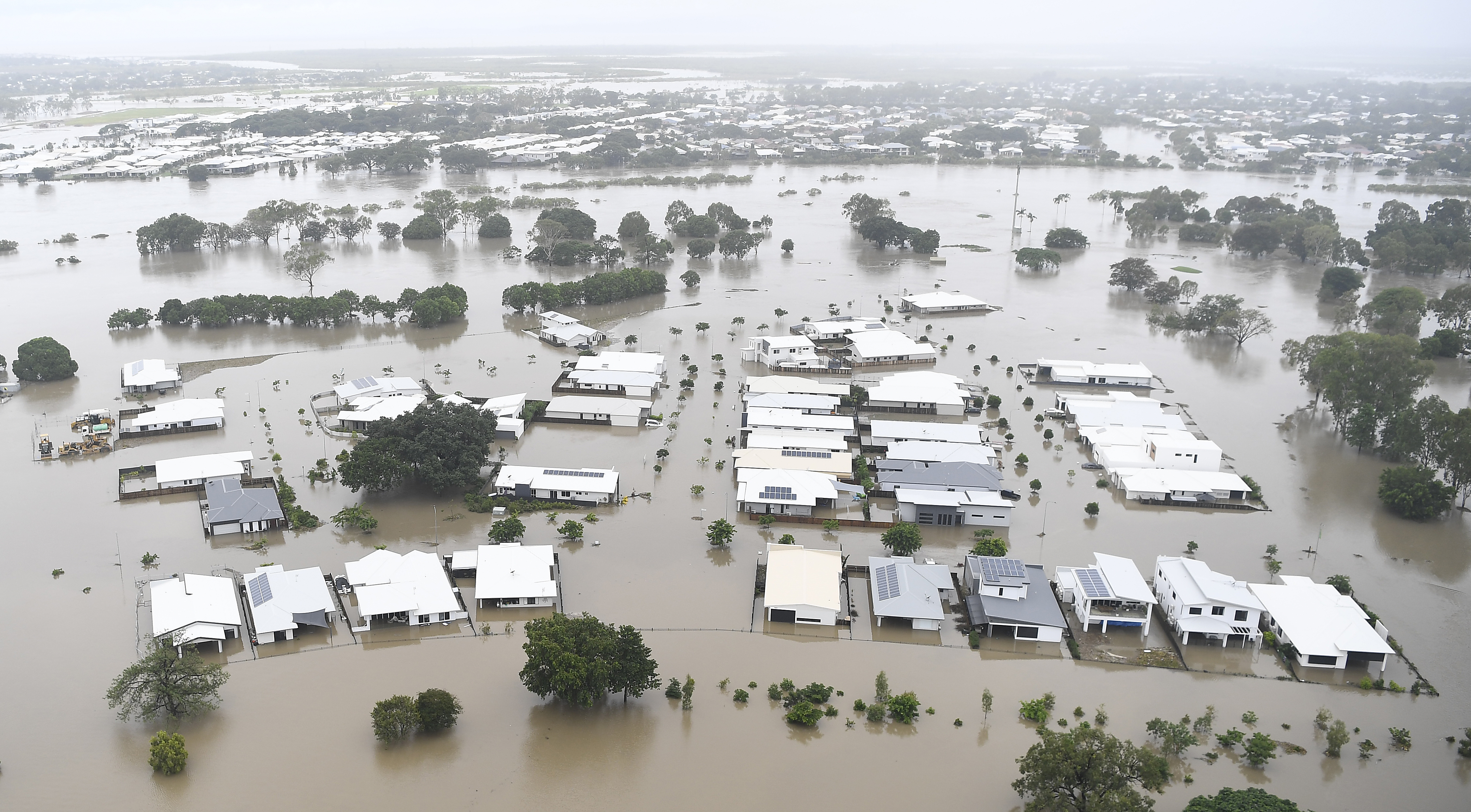
 Townsville, Qld
npr

Maryborough, Queensland
Floodlist

1.Riverine floods are the most common form. The two main contrib­ut­ors to riverine flooding are heavy rainfall and the land’s capacity to absorb water. When the land is satur­ated, the excess water flows into river systems and pushes the overflow onto the adjacent low-lying areas.

2.Flash floods occur from short intense bursts of rainfall, as during a thunderstorm. They can be particularly dangerous in ur­ban areas where drainage systems cannot cope with the amount of water. As the water rises quickly, the drainage system may have insuffic­ient capacity or time to cope with the downpour. Alth­ough flash floods are generally localised, they may pose a signif­icant threat because of their short duration and unpredictability.

3.Coastal floods happen when a low-pressure system or strong onshore winds force sea levels to rise above normal levels, creating a storm surge that floods low-lying areas. All type of floods can be class­if­ied as minor, moderate or major bas­ed on their impact on communit­ies and infrastructure.

Floods occur all over Australia, however different types of floods are common in different regions. Location determines what type of flooding is likely to experienced: river, flash or costal flooding or a combination. In the extensive flat inland regions, floods may spread over thousands of square ks and last sev­eral weeks.

The damage from floods can be varied, extensive and far reach­­ing. The immediate impacts of flooding include loss of human life, long term damage to property, crop destruction and loss of live­stock. The ongoing emotional impact is often terrible, as are the em­otional st­ress and physical illness from waterborne diseases. Floods also dam­age power transmission and sometimes power gener­at­ion, which then has knock-on effects caused by the loss of power.

The 2022 flooding was caused by a low pressure system over Queens­land's southern coast that dragged in moisture from the Coral Sea in the north, raising it over the Queensland coastline. The low press­ure trough delivered the rainfall but an area of colder air higher in the atmosphere was drifting in, making the atmosphere unstable and permitting moisture to be lifted up and dropped as heavy rain. 

Hawkesbury River, New South Wales
Desdemona Despair

Lismore, NSW
 
The 2022 eastern Australia floods were one of the nation's worst re­corded flood disasters that occurred in S.E Queensland and in­to coast­­al NSW. Brisbane suff­ered major flooding, as did the cities of Maryborough, Sunshine Coast, Gympie, Cab­oolture, Too­woomba, Ips­wich, Logan City, Gold Coast, Murwillumbah, Mullum­bim­by, Grafton, Byron Bay, Ball­ina, Lis­more, Central Coast and Sydney. Clearly as the system headed south, it turned into an East Coast Low near New South Wales/NSW’s Central Coast and Sydney. It will not surprise anyone that Sydney received more rainfall this October than any other October total in almost 170 years of record-keeping.

22 people so far have died in the 2022 floods. Across S.E Queens­l­and, 1000 schools were closed in response to the flood­ing, evac­uat­ions were urgent and the public had to avoid non-essential travel. Food shortages occurred across the region due to the ensuing supply chain crisis in outback Queensland. The flooding caused the ground across S.E Queensland and Northern NSW to become saturated and vul­nerable to even small amounts of rain.

While the amount of rain was less than the huge volumes seen in eastern states earlier in the year, the situation in the southern state of Victoria was made worse by the ground already being sat­ur­ated. Victoria had experienced its wettest Aug since 2010, and Sept rainfall was above average across most of northern Victoria. 

Residents in Echuca, Victoria
building sandbag levees to protect their properties
theguardian

Shepparton, Victoria
NYTimes

Shamrock Hotel, Rochester Vic
Watoday

A low pressure system travelled east over the nation, bringing the rain which hit southern Australia throughout Oct. As torrential rain swelled many of Victoria's major waterways to flood level, tran­­s­port routes were cut, homes were inundated and communit­ies were isolated. Victoria's floods were particularly severe along the Goulburn, Loddon and Campaspe Rivers, and on the Murray River. The third yearly La Niña event in a row was an important driver of rain in spring and summer. But the Indian Ocean electric dipole was really the main cause of the recent inland crisis.

La Trobe, Tasmania
weatherzone

South of the mainland in Northern Tasmania, some of the most signif­icant flooding that they’ve had for years have subsided. But the wea­th­er system that pushed through in October has again lifted some of the northern river levels. And many of the catchments that were affected weeks ago have already received warnings that more rain was coming. Tas­manian residents in regions hit by recent floods are now preparing again as storm fronts move over the island state. Moderate flood warnings are in place to northern towns near Launceston, places already flooded.

Flooded areas across Australia, 2022
phys.org