Showing posts with label Canberra. Show all posts

04 August 2026

Old Parliament House Canberra & museum


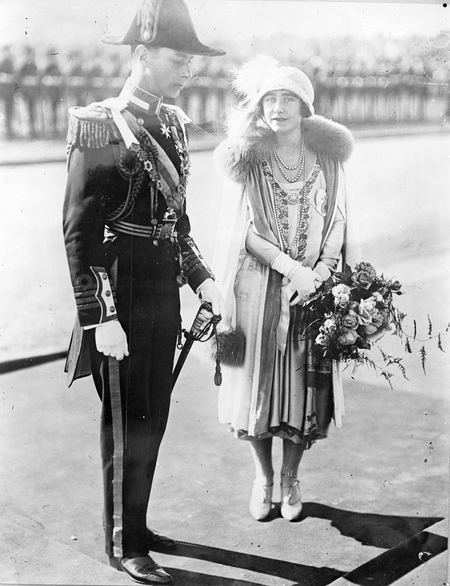
Duke and Duchess of York 
opened Parliament House May 1927.    
                                   
The need for a national capital city arose when the colonies united to form the Comm­onwealth of Australia in 1901. The constitution provided that a new national capital should be built half way between Melbourne and Sydney, to avoid jealousy and conflict. The new Australian capital city of Can­berra was fixed in 1908 and the area was formally ceded to the Federal Government in 1911. However the Parliament couldn’t relocate from its interim location, Melbourne, to Can­berra until the new building was ready.

Parliament House was designed by Scottish John Smith Murdoch (1862–1945), the first Common­wealth Government archit­ect in Australia, and a team of assist­ants from the Dept of Works & Railways. The building wasn't int­ended to be permanent or elaborate; rather a provisional building to serve Parliament for 50 years max. It would be a classical building like the Parthenon, but with­out all the ornate details. And it was to look out over Lake Burley Griffin.

Murdoch’s provisional parliament building was to be modest & funct­ional. It was designed on a basic square, which provided the building with regular pro­p­or­t­ions. It was a 3 storey brick building with the principal floor on the middle level. The funct­ional aspect was reflected in all the des­ign, extending to the interior fit­t­ings & furnishings. The faç­ade originally included a grid of recessed openings and balcon­ies, with four bays having arched bronze windows and stepped parapets. The building’s front façade had strong horizontal lines, display­ing only 2 storeys, with higher massed elements behind the faç­ade, indicating the loc­ation of the debating chambers. The lower mass in the centre was where King’s Hall was. As a result, with its now enclosed verandas and colonnades, and strong horiz­ontal lines, the building was not as some people expected a proper Par­liament House to be.

Old Parliament House, front entrance

It didn't include cl­assical arch­itectural elements like columns or pedim­ents, but did have the necessary sym­metry. In the end, he had designed what is now considered a significant, nation­ally-listed heritage building with fine classical simplicity, order & proportion. And the design ex­tended from the building to include its gard­ens, dé­cor and furn­ishings.

Murdoch designed both the exterior of the building AND the int­er­iors. He had to integrate all the spaces required of a parliament including: chambers, King’s Hall, party rooms, library, offices, members’ dining rooms and kit­chens. And he designed a distinctive set of furniture that shared the architecture’s design language.

Everything was pre-planned. Old Parliament House was designed in the Strip­ped Classical Style, commonly used for most Aust­ralian government build­ings built in Can­b­erra in the 1920s-30s. It was also recognisable in Murd­och’s other Can­ber­ra buildings eg Hyatt Hotel Canberra and Hotel Kurrajong.

Parliament House and Old Parliament House are the most significant features in the area covered by the National Triangle. Other build­ings key to the design and symmetry of the Triangle are the High Court and the National Gallery near Lake Burley Griffin, and the National Libr­ary.

Note that some of the integrity of Canberran architecture came after John Murdoch persuaded archit­ect Walter Burley Griffin to come to Australia from the USA. He was very busy.

Old Parliament House was the seat of the Parliament of Australia from 1927-88. In the 63 years that the building served, there were changes in the size and nature of the Federal Parliam­ent. During those years, the House of Representatives grew from 76 to 148 members and the Senate from 36 to 76 members. In 1927, only the Speaker of the House, President of the Senate, Prime Minister, Lead­er of the Government in the Senate and ministers had their own offices. But in the next 60 years, great changes took place in Australian social and political life, and democracy matured.

In 1927 the bush landscape in Canberra stood in stark contrast to the estab­lish­ed lush gardens of Parliament House in Melbourne. So throughout the 1930s, gardens were established to the east and west of Old Parliament House, patterned rose and annuals display beds, set in lawns and trees. Located on either side of Old Parliament House today are the rebuilt House of Representatives Garden and the Senate Garden so that when Parliament moved, the old gardens could be opened to the public.

By the 1980s, the building had exceeded its capacity with 3,000 people crowded into a building intended for a few hun­dred. Members and senators had tiny, overcrowded offices. In June 1988, mem­bers sat for the last time after 61 years in the old building, as Parl­iament trans­ferred to the completed New Par­l­iament House on Capital Hill.

Senate chamber

House of Reps chamber

Was King's Hall,
now Museum of Australian Democracy

So the sig­nif­icance of Old Parliament House today lies in its hist­or­ical value. In May 2008 King’s Hall became the Mus­eum of Austral­ian Democracy. It tells the herit­age of the build­ing and the story of Australia’s democracy. During its life as a work­ing parliament, the building was the setting for many of Aus­tral­ia’s major polit­ical events. Debates that influenced the future of the nation took place here, key decisions were taken, pol­itical careers were made and ended.

The Museum of Australian Democracy displays Aust­ralia’s pol­itical heritage. Old Parl­iament House is open daily, for either a guided tour or a self-tour where we can visit nearly all areas of the Old Parliament. See, for example, Kings Hall, House of Representatives Chamber, Prime Ministers Office, Cabinet Room and Senate Chamber.

In 1998 Old Parliament House became home to The National Port­rait Gallery which holds a range of changing exhibitions. And it serves as a venue for lectures and con­certs.

18 November 2025

John Curtin: Australian PM's modest homes

John Curtin (1885–1945) was born in rural Victoria to hard working parents and left school at 13. He became involved in the labour move­ment in Mel­bourne, joined the Labour Party at a young age and then the Vict­or­ian Socialist Party. He became State Secretary of the Timber Wor­kers' Union in 1911, then Federal President in 1914. Curtin was a lead­er of the No Campaign in the 1916 referendum on overseas conscript­ion, and was briefly gaoled for not attending a compulsory military medical examination.     

Curtin lived in a modest Brunswick residence from 1912-15, as Fed­eral President of the Victorian Timber Workers Union. He later bec­ame a leader in the Australian Workers Union. He married in 1917 then moved to Perth to become the editor of the un­ion movement newspaper West­ralian Work­er, and later was State President of the Aus­t­ralian Journ­al­ists' Ass­oc­iation. In 1923, he and wife Elsie built a house in Cottesloe, Perth. [This Cottesloe home was restored by the National Trust much later].
                                           
John Curtin and his wife Elsie built this modest house in 1923.
Cottesloe in Perth
National Trust

After 3 unsuccessful attempts, Curtin was el­ected to Fremantle in the W.A House of Representatives at the 1928 federal election. He remained loy­al to the Labour gov­ernment during the party split of 1931 but lost his seat in Labour's land­slide defeat at the 1931 election. Only in 1934 did Curtin win the seat again and rose up in the Aus­t­ralian Lab­our Par­ty, becoming party leader from 1935.

In 1936 Curtin was elected party lead­er in place of James Scul­lin. The party gained seats at the 1937. In Sept 1939 Prime Minister Robert Menzies announced Australia's entry into WW2 in Europe. The 1940 elections re­sulted in a hung parliament. The ALP eventually formed a minority gov­ernment in Oct 1941, just after the Japanese at­tack on Pearl Harbour oc­curred, so Australia now had to fight Japan as well! Worse still bom­bing raids on northern Australia started! John Curtin, Australia's 14th Prime Minis­t­er, led the nat­ion's war eff­ort and made significant de­cisions about how the war was conduc­t­ed. He placed Australian Pacific forces under the com­mand of the Amer­ican General Douglas MacArthur, with  whom he formed a close relat­ion­ship.   

John Curtin (R) became the prime minister in 1941.
Ben Chifley (L) was elected to the Cabinet as Treasurer
 
    
The Curtins with Canadian Prime Minister Mackenzie King,
Book of Remembrance in Memorial Chamber, 
Parliament House Ottawa, 1944. Wiki

The ALP won almost two-thirds of the seats in the House of Represent­at­ives at the 1943 election, a party record. In total Curtin was prime minist­er for 4 years, leading Australia through the last years of WW2 un­til his death in 1945. He was long­est serving leader of the Aust­ral­ian Labour Party-ALP from 1935-45, his leadership and interper­s­onal skills being accl­aimed by his polit­ical contemp­or­aries. Curtin died in office in July 1945, after months of war-related ill health. Fortunate­ly many of his post-war reconstruction plans were implemented by his succ­es­sor Ben Chifley.
 
In 2011 the heritage-listed home came up for sale; the vendors bought from a family who'd owned it since 1921. The unrenovated house had heritage demolition restrict­ions, so many of its original period features remained.  

Original facade, built in 1906
Brunswick Melbourne

The Brunswick home where Curtin once lived was bought at auction in 2011 by a family paying $710,000. Since then, the ex PM’s home had a renovation, while keeping many of its original Victorian features eg the original façade, stained glass at the front door, ceil­ing roses, wrought iron lacework and 3.3m ceilings. It now had quite gen­erous rooms wh­ich were more fitting as a form­er Prime Min­ister’s home than his actually home had been. Later the house had a plaque added onto the front, mark­ing its historic signif­ic­ance.  

Blue plaque
   
Now Curtin’s former Brunswick home, Melbourne property with a prime min­ist­erial pedig­ree, will be auctioned again at the end of Mar 2023. The less modest four-bedroom house at Fallon St Brunswick still feat­ur­es a plaque on the footpath outside marking its historical sig­nific­an­ce, and has a price guide of $2.1-2.3 million. I would buy the house in a heart beat, but not just because the historical architecture and déc­or should be heritage-protected forever. Rather I need like to know how many prime ministerial houses can rec­eive a blue plaque; Curtin lived in 1]Creswick and 2]Brunswick in Vic­toria, 3]Cottesloe in W.A and 4]Canberra, and possibly other cities I don’t know about.

renovated Brunswick kitchen
Woodards

renovated alfresco deck
realestate.com.au


31 December 2024

Phar Lap, Australia's greatest ever racer!

Phar Lap was born in Timaru New Zealand in 1926, a chestnut gelding standing 17 hands high. The yearling was one of those sent by Sea-down Stud owner Alec Roberts to the Trentham sales. Sydney trainer Harry Telford received a copy of the N.Z Thoroughbred Yearling Sale Catalogue in Jan 1928 and was impressed by the colt’s breeding. Telford did not have money to buy the horse and contacted U.S businessman David J Davis who was initially reluctant to commit to the unseen prize. But eventually Telford’s brother inspected the horse and asked a businessman in N.Z to bid.

Although Phar Lap was New Zealand-born and raised, he never raced there. Even in Australia, Phar Lap failed to place in 8 of his first 9 starts. But he went on to win 36 of his next 41 races, including the Race That Stops the Nation, the 1930 Melbourne Cup. Phar Lap often won by several lengths and sometimes even finished at half pace. In the misery of the Great Depression, Phar Lap’s exploits thrilled both NZ and Australia, and became a legend of Australian sporting history. His sensational rise from humble beginnings captured the public’s imagination in those years.

 Jockey Jimmy Pike rode Phar Lap to 27 wins in 30 races!

Phar Lap and his strapper, Tommy Woodcock, 
Australian Geographic

In the 1930 Melbourne Cup, when he was ridden again by Jimmy Pike, the Australian wonder-horse beat Second Wind by 3 lengths to claim one of his greatest victories. To show you how important the Melbourne Cup always was, it’s still a significant public holiday in Victoria.

In 1931 co-owners Harry Telford and David Davis sent the horse to America. Once in California, all Tom Woodcock's efforts were focused on acclimatising the horse. If Phar Lap lost, Woodcock would get paid nothing other than his trip costs, and he really wanted to show the Americans what he was made of. In the weeks leading up to the Agua Caliente Handicap in Tijuana MexicoAustralians listened to and read whatever they could on Phar Lap's progress. 

In March 1932, Phar Lap and jockey Billy Elliott won the richest race in the world then!! A fortnight later in April 1932 Phar Lap’s strapper Tommy Woodcock, who’d seen the horse in all his races, found him suffering in severe pain and high temperature. Phar Lap quickly bled to death and Woodcock was devastated. In Australia the death was seen as a great tragedy; rumours quickly spread that the horse may have been poisoned. The autopsy showing the horse's stomach and intestines were inflamed, perhaps poisoned.

Phar Lap’s very large heart was returned to Australia for testing after his sudden death. Davis arranged for the heart to be sent to Sydney Uni for examination by thoroughbred expert Dr Stewart McKay and pathologist Prof Welsh. The wall of the left ventricle was removed, to inspect the muscle thickness. Noting the unusually large size of Phar Lap’s heart, Dr McKay asked Telford to donate it to Canberra’s Australian Institute of Anatomy. Although my father was sure American criminals poisoned the horse on purpose, debate continued as to whether Phar Lap died of an acute infection or from arsenic poison. Not surprisingly, the Institute of Anatomy collection became one of the key parts of Canberra’s National Museum.The mounted hide went to the Museum of Victoria in Melbourne, the skeleton to the National Museum of New Zealand in Wellington.

The death prompted an out-pouring of anger and mourning, and the saying a heart as big as Phar Lap’s came to refer to the horse’s staying power, used to indicate great courage. The heart is still suspended in a clear case, an icon of the National Museum’s collection. Letters sent to Harry Telford by the grieving public are now displayed with Phar Lap with other tributes in art and relics. Objects from his life: training saddle, shoes and tonic book tell the story of the wonder horse whose life abruptly ended.

Easily winning the 1930 Melbourne Cup
The Age

The Museum’s Phar Lap Collection includes the personal photo album of Phar Lap’s owner, David Davis. The album has 36 black and white photos, documenting each of Phar Lap’s race wins in Australia, with race details inscribed on the mounts. This is the only photo album known that features each of Phar Lap’s Australian wins. Davis died in 1959 and this album was discovered by his descendants in their California home in the 1990s.

The Museum’s Phar Lap collection also includes:
1. Jockey Billy Elliott’s Agua Caliente Club race programme
2. The 1932 program from Phar Lap’s last race, with personal inscription on the cover from Elliott.
3. Jockey Jim Pike’s 1930s riding boots and skull cap. 
4. An Akubra owned by Pharlap Dixon who worked on a Territory cattle property!
5. N.Z Thoroughbred Yearling Sale Catalogue Jan 1928, showing Davis WAS the buyer (£160).

In the 1983 film Phar Lap, he was as well-known for his mysterious death as for his great life successes. The film started when Phar Lap was bought on impulse by trainer Harry Telford. The horse lost his first races but Telford's faith in the animal was unshakable. Suddenly the horse became a winner, thanks to stable boy Tommy Woodcock. American promoter Dave Davis arranged for Phar Lap to be entered in several top races, where his long shot status resulting heavy losses for the criminal gamblers. Just after winning a major race in Mexico, Phar Lap collapsed and died; they assumed that the horse was murdered by gambling interests. Australia mourned.

Australia's greatest racehorse Phar Lap.
Museum of Victoria

National Mus Aus concluded that Phar Lap’s popularity was not just due to the fact he won so often. Rather in the impoverished Depression, the horse’s spectacular rise from humble beginnings expressed the dreams of ordinary Australians. 80+ years after he first went on display, the champion Phar Lap remains the most popular exhibit.


10 February 2024

Hilda Rix Nicholas: France, WW1, Aus art

Hilda Rix  (1884-1961) was born in rural Victoria. Her mother was artistic so Hilda was allowed to study at the National Gallery School Melbourne from 1902-5 under Frederick McCubbin, Australia’s greatest artist then. In 1907 she left Australia for Europe with her mother and sister, studying at the New Art School in London, followed by studies at three of the best known art académies in Paris.

Hilda Rix Nicholas
La Robe chinoise c1913,  oil, 141 x 83 cm, 
Art Gallery of WA

Every summer between 1910-1914 Rix established herself at the artist’s colony in Etaples in northern France, enjoying painting the local people in their traditional dress. The work entitled Dear Old Fairy Godmother was drawn there.

In 1912 and 1914, Rix visited Spain and Morocco, with long periods in Tangier. There the colour and light, very different from that in Northern France, reminded her of the Australian light. She championed the culture of cosmopolitan Morocco, carefully recording in a discreet way the public life of the market place, especially the role of women in it. Staying at Tangier's famous Hotel Villa de France at the same time as Henri Matisse, she depicted some of his sites and models.

Rix's drawings and paintings of both Picardy and Morocco added to her fame. A large painting was shown at the Salon des Artistes Francais 1911 and many works were included in exhibitions conducted by Societe des Peintres Orientalistes, Paris. In 1912 the French government bought her work Grand Marche Tangier, for the Luxembourg Gallery. Serious articles about Rix appeared in The Studio published in London, and Notre Gazette published in Paris.

La Robe chinoise c1913 depicted Hilda Rix’s sister, Elsie, in fancy dress. The blue and red costume of oriental design looked very lush, and by placing it in an ornamental frame, Rix was making her sister look exotic. Elsie and Hilda sent heaps of correspondence to friends and family - letters that have recently been published.

Hilda Rix Nicholas
Camouflage, 1914
crayons and charcoal on paper, 37 x 27 cm

Rix wrote to her sister talking of women doing brutal physical labour in Public Space i.e in Moroccan streets and markets. She said "I proceeded to work while a merry interested crowd grew behind me, I put into my foreground one of the many women who, like any of the other beasts of burden, had tramped fifteen miles bearing a heavy load on her back. She wore scant attire made of a series of towels, her face bound and veiled. Her legs were encased in primitive leather gaiters".

When WW1 started in 1914, Rix happily lived and worked in Paris. Then Rix, her mother and sister were all forced to evacuate to the safety of London. Several months later her sister died of typhoid. Her mother died in early 1916.

Later in 1916 in London Hilda Rix met and married an Australian, Major George Nicholas. Stratford Historical Society and Museum in Gippsland has a fantastic photo of the young couple in their wedding week, leaving Buckingham Palace. After a short honeymoon, Major Nicholas returned to the French Front where he was killed in action at Flers. It was a time of irrepairable tragedy.

Rix Nicholas maintained her husband's name throughout the remainder of her career, although she later remarried. She was devastated by the death of her sister and husband in 1916; she painted that devastation into the work Desolation. Catherine Speck wrote movingly about women artists and their visual responses to terrible wartime events .

A mother of France c1914 was purchased later by the Australian War Memorial Canberra. It was a portrait of her elderly neighbour in Étaples, whose son had been killed in an early WW1 battle. Nicholas painted the poor woman as silenced by her private grief. The Australian War Memorial noted that by identifying the woman only “as a mother of France”, Rix Nicholas presented her as a symbol of the suffering of all grieving mothers. This image countered the nonsense that mothers should take pride in their sons' sacrifice for their country.

At war's end Rix left England for Australia. Going first to Sydney, her art was widely shown there. Young artist  Grace Cossington Smith told people that Rix’s work was stunning. During the next 6 years Rix Nicholas continued to establish herself as one of Australia's finest painters, but not without raising some strife within the conservative and male dominated art establishment.

More used to Europe’s liberalism, Rix began to explore Australia's great outback landscapes eg The Shearers 1922. This was gutsy since landscape was the domain of male artists in this country. Women artists were expected to specialise in portraiture and still life. But she had fallen in love with her own country again and it was the start of her grand romance with the Australian bush and landscape.

Hilda Rix Nicholas
The Shearers 1922,  oil, 79 x 98 cm
sold at auction in 2005

In 1928 she married an Australian soldier, Edgar Wright. But unlike Major Nicholas, Wright had survived the war and offered a peaceful life as a grazier’s wife. Amazingly when she was over 40, they had a beloved son (Rix).

While artist Margaret Preston was supported by the art establishment; fortunate to have her work reproduced in Art in Australia, Nicholas thought her own work was being undermined. This was because: 1] her best-known work, A Man 1921, had been refused by the Australian War Memorial and 2] her entry for a War Memorial Mural in Melbourne's Public Library failed. But knowing how popular she had been, her fear of a gender-based rejection was telling.

Une Australienne, Portrait of Dorothy Richmond, 1926
oil, 103 x 81 cm.
National Gallery Australia

In 1924, Hilda was invited to exhibit her Australian art in both France and England, so she rather happily returned to Paris. The French government purchased one of her most important paintings, In Australia, and she exhibited at London's prestigious, Royal Academy. And in 1926, even more recognition arrived - she was elected an associate of the Societe Nationale des Beaux-Arts and died in 1961.

Hilda Rix Nicholas
The Summer house, 1931, 81 x 100cm, oil, 
Newcastle Region Art Gallery

See John Pigot's book Hilda Rix Nicholas: Her Life and Her Art, (Miegunyah 2000); Jeanette Hoorn's book Moroccan Idyll: Art and Orientalism (Miegunyah 2012) and Catherine Speck's article "Women Artists and the Representation of WW1" in The Journal of Australian Studies, March 1999.


20 January 2024

Australia WW2 rationing was hard; UK's was tougher and longer

Petrol in the UK was the first commodity to be rationed, although it was supplied for essential services eg doctors and farmers. When a North Atlantic blockade by German U-Boats stopped imported food, huge shortages were caused and by Jan 1940, the British government had to introduce food rationing. The scheme was designed to ensure fair shares for all at a time of national crisis. The Ministry of Food was responsible for overseeing rationing, issuing a ration book with coupons for every citizen. Before rationed goods could be purchased! 

Women and children queue to buy vegetables, London, 1945.
Museum Crush

By mid-1942 most foodstuffs in Britain were rationed, except for some vegetables, fruit, fish and bread. A typical weekly ration allowed a person 1 egg, 2 ounces each of tea and butter, an ounce of cheese, eight ounces of sugar, four ounces of bacon and four ounces of margarine. Other scarce commodities were rationed too eg clothing, shoes, fuel, and soap. As the war progressed, the rationing system had to be refined to accommodate different needs. 

Britain’s truly drastic rationing regulations were not needed in Aus­tralia because we had bigger farm areas, a smaller population and our own large and well developed rural in­dust­ries. Nonetheless Australia's use of food ration coupons was applied to tea, sugar, butter, meat and clothes. Eggs and milk were also rat­ioned, as needed. Rationing regulations in Australia were intro­duced in mid-1942 to manage shortages, control civilian cons­ump­tion and curb in­flation by red­uc­ing consumer sp­end­ing. Hopefully this would lead to 1] a higher level of sav­ings by the popul­ation, 2] a greater invest­ment in govern­ment war loans and 3] a fairer dis­tribution of food and clothing. Many thanks to the War Memorial in Canberra.

Waiting patiently for meat rations,
Sydney Morning Herald, 1944

Australian troops abroad had to be supplied with food produced in Australia, and when thousands of Amer­ican troops arrived in Australia to fight the war in the Pacific, they too had to be fed.

Rationing was planned by the nation's Rationing Commission in the Minister for War Organis­ation of Industry. From 1942, as the range of rat­ioned com­modities grew, not every Australian citizen supported rationing legislation; some citizens were pre­pared to exploit and pro­fit by selling scarce commodities at in­flated prices. This created a Black Market where commodities could be acqu­ired without coupons, but at high prices. So rat­ion­ing was closely policed and breaches were punished under the National Security Re­gulations - £100 fines or up to 6 months gaol were imp­osed. When these penal­t­ies were inadequate, the gov­ern­ment passed the Black Marketing Act in late 1942, for more serious cases.

Australia shops changed from a cash-economy to a coupon-economy. Each adult citizen received a ration book with 112 coupons. All purchasable items had a coupon value eg a man’s suit cost 38 coupons, socks 4. Us­ed coupon books were exchang­ed for new ones only an­n­ually, so people had to plan their ex­pen­ses to avoid using all their coupons too quick­ly. Civilian clothing was run­ning out, so cheap austerity gar­m­ents re­p­laced the old stocks, made from mat­erials not vital to the war effort.

Australian rationing coupons and cards 
Gizmodo

Rationing was based on supply. In some towns the impact was les­s when suburban blocks were big enough for famil­ies to grow their own vegetables/fruit. And some could support chickens or cows, sup­plying them­sel­ves with eggs and dairy products. Some public parks were dug up for vegetable gardens!  The gov­ern­ment feared that rationing would result in poorer health on the home front, but rat­ion­ing actually re­duced food-related prob­lems eg obesity, diabetes.

Fish, sausages, chicken, ham and rabbits were hardly rationed. Recipes designed to cater for the lack of eggs, butter and meat regularly ap­peared in newspapers and magazines. Animal organs were more readily available than better cuts of meat in WW2 and formed a signif­icant part of people's diets. Even so, people had to stand in long queues

The Austerity Campaign wanted simple living; citizens were told to smoke less; drink less; plan meals for food value and give up cosmetics. Children’s toys had to be hand-made.

When WW2 began, Australia had been totally unready for a long con­flict; there were enough petrol reserves for only 3 months, and limited stor­age capacity. The Commonwealth asked the Dept of Supply to prepare pl­ans to rat­ion petrol but it was not imposed im­med­iate­ly; instead they only recommended frugality. As an alt­er­n­ative, the government encouraged motorists to use charcoal gas pro­duc­ers, fit­ted to the back of cars. However, gas producers were in short supply, cumbersome, messy and inefficient.

The motor industry lobbied against petrol rationing, claiming it would lead to unemployment and economic in­stability. But as a last resort, Director of Economic Planning had to in­troduce a scheme to cons­erve pet­rol. Div­ided into classes, eg delivery vans, buses, taxis, trucks, ind­ustrial transport, farm mach­in­ery and private cars, prior­ities were det­ermined for each class and allowances were allocated.

 
Australians were encouraged to grow their own fruit, vegetables and eggs
Australian War Memorial

To obtain rat­ion tickets from late 1940, the million+ civilians apply­ing for petrol licences had to complete an application each time which lasted 6 mon­ths. After that, issues were made every 2 months, to avoid forg­eries and black market hoarding. Petrol companies pooled their sup­pl­ies, and storage facilities grew up everywhere, for all vehicles.

Victory over Japan in 1945 raised expectations that rationing would be abolished. But rationing was only gradually phased out, given that Aus­tralia continued to send food etc to Britain for years. The meat ration had been further reduced in the motherland, and in an effort to support the British public, the Australian Government maintained meat ration­ing and price controls until 1948.

Five years after the war ended, Australian food rationing finally ended. While sugar and meat had already become freely available, butter and tea were STILL rationed until June 1950. NB in Britain rationing didn’t end until July 1954!

Even after WW2 ended, Australia still needed to send meat supplies to Britain
Digger History


28 March 2023

Australian prime ministers post-Federation


I asked my students if they knew all 29 Australian Prime Ministers since Federation (1901). Everyone knew the first two P.Ms, but no-one knew the rest, until Menzies in WW2.

The gallery of portraits of past Prime Ministers (top image) 
Parliament House Canberra

So I referred students to The His­tor­ic Memorials Collection, the Australian art programme founded by Andrew Fisher in 1911. It was guided by the Historic Mem­or­ials Committee, chaired by each P.M. The Committee comm­issioned official port­raits of the Governors-General, P.Ms, Senate Presidents etc. All of the 25 portraits of Australian P.Ms are dis­played in order in Parliament’s Members’ Hall. Some portraits hang in King's Hall between the House of Representatives & Sen­ate cham­bers, Canberra. From 1927-88 it was the heart of Old Parl­iament House.

1. Edmund Barton (1849-1920). Barton was sworn in as leader of the new Commonwealth of Australia on 1 Jan 1901, after being in the NSW Parliament. A leader of Federat­ion movement, he help­ed draft Australia’s Constitution and later became a judge of our High Court. Was P.M 1901-1903. Artist: Norman Carter. 

2. Alfred Deakin (1856-1919) This Member for Ballarat Victoria held the office of P.M three times after Federation. Deakin built on Aus­tralia’s constitut­ional foundations, introd­uced legislation for a site for a new national capital and estab­lish­ed the High Court. Was P.M: 1903-4; 1905-8; 1909-10. Artist: Frederick McCubbin. 

Robert Menzies
by Ivor Hele

3. John Watson (1867-1941) Member for a NSW electorate 1906-10, Watson was considered the world’s first national Labour government leader. Appointed as P.M at 37, he remained Australia’s youngest. Was P.M 1904-1904! Artist: John Longstaff.

4. George Reid (1845-1918) Reid was NSW Premier from 1894-9. He led the Free Trade Party, and was the Federal Oppos­it­ion Leader for 6 years of Parliament, then as PM from 1904-5. Artist John Longstaff.

5. Andrew Fisher (1862-1928) A Labor member in Qld, Fisher was one of only two Australian P.Ms to have held office on 3 occasions. Fis­h­er established the Commonwealth Bank, found­ed Canberra and created the Royal Aust­ral­ian Navy. Was P.M: 1908-9; 1910-3; 1914-5. Artist: E Phillips Fox.

6. Joseph Cook (1860-1947) Member for Parramatta, this NSW Liberal man was P.M from 1913-1914, until he prov­oked a double dissol­ution election and was defeated by Fisher. Artist: Norman Carter.

7. Billy Hughes (1862-1952) A member for Labor Party NSW. He joined the Nationalist Party and was the longest continuous House of Repres­entatives member, 51.5 years. During the hardest years of WWI, The Little Digger was P.M 1915-1923. Artist: George Lambert.

8. Viscount Stanley Bruce, (1883-1967) was a Nationalist Party member in Vict­or­ia. During his term, the government was transferred from Melb­ourne to the new capit­al. Bruce was the first P.M to work in Canberra’s Old Parliament House and to live in the P.M’s official Canberra residence, The Lodge. Was P.M 1923-1929. Artist: William McInnis.

9. James Scullin (1876-1953) was a Victorian Labor member. When his term started, Wall St crashed and he focused on managing the fail­ing economy. And he nomin­ated Isaac Isaacs as the first Australian-born Governor-General. Was P.M 1929-1932. Artist: William McInnes.

10. Joseph Lyons 1879-1939, a member of the United Australia Party, was elected to Federal Parliament in 1929, having ser­ved as Premier of Tasmania. He established the Australian Broad­casting Commission and regulated the growing air travel industry. Was P.M 1932-1939, the only Tas­manian ever. Artist: William McInnes.

11. Earle Page (1880-1961) represented NSW from 1919-61. He was one of the longest serving parliamentarians, 42 years, and a co-founder of the Coun­try Party. Page was P.M briefly in April 1939, after Lyons’ death. Artist: Fred Leist.

12. Robert Menzies (1894-1978) represented Kooyong Vic­toria for the United Australia Party. In 1941 he resigned as PM, hav­ing lost his Cabinet support. As leader of the new Lib­eral Party, Menzies won the 1949 election, setting new goals in immigration, social services, hospit­als, schools & universities. Was P.M 1939-1941, 1949-1966 when he retired, longest serving P.M ever. Artist: Ivor Hele.

13. Arthur Fadden (1894-1973) Country Party member in Qld 1936-49 &1949-58: Fadden replaced Menzies post-resignat­ion in 1941, briefly as P.M. In his 22-year parl­iam­ent­ary career, Fadden also served as Treasurer. By William Dargie.

14. John Curtin (1885-1945) Labor member for Fremantle WA 1928-31 and 1934-45, Curtin was most remembered for his leadership of the nation during WW2. Was P.M 1941-1945, dying in office, before WW2 ended.

15. Frank Forde (1890-1983) Labor member in Q­ld, Forde served as a deputy leader to James Scullin, John Curtin and Ben Chifley, then was Australia’s shortest serving P.M after Curtin’s death in 1945.

16. Ben Chifley (1885-1951) Member for Macquarie NSW 1928-31 and 1940-51, Labor man Chifley became P.M after Curtin’s death in 1945. Chifley started Australia’s post-war renew­al with an immigration programme, Snowy Mountains Hydro-electric Scheme and Australian National University. Was P.M 1945-1949. Artist: Archibald Colquhoun.

17. Harold Holt (1908-1967) Liberal member for Victorian from 1935-67, Holt became P.M after Menzies’ retire­ment in 1966. His gov­ernment used the 1967 referendum to recog­nise Indigenous Australians, relaxed immigration laws and increased Aus­t­ralia’s Vietnam War role. Was P.M 1966-7. In Dec 1967, Holt drowned at sea. Artist: William Pidgeon.

18. John McEwen (1900-80) Member for Victoria 1934-71, this Country Party man was caretaker P.M after Harold Holt drowned (1967-1968). McEwen became as Deputy P.M until retire­ment in 1971.

Malcolm Fraser
by Ivor Hele

19. John Gorton (1911-2002) A member in Victoria 1949-75, Gorton became P.M in 1968, winning the Liberal Party leadership ballot af­ter Holt’s drowning. He established the Australian Arts Council, and the National Film & Television Training School. Was P.M 1968-1971 when Gorton lost office in a no-confidence vote. Artist: June Mendoza.
  
20. William McMahon (1908-1988) NSW Liberal member from 1949-82, McMahon became P.M in 1971. He was the first P.M to appoint a Min­is­t­er for Aboriginal Aff­airs. Was P.M 1971-2, in Par­liam­ent until retiring in 1982. Artist: Ivor Hele.

21. Gough Whitlam (1916-2014) Labor member in NSW 1952-78 who ended our fighting in the Vietnam War, int­roduced free tert­iary education and a national health scheme. He was the first Australian P.M to visit People’s Rep­ublic of China. Was P.M 1972-1975 until his govern­ment was dismissed by Governor-General John Kerr in Nov 1975. The por­t­rait was painted by Clifton Pugh for the Archibald Prize competition.

22. Malcolm Fraser (1930-2015) This Victorian Liberal became caretaker P.M, after Whitlam govern­ment's dismissal and won the next election. Fraser promoted multi­culturalism, introduced fam­ily allowances, the Great Barrier Reef Marine Park and commis­sioned a new Parl­iam­ent House. Was P.M 1975-1983. Artist: Ivor Hele. 

23. Bob Hawke (1929-2019) This Victorian Hawke won the 1983 elect­ion and became Australia’s longest-serving Labor P.M. He focused on globalisation, micro-economic reform and industrial relations, floating the Australian dollar and reducing tariffs. Was P.M 1983-1991 when Hawke was defeated by his own party’s ballot.

Bob Hawke
by Bill Leak

24. Paul Keating (1944- ) A Labor member in NSW 1969-96, and after eight years as Treasurer in the Hawke government, Keating became P.M. He continued economic ref­orms, wrote Indigenous land rights legislation and reformed vocat­ion­al ed­ucation. Was P.M 1991-1996. Artist: Robert Hannaford.

25. John Howard (1939- ). Member for NSW Liberals 1974-2007, he was Australia’s 2nd longest serving P.M. He introduced major taxation reform & the Goods and Services Tax. He brought in strict gun control legislation after the Port Arthur mass­ac­re. But he, who was brutal to refugees, was P.M until the govern­ment was def­eated.

Portraits have not yet been painted for Labor P.Ms, Kevin Rudd & Julia Gillard, and Conservative P.Ms Tony Abbot & Malcolm Turnball. Or read  Political Lives: Australian Prime Ministers and their biographers, Chris Wallace, 2023


27 December 2022

Armistice Day, 11th November 1918-2018.


Huge crowd at Parliament House for the Declaration of the Signing of the Armistice 
Adelaide, 1918
Photo credit: Australian War Memorial


By Nov 1918 the Allied armies had driven the German invaders back, having inflicted heavy defeats on them over the preceding months. Finally the Germans accepted Allied terms, signing an armistice in Commander Marshal Ferdinand Foch’s railway carriage, stationed in the Compiègne forest north of Paris.

When the formal Armistice came into effect on 11th Nov 1918, the guns of the Western Front fell silent for the first time in over four years of brutal warfare.

It was early morning in Britain when peace was declared, but grad­ually the news was spreading, on the western front and the home front. Soldiers were cheering after sunrise. Ports celebrated early because that was where people were given the news by the sirens of naval vessels. In London crowds formed in Downing St, as newspapers and newsboys spread the word. The prime minister David Lloyd George appeared outside #10 and received the cheers of many thousands of citizens. In many towns, bells & music announced the news. In churches every­where, the emphasis was on triumph, not remembrance of the dead.

When it got dark across Britain, fireworks and bonfires were lit, and street lights came on for the first time in years. It was a magical evening. Quiet didn’t arrive until midnight.

From then on, Armistice Day was marked on 11th hour of 11th day of 11th month each year. This first modern world conflict had brought about the mobilisation of 70+ million people and left 9-13 million dead, perhaps one-third of them with no known grave. The Allied nations chose this day and time for the commemoration of their war dead.

On the first anniversary of the armistice in 1919, 2 minutes' silence was used as part of the main commemorative ceremony at the new Cenotaph in London. The silence was proposed by Aust­ralian journalist Edward Honey, who was working in Fleet St. At the same time, a South African statesman made a similar proposal to the British Cabinet which endorsed it. King George V personally requested all British Empire peoples to sus­pend normal activities for two minutes on the hour of the armistice. After all, this was the moment that ended the worldwide carnage of the four preceding years and marked the victory of Right and Freedom. The two minutes' silence became the central feature of Armistice Day commemorations.

In the four years of WW1, 330,000+ Australians had served overseas and 60,000+ of them had died. The social effects of these losses cast a misery over families, communities and the nation in the 1919-39 era. 

Note Castlereagh St Sydney looking down to George St where a large crowd which had gathered in Martin Place to cel­ebrate Armistice Day’s first anniversary in 1919. The clock on the GPO building says 12 o'clock and a replica sailing ship float has been set up in the centre.

First anniversary of Armistice Day in Sydney, 1919
Photo credit: Australian War Memorial

On the second anniversary of the armistice in 1920 the commem­or­ation was given added significance when it became a funeral, with the return of the remains of an unknown soldier from the Western Front. Unknown soldiers were interred with full military honours in Westminster Abbey in London and at the Arc de Triumph in Paris. The entombment in London attracted 1,000,000+ people within a week to pay their respects at the unknown soldier's tomb. Most other allied nations adopted the tradition of entombing unknown soldiers over the following decade.

Charles Bean, Australia's official WWI historian, planned a museum memorial to Australian soldiers. The Australian War Records Sect­ion was established in May 1917, the records being exhibited first in Melbourne and later in the new Federal capital, Canberra. Two of the entrants in an architecture competition, Emil Sodersten and John Crust, were encouraged to present a joint design for the new Australian War Memorial in Canberra. The War Memorial building was officially opened following a Rem­em­br­ance Day cerem­ony on 11th Nov 1941 by Governor-General Lord Gowrie. Newer add­itions allowed the remembrance of Australia's particip­at­ion in all subsequent wars. 

After WW2 ended, the Australian & British governments changed the name from Armistice Day to Remembrance Day, to comm­emorate all war dead. All school students in the post-war era were assembled before 11 AM, to lower the flag to half mast and to honour the 2 minutes of silence. I remember it very well!

In Australia on the 75th anniversary of the armistice in 1993 Remembrance Day ceremonies again became the focus of national att­ent­ion. The remains of an unknown Australian soldier, exhumed from a WW1 military cemetery in France, were ceremonially entombed in the Memorial's Hall of Memory. Remembrance Day ceremonies were cond­uct­ed simultaneously in towns and cities all over the country. The day was formally re-established as a significant national day.

Remembrance Day 2018
Australian War Memorial, Canberra

On every Remembrance Day, the Australian War Memorial in Canberra hosts the nation’s key commemoration. The ceremony, which includes a formal wreath laying, is attended by many high-level dignitaries, diplomats, school students and members of the general public. Australia’s Federation Guard and the Band of the Royal Military College Duntroon form part of the parade.

What about ANZAC Day each year? 25th April marks the anniversary of the first major military action fought by Australian and New Zealand forces during WW1. Anzac Day carried proof of untested national qualities, with some imperial endorsement for the Australian and New Zealand fighting men. For most it was a day to proudly remember service and sacrifice. Thus Anzac Day combined mourning AND nation-building in a way that Remembrance Day did not; positivity amid the solemnity. Grief and national pride were combined in equal measure, meaning that Anzac Day was understood in different ways. For some it was a day to proudly remember service and sacrifice. For my grandfather and father, it was a day to remember the tragedy of war.

red poppies on the Roll of Honour
Australian War Memorial, Canberra


16 August 2022

Old Parliament House Canberra. Now a great museum, gallery and gardens.

Old Parliament House, Canberra

The need for a national capital city arose when the col­onies united to form the Commonwealth of Australia in 1901. The new Australian capital city of Can­berra would soon grow, but Parl­iament couldn’t relocate from Melbourne until the pro­visional building in Can­berra was ready.

Scottish John Smith Murdoch (1862–1945), first Common­wealth Government archit­ect here, persuaded archit­ect Walter Bur­ley Griffin to come from the USA in 1913.

Parliament House was designed by Murdoch and a team of assist­ants from the Department of Works and Railways. The building was never int­ended to be permanent or elaborate; it was to be a provisional building that would serve Parliament for 50 years max. It would be a classical building like the Parthenon, but with­out all the ornate details. And it was to look out over Lake Burley Griffin.

Murdoch designed both the exterior of the building and the int­er­iors. He had to integrate all the spaces required of a parliament including: chambers, King’s Hall, party rooms, library, offices, members’ dining rooms and kit­chens. And he designed a distinctive set of furniture that shared the architecture’s design language.

So Murdoch’s provisional parliament building was to be modest, funct­ional and impermanent. It was designed on a basic square which provided the building with regular pro­p­or­t­ions. It was a 3-storey brick building with the principal floor on the middle level, and the funct­ional aspect was reflected in all the des­ign.

The faç­ade orig­inally included a grid of recessed openings and bal­con­ies, with four bays having arched bronze windows and stepped pa­r­apets. The façade had strong horizontal lines, display­ing only two storeys, with massed elements behind the faç­ade indicat­ing the loc­ation of the debating chambers. The lower mass in the centre was where King’s Hall was. As a result, with its now enclosed verandas and colonnades, the building was not what some Australians expected from a proper Par­liament House.

It did not include such cl­assical arch­itectural elements like col­umns or pedim­ents, but did have the necessary sym­metry. In the end, he had designed what is now considered a significant, nation­ally-listed heritage building with a fine sense of classical simp­licity, order and proportion.

The Duke and Duchess of York
opened Parliament in 1917

The building was in the Simplified or Strip­ped Classical Style, commonly used for Can­b­erra’s government build­ings built in the 1920s-1930s, and also recognisable in Murdoch’s other Can­ber­ra buildings eg the Hot­el Canberra/now Hyatt Hotel Canberra and Hotel Kurrajong. It was opened by the Duke and Duchess of York at the opening in May 1927.

When politicians arrived in Canberra for the opening of Provis­ion­al Parliament House in 1927, they saw bare ground and a low hedge, planted by the Superintendent of Parks and Gardens. The bush land­scape stood in stark contrast to the established lush gardens of the temporary Parliament in Melbour­ne. So from 1931-8, the Secret­ary of the Joint House Department started creating gardens to the east and west of Canberra’s Old Parliament House.

Old Parliament House's sig­nif­icance today lies in its hist­or­ic­al and social value to the nation. Now it is an important museum of Aust­ralia’s pol­itical heritage. Old Parl­iament House is open daily, for a guided tour or a self-tour where it’s possible to vis­it nearly all areas of the Old Parliament.

On the guided tour, see:
King's Hall,
House of Representatives Chamber,
Corridors of Power,
Ministerial Party Room,
Prime Ministers Office,
Cabinet Room,
National Portrait Gallery,
Senate Chamber,
Suite of the President of the Senate,
Senate Club Room,
House Gallery and
Strangers Gallery.

King's Hall

Senate chamber

Speaker's chair, oak, House of Representatives

Old Parliament House Canberra was the seat of the Parliament of Australia from 1927-88 . In the 61 years that the building served, there were changes in the size and nature of the Federal Parliam­ent eg in this time the House of Representatives grew from 76 to 148 members and the Senate from 36 to 76 members. In 1927, only the Speaker of the House, President of the Senate, Prime Minister, Leader of the Gov­ernment in the Senate and ministers had their own offices. Mean­while great changes were taking took place in Australian social and pol­itical life, and democracy matured.

During its life as a working parliament, the building was the set­ting for many of Australia’s major political events. Debates that influenced the future of the nation took place here, key decisions were taken, pol­itical careers were made and ended. But by the 1980s the building had exceeded its capacity with 3000 people crowded in­to a building originally intended for a few hun­dred. Members and senators had tiny and overcrowded offices.

In June 1988, members sat for the last time after 61 years in the old building, just as Parliament moved to the New Par­l­iament House on Capital Hill. Then Old Parliament House became home to The Nat­ional Por­trait Gallery which holds a variety of changing exhibit­ions. And it serves as a venue for temporary exhibitions, lectures and con­certs. In May 2008 King’s Hall became the Museum of Austral­ian Democracy. The museum tells the herit­age of the building and the story of Australia’s democracy.

Located on either side of Old Parliament House are the House of Representatives Garden and Senate Garden. The roses in this garden were planted during the Great Depression, and when Parliament mov­ed, the old gardens were restored to their former glory and opened to the public. New features included seating pavilions, pergolas, rose arbours, gateways and refurbished tennis courts.

 The old gardens have been restored and new facilities opened

The Hall of Valour recognises the heroic deeds of ordinary Australians in war.

Photo credits: Mildenhall images of Old Parliament House


14 September 2019

Brutalist architecture

Brutal­ism was a style that flourished from the 1950s to the mid-1970s, adapting from the modernist architectural movement. Its monolithic concrete buildings composed of blunt rectangular forms, devoid of colour, decoration or symbolism, with cavernous interiors that complement the exterior’s hulking, inhuman scale. It may have been described as oppressive, yet architects, preservationists and his­tor­ians have embarked on numerous campaigns over the past decade to save extant Brutalist buildings from oblivion.

In the 1920s, my French architect Le Corbusier popularised an arch­itecture that celebrated simple cubic forms of raw concrete as the epitome of modernism. Did he start the modernist fondness for raw concrete? The idea of natural finishes meant that the concrete was intentionally left raw.

After WW2, architects and engineers looked to con­crete as the material that would help with mass hous­ing and urban renewal. Unrefined concrete was an honest expres­sion of their eth­ical goals, while plain forms and exposed structures were just as ethical. With the arrival of metal reinforcing, concrete came into its own with greater expanses and stronger structures. From Soviet housing complexes to Western European community projects, Brutalism became a modern, efficient and cheap solution for mass services. Brutalism had an era of popularity with professionals until the mid 1970s, but probably not with the general public.

So Brutalism was not just a style; it aimed to respond to a mass-production society. Up to now Brutalism has been discussed stylistically, whereas its essence was ethical.

It was functional, economical and progressive. It was essential to consider Brutalism’s ethics and politics. Firstly, Brutalism evokes an era of optimism and belief in the permanence of public instit­ut­ions – government as well as public housing, educational and health facilities. Furthermore who wants more private developments destroying and replacing community-owned facilities?

High Court Building, Canberra
Opened by Her Majesty the Queen, 1980.

Inevitably Brutalism became popular for public institutions, esp government buildings, cultural complexes, schools, universities and hospitals eg Canberra’s High Court Building and National Gallery of Australia, and Sydney’s University of Technology’s Tower.

Fans of concrete noted that it was a very beautiful and sculptural material when it was well looked after. But then all buildings re­qu­ired regular maintenance because all materials deteriorated, including concrete. This became very obvious in the 1960s when Brutalism went global.

Aesthetics provided a cover for this move, especially in inner cities where Brutalist institutions sat on valuable land. But restoration and renovation, rather than demolition and rebuilding, were often more sustainable solutions.

The idea of drama was central to Brutalism. The buildings were designed to celebrate the community wanting to make public space central! So these buildings were built with the idea of public good in mind.

I am examining two examples of Melbourne’s Brutalist architecture. One such example was the very grey Harold Holt Swimming Centre in Malvern. Designed by Daryl Jackson and Kevin Borland in 1967, the complex was one of Melbourne’s first to be built in the Brutalist style and was probab­ly one of the state’s most important instances.

Harold Holt Swimming Centre, Malvern
1967

The swimming complex originally consisted of two indoor pools and an outdoor Olympic-sized pool, diving pool with dive tower, wading pool and changing rooms. The indoor centre was a glass and concrete structure distinguished by its unpainted concrete block and off-form concrete construction in which the patterns created by the timber form-work were clearly seen. The principal components of the building's functional and structural system were emphasised as pos­itive elements, in particular the circulat­ion elements including concrete pedestrian ramps and semi-circular stair. There was a transparency through the entire site and natural light was maximised by glass walls on the indoor pool complex, enab­l­ing a clear sight line from the diving pool on the northern boundary through the pool complex to High St to the south.

The City of Ston­nington has been trying to refurbish the building for some time, however the Heritage Council intervened and planned to give it heritage protection.

Harold Holt Swimming Centre does not represent the city’s first attempt to protect a Brutalist structure. In 1997, there was much controversy surrounding the alterations to the National Gallery of Victoria and in 1999, a section of the Waverly Park Stadium was heritage listed when the venue was closed down.

By 1863 the Free St Kilda Public Library and Mechanics’ Institute was operating in the old Town Hall (now gone). But before WW1 the library was in decline and after transferring to the present Town Hall, closed down.

Sweeping lines of wide overhanging eaves and sloping wall surfaces that appear to float over the ground. St Kilda Library fits happily into its environment, 1973.
Photo Credit enricotaglietti 

In Dec 1971 a tender was accepted to construct Enrico Taglietti’s design and the new St Kilda library was opened by the Victorian Governor in May 1973. Its building referenced St Kilda’s waterfront setting: a sleek grey ocean-going cruiser its 10 metre high smoke-stack towers over saloon windows and portholes piercing its battleship grey flanks. The library was a deceptively large building, it covered c50 metres square from Carlisle to Duke Sts. This Brutalist design, with its stained rough timbers and exposed raw concrete, was a clear nod to Le Corbusier.

In 1994, Ashton Raggatt McDougall’s design for a major addition to the library was under construction, along with their major addition and reconstruction of the Town Hall complex opposite.

Note that Perth Brutal: Dreaming in Concrete will be at the Art Gallery in Perth from Sept 2019–Feb 2020, celebrating the gallery’s 40th anniversary.