Showing posts with label Turkey. Show all posts

08 September 2026

Gertrude Bell's great Middle Eastern legacy

The female scholar behind Iraq's independence
The Librarians

Gertrude Bell (1868-1926) was the grand­daughter of British nobility and the daughter of an monied industrialist. Instead of seeking a life of cocktail part­ies, her brain actually required a high-class education. In 1884 Bell went to Queen’s College and Oxford Univ­ers­ity, gaining 1st Class Honours in Modern History. She spent the next 15 years in cons­tant travel including Persia, Egypt and Algiers.

A “cause” arrived in 1899 when she met arch­aeol­ogist David Hogar­th and his world of Middle East ant­iquity. Already fluent in Persian, Fr­en­ch and German, Bell also studied Arabic and Hebrew, and in 1900 she completed the first of her desert travels through Pal­est­ine, Leb­an­on and Syria. She then began learning desert rul­es and the soc­ial prac­t­­ices of nomadic Bed­ouin, building val­uable friendships among sheiks, warr­iors and Mesopot­amian merchants. From 1900-12 her focus was on developing her skills as an arch­aeol­ogist, map-maker and ethnographer in a tough part of the world. Her 1907 trips with Sir William Ramsay in Anatolia became the basis for her book, The Thousand and One Churches (1909). She was becoming a specialist in Byzantine religious architecture, writ­ing mono­gr­aphs as she went.

1911 was when met the young archaeologist T.E Lawrence (1888–1935) aka Lawrence of Arabia. They shared a passion for Arab­ic cul­ture and antiquit­ies, becoming powerful forces in the next dec­ade prom­oting Arabic independence from the Otto­mans and from Eur­ope.

After a long trip along the Euph­rates River, Bell discovered and surveyed an C8th Abbas­id fortress at Ukhaidir. She wrote the account in her 1909/10 journal, and an arch­itectural mono­gr­aph, The Palace and Mosque at Ukhaidir (1913).

In 1913 Bell travelled by camel through modern Saudi Arabia and Iraq, hoping to reach the famed White City of Hay­yil. She negotiat­ed her way thr­ough cont­ested territories, critical water short­ages, hostile tribes and the shift­ing sands. Then she went home with maps and knowledge of Arabia that were invaluable as Europe faced WW1.

With Turkey and Germany allied in WW1, the Middle East suddenly be­came an area of military importance remote from British intell­igen­ce. Who were the relevant powers there? Who did they support? So in 1915 Ger­trude Bell trav­el­led to Cairo, to work with Brit­ish Intell­ig­­­en­ce, com­pile inform­ation and form a strategy for org­anising Arab­ic res­is­tance to Turk­ish rule. However she did not participate in the Sykes-Picot Agree­ment in 1916 that eventually divided Turkish-held Syria, Iraq, Lebanon and Palestine.
                                     
Bell, Cox and Ibn Saud in Mesopotamia in 1916.
Feisal's two staunchest supporters re holding the new Mandate of Iraq together
Imperial War Museum

After the war, the Ottoman Empire was being dismantled and Bell sought to help the Arabs. She was asked to make her recommendations for Mesopotamia, as her 1920 report “Self-Determination in Mesopot­amia” made very clear. Bell was in the middle of the region’s politics, acting as mediator between the local Sunni, Shiite and Kurd leaders, the British government, and Winston Churchill.

Self-Determination in Mesopotamia was the paper that earned her a seat at the Paris Peace Conf­er­ences (1919-20), to honour the Al­l­ied promise of Arabic independence. She opp­osed French del­egates who were cr­eating their mandate in Syria. And she opposed the Brit­ish delegates who were creating a British mandate in Iraq and Palestine.
                                 
participants of the 1921 Cairo Conference. 
L to R: Winston Churchill, Gertrude Bell and TE Lawrence.
Under the Sphinx of Giza.

Winston Churchill, Secretary of State for the Colonies, called the 1921 Cairo Conference. While other British offic­ials argued for Iraq’s continued sub­servience to Brit­ain, Bell arg­ued hard for their indep­end­­­ence, and for the pro­m­ot­ion of a larg­er Arabic state from France. For a newly un­ified Iraqi state, Bell and Lawrence highly recommended Faisal bin Hussein, former command­er of the Arab forces that helped the Brit­ish in the war. And through his charis­matic leadership, a nation was forged! Bell became one of King Faisal’s most trusted advisors, beloved in Baghdad.

Yet Bell and her boss British high commissioner, Sir Percy Cox, laid down state policies in Iraq that were taken up by Sadd­am’s Arab Ba’ath socialist party. Iraq retained the Kurdish mount­ains as a buffer against Turkey and Russia, and promoted Sunni Mus­lims over the Shia majority. They expelled the Shia clergy to Iran, and depl­oyed air power as a form of political control. Why did the U.K care? Iraq enjoyed valuable oil resources AND acted as a buffer zone in the region to protect against Turkey, Iran and Syria.

Bell believed passionately in Arab independence and persuaded Lon­d­on that Iraq had enough able men at least to provide an administ­r­at­ive façade; and she contr­ib­uted importantly to the construction of the Iraqi state in 1921. But she had two difficulties. Firstly she always ov­er­estimated the popularity of Cox and herself. And secondly she underest­im­ated the force of religion in Iraqi affairs.


Bell and Sir Herbert Samuel, British High Commissioner in Palestine,
meets Jordanian pilot 1921. Highbrow.

Bell was never loved in London. And when Cox left Bag­h­dad in 1923, she lost her bureaucratic protector. Yet Bell still wanted help in preserving Baghdad’s heritage in a new Archaeological Museum and she was named as the Director of Antiquities by King Faisal. Later she helped draw up the borders of the new nation of Iraq.

She died in 1926 in Baghdad at 57, from ?lung can­cer. The citizens and British officials lined the streets to pay respect to this weal­thy British scholar who’d dedicated her life to Arab culture; the King of Iraq stood in a place of honour.

Bell’s greatest legacy was indeed the recovery and preservat­ion of an­cient artefacts and archaeological sites all over the Mid­dle East, as at the Gert­rude Bell Archive at Newcastle Uni. But in 1921, Churchill agreed that Mesopotamia should be a self-ruling state, and Bell was a central figure at the Cairo Conference. Her influence was essential to the establishment of modern-day Iraq.


11 November 2025

Dr R Virchow: pathology, science, politics ....................... by guest blogger

Prussian Rudolf Virchow (1821-1902) was the only child of a farmer and always had a strong interest in natural science. In 1839, he received a scholarship from the Prussian Military Academy to study medicine at Berlin’s Friedrich Wilhelm Institute University. He grad­uated in 1843 and was preparing for a career as an army physician.

Rudolf Virchow with skeletons
Science Photo Library

At the Charité Hospital he studied pathological histology and in 1845 published a paper des­cribing one of the earliest reported cases of leukaemia. He became hospital anat­omist, and in 1847 he and Dr Benno Rein­hardt started a new journal Virchow’s Archives which still goes on as a leading pathology journal. He asked students to use microscopes and had a major impact on medical education in Germany. He taught several men who became famous scientists, including William Welch & William Osler, 2 physicians who founded Johns Hopkins Hospital.

Dr Virchow was appointed by the Prussian government to in­ves­tigate a typhus epidemic in Upper Silesia; his strong report blamed the outbreak on social conditions that were tolerated by the government. The government was annoyed, but it had to deal with the revolution in Berlin! After the 1848-9 Revolution, Virch­ow wrote and published a weekly paper, Medical Reform, but the government didn’t like his progressive views.

Having already established a reputation as a crusading social reformer, he’s since been identified as much with social medicine as pathology. His regular writings on topics of pathology included many essays and lectures on social medicine and public health. His writings and teachings recommended ways of improving people’s health by improving their economic and social conditions.

The doctor was soon appointed to the newly established Chair of Path­ological Anatomy at Würzburg University, Germany’s first. During his successful years there, Virchow published many papers on pathological anatomy, and began publishing his 6-volume Handbook of Special Pathology and Therapeutics (1854). He also began to formulate his theories on cell­ular pathology with studies of the abnormal skulls of those affected by neonatal hypo­thyroidism.

Dr Virchow giving a Pathology lecture
Science Photo Library

Virchow disliked the majority view that phlebitis of a vein caus­ed most diseases; he de­monstrated that mass­es in the blood vessels resulted from thromb­osis and that portions of a thrombus could detach to form an embolus. An embolus set free in the circulation could be trapped.

Virchow’s greatest success was his observation that a whole organism does not get sick, only groups of cells. In 1855 at 34, he published his now famous aphorism every cell stems from another cell. Virchow thus launched the field of cellular pathology. He stated that all diseases involve changes in normal cells i.e all pathology ultimately is cellular pathology. This insight led to major progress in medicine. It meant that disease entities could be defined much more sharply. Diseases could be characterised not merely by a group of clinical symptoms but by typical anatomic changes.

In 1856 he was given the Chair of Pathological Anatomy established at Berlin Uni; and a new pathological institute was built which he used until retirement. His main statement of his cellular pathology theory was given in a lecture series in 1858 and published as his book Cellular Path­ol­ogy as Based upon Physiological and Pathological Histology. Virchow lectured on the inflammatory process, introducing the modern con­cep­t­ion of starchy degeneration. The pathology of tumours was important, as was his work on the role of animal parasites in causing disease in humans.

Interestingly Virchow became actively engaged in politics. In 1859 he was elected to the Berlin City Council, foc­using on pub­lic health issues eg meat inspection and school hygiene. He super­vised the design of two large new Berlin hospit­als, opened a Nursing School and designed the new city sewer system. Then in 1861 he was elected to the Prussian Diet/Assembly under Otto von Bis­marck. In the wars of 1866 and 1870, Vir­ch­ow was involved in building military hos­pitals and equipping hospital trains. In 1874 the doctor introduced a standardised technique for perform­ing aut­opsies, to examine the whole body in detail.

Dr Virchow supervised autopsies closely
ThoughtCo.

It was interesting that this talented doctor campaigned vigorously for soc­ial reforms and contrib­uted to the development of anthropology and archaeology. These were Virchow’s­ main interests in 1865 when he discovered hill forts in North­ern Germany. In 1869 he co-founded the German Anthropological Ass­ociation and in 1870 he founded the Berlin Society of Anthropology, Ethnology & Prehistory and continued to edit its journal. And in 1873 Virchow was elected to the Prussian Academy of Sciences. He excavated wall mounds in Wollstein with Dr Robert Koch in 1875 and edited Koch’s papers. [For his discovery of tuberculosis bacterium, Koch won a Nobel Prize in Medicine, 1905].

Pathologic anatomy had major practical consequences. If the physician was able to find out what anatomic changes had occurred in a patient, he could make a much more accurate diagnosis of the disease than he could previously. This also empowered physicians to give more precise treatment and prognosis. In his speeches Virchow advocated that medicine in Germany should a] study microscopic pathological anatomy, b] do research performed by physicians and c] make systematic clinical observations

Virchow’s many discoveries included finding cells in bone and connective tissue and describing substances eg myelin. He was the first to recognise leukemia and the first to explain the mechanism of pulmonary thromboembolism. He showed that blood clots in the pulmonary artery can originate from venous thrombi. While Virchow in Germany was creating the new science of cellular pathology, Louis Pasteur in France was developing the new science of bacteriology. Virchow and  Pasteur’s germ theories were somewhat different.

He served in the German Reichstag (1880–93) while also directing the Pathological Institute in Berlin. Even though Virchow was opposed to Bismarck’s excessive budget, which angered Bismarck sufficiently to challenge Virchow to a duel, Virchow helped to shape Bismarck’s health care reforms. Not bad for a pathologist, public health activist, social reformer, politician and anthropologist!

by Dr Joseph

neoclassical sculpture was created to honour Dr Virchow
by Fritz Klimsch from 1906, 
On Karlplatz in Berlin-Mitte, 
Wiki


16 July 2024

The Armenian Genocide: 1915–16

The Kingdom of Armenia adopted Christianity as its national religion in the C4th, loyal to the Armenian Apostolic Church. Armenian Christ­ians were just one of many ethnic groups in the Ottoman Empire. But in the late 1880s, some polit­ical organisations seeking greater autonomy for Armenians, reinforcing Ot­to­man doubts about the loyalty of the wider Armenian comm­unity inside its borders. By 1914, c2 mill Armenians lived in Anatolia, in a total population of 16 mill.

armenie-historique
 
The Armenian minority in Ottoman Turkey had been subject to episodic torment over the centuries. In 1894-96, these were stepped up with more violent pers­ecutions. The massacres began in the SE and E pro­v­inces of Anatolia and the Caucasus as early as Aug 1914, several months before the Otto­mans entered WW1, on the side of the Central Powers. But the worst of the Armen­ian cat­astrophe in the Ottoman Empire started in early 1915 when Otto­man authorities, sup­ported by aux­il­iary troops and some civ­ilians, per­pet­rated mass killing. The Otto­man govern­ment, cont­rolled by the Committee of Union and Progress-CUP/aka Young Tur­ks, aimed to solid­ify Muslim Turk­ish dom­in­ance in the cent­ral and eastern regions of Anatolia, by elim­in­ating the sizeable Armenian presence.

From 1915, inspired by rabid nationalism, secret gov­ernment ord­ers and WW1 fever, the Young Turk government drove Armenians from their hom­es and massac­red them in greater num­bers. The Young Turk Regime rounded up thousands of Armen­ians and hanged many in the streets of Is­tanbul. Then they began a genocidal deportat­ion of most of the Ar­menian population to the southern desert. This meant they were murd­ered en route to the desert or died when they reached there. Alth­ough fig­ur­e­s on the death toll were uncertain, hist­or­ians believed 800,000-1 mil­lion people were killed, often in unsp­eakably cruel ways. Unknown num­bers of others survived by converting to Islam, lost to Armenian cult­ure.

Called the First C20th Genocide, the Armen­ian genocide referred to the annihilation of Armenian Christian people living in the Ottoman Empire from 1915-16. There were c1.5 million Armenians living in the multi-ethnic Ottoman Empire in 1915. c1 million died in the gen­ocide, either in mass­ac­res, from ill treatment, exposure or starvation.

Mass atrocities were often perpetrated within the con­text of war, so the timing of the Armenians genocide was inevitably linked to WW1. Fear­ing that invading enemy troops would induce Armen­ians to join them, the Ottoman government began the deport­at­ion of the Armenian population from its N.E border regions in 1915. In the following months, the Otto­mans expanded deport­ations from almost all pro­v­inces, regardless of distance from combat zones.

Victims of the Armenian genocide included people killed in local mass­acres that began in 1915; others who died in deportations, from starvation, dehydration, exposure and disease; and Ar­m­enians who died in the desert regions of the southern Empire [today: Nth and E Syria, Nth Saudi Arabia and Iraq]. Plus tens of thousands of Armenian children were forcibly removed from their families and conv­ert­ed to Islam.

Were there any locally written reports and photos? In 1917 John Elder, a divinity student from Pennsylvania, joined the American Committee for Armenian and Syrian Relief Team that was aid­ing refugees. For 2 years, Elder did volunteer work with Armenian orphans when he photog­raphed re­fugees and conditions at camps. Arm­in Wegner ser­ved as a nurse with the German Sanitary Corps. In 1915 and 1916, Weg­ner travelled throughout the Ottoman Emp­ire and documented at­rocit­ies carried out against the Armenians, including children lying dead in the street.

And some influential foreigners spoke out against these atrocit­ies eg British Prof of International History Arnold Toynbee. But how is it that other Christian countries didn’t intervene? Or at least take those Armenians who survived as refugees? US Ambassador to Cons­tantinople Henry Morgen­thau Sr (1856-1946) was deeply tr­oubled by the atrocities com­mitted against the Armenians and was one who sought to stir the U.S’s conscience in resp­on­se. The plight of the Armenians triggered a gen­er­ous public re­s­ponse, involving President Woodrow Wilson and thousands of or­d­inary Am­erican citizens who volunteered both at home and abroad, and raised $110+ million to assist Armenian orphans.

This genocide almost ended 2,000+ years of Armenian civilis­ation in east­ern Anatolia. The First Republic of Armenia (1918–20) was the first modern establishment of an Armenian nation. And it enabled an eth­no­-nationalist Turkish state, Republic of Turkey in 1923, as the successor state of the Ottoman Empire. Note that the Turkish gov­ernment always maintained that the deportation of Armenians was a legitimate action, and therefore was never genocide.

The word genocide wasn’t formally coined until 1944, although the or­igin of the term and its codification in intern­at­ional law had their roots in the 1915–16 Armenian massacre. Lawyer Raph­ael Lemkin, himself a Polish Jewish refugee, was the man behind the first UN human rights treaty, the Convention on the Prevention and Punishment of the Crime of Genocide. He repeat­edly stated that early exposure to the Otto­man Armen­ian genocide in newspaper was key to the need for legal protec­t­ion of groups, the core element in the 1948 UN Genocide Convention. In any case, it has only been since the 1970s that scholars have offered close at­t­­ention to this human catastrophe.
 
Refugee camp

Bodies in a field, a common in Armenian provinces in 1915 .
Britannica

Ottoman military forces march Armenians to an execution site
Holocaust Encyclopaedia

Armenian-Syrian refugees Red Cross camp, 
Jerusalem, 1917-19
Wall St Journal

The modern Republic of Armenia became independent in 1991 with the dis­s­olution of the Soviet Union. Most Armenians today are Christians (97%) and are members of the Armenian Apostolic Church.


14 November 2023

Dubrovnik, pearl of the Adriatic Sea


city walls, forts and bridge
Lonely Planet

Dubrovnik Croatia (pop 41,000) is the Pearl of the Adriatic and a UNESCO World Heritage site since 1979. The city was founded c614 as Rausa by Roman ref­ugees fleeing the Slav and Avar sack of Epidaurus. A Slavic colony soon joined the Ro­mans th­ere and the city soon formed a link between two great civilis­at­ions. 

After Rome fell, Dubrovnik was ruled by the Byzantine Empire. The city was planned in 1292, when the port was reb­uilt after a fire. The elegant limestone-paved Stradun-main street has beautiful late-Renais­sance houses. The ground levels had shop fronts under a semi-circular arch, while the upper fl­oors were living spaces.  Except for the Stradun, the old city is a maze of pict­uresque narrow and twisting streets, so no cars are allowed in. In the C9th-C12th Dubrovnik defended itself against foreign powers, and in 1205-1358 era it acknowledged Ven­etian suz­er­ainty, though it re­tained independence.  

English King Richard I Lionheart  had landed on Lokrum Island on his return from the Crusades and via treaties and tributes, it enlarged its territ­ory along the Dalmatian coast. In 1272 the city’s statute incorpor­ated Roman and local pr­actices. Situated on overland trade routes to Byz­antium and the Danube, it became a gr­eat mercantile power.   
      
limestone-paved Stradun
Dubrovnik Times

When Dalmatia was sold to Venice in 1420, Dubrovnik largely remained a free city. For centuries citizens were able to pres­erve their city-republic by skilful manoeuvring between East and West. A tr­eaty with Turkey extended Dubrovnik’s liberty and maintained a major trading role between the Ottoman Empire and Eur­ope. In C16th Dubrov­nik traded with India, and gave ships to Spain for Arm­ad­a invasion of England (1588).

Two C14th convents stand at the ends of the city; the Dominican Monast­ery was founded in 1225, dominating the Eastern corner. The cloisters and courtyard in this Gothic-style monastery were built to be solid and defensive. There's also a mus­eum containing a wide collection of art and artefacts, incl­uding outstanding C15th-C16th paintings.

Dominican Monastery
Times of India

The Franciscan Mon­astery guarded the west­ern gate. Passing through the Pile Gate, see St Sav­iors Church then a small walkway lead­ing to the Franciscan monastery’s museum. Its library has 70,000+ books and the pharmacy is one of the oldest functioning one any­where. Construct­ion started in 1317 and the Monastery in 1360, all of which has been rebuilt and repaired after wars and ear­th­quakes, creating a Gothic Baroque complex. The Bell tower can be seen all over the Old City.

The Rector’s Palace, built in the late Gothic style in the C15th, was the Republic’s seat of government and is still an arch­it­ect­ural trea­s­ure. Other notable sites include fortresses, a 16-sided fountain and a C15th bell tower.                
Rector's Palace
now the Dubrovnik Cultural History Museum
You Tube

The Jewish synagogue
is one of the oldest in Europe, formally in­au­gur­ated in 1546. Baroque style decoration was completed in 1652 and is st­ill intact, although partition separating the women’s gallery was ad­ded later In the central hall, the wall has 3 arches, which divides the fenced Bimah. The Ark holds Torah scrolls which came with the exiles from Sp­ain. On the steps leading to the Ark is a C13th Moor­ish carpet, given to a Jewish doctor by Spanish Queen Isabella. The ceiling has stucco reliefs, sky blue with golden stars and C19th chande­l­iers.

Sefardi Synagogue
Dubrovnik Guide
 
A flourishing of art and literature in C15th–17th continued. But in 1667 an ear­th­quake destroyed parts of the city, including the cathedral and many monast­eries and palaces, and killed c5,000 residents. The rep­ub­lic did not regain prosperity until the Nap­oleonic Wars. From 1800-5, it was a neutral Mediter­ran­ean state until Nap­oleon I conquered it in 1808. The Congress of Vienna 1815 gave Dubrovnik to Aust­ria and in 1918 it was incorporated into Yugoslavia. Many his­t­oric sites were dam­aged in 1991–2 in Croatia’s independence struggle, but since rest­or­ed

The Museum of Dubrovnik, in the Rector’s Palace, contains extensive collections of fur­niture and unif­orms, inventory of Dub­rovnik’s C14th ph­armacy, embroid­­eries and jew­ellery. The Marit­ime Museum, estab­lished in 1941 in a form­er fortress, chronic­les the sea­faring past. The Dubrovnik State Arch­ives, with manu­scr­ipts in many languages and some 800 years old, are located in the Renaiss­ance Sponza Palace. There are also theat­r­ical museums, and festivals of theatre and music.

Small boat harbour
Westend61

Stroll Old Town/Stari Grad’s streets with a guide, learning the secrets behind palaces and plazas, clois­ters and cath­edrals. Go on the tour from the clock tower to the Assumption Cathed­ral, travers­ing the entire Old Town while discovering history. Vi­s­it the Catholic Cath­edral of the Assumption’s Baroque architecture.

The city walls are Dubrovnik’s most iconic sight, the pride of the city. Erect­ed by the C16th and running c1,940 ms in length, they encircled most of the Old City and reached c25 ms high. With­in the walls lie to­wers, forts and hist­oric monuments. Beyond the walls are villas and gardens.On the walk around them, get spectacular views of the glist­ening Adriat­ic Sea and the charming Old Town, with its bright terra­cotta rooftops. 

Link­ing together the city’s many medieval tow­ers and forts, the walls were 6 ms thick and 25 ms tall. Minčeta Fortress was built in 1319 with the larg­est protective towers, dominating the city’s land­scape. Located on the north side of the Old Town, the magnificent his­toric stronghold is the highest point in the city. In Pile Square, stop at Onof­rio's Foun­t­ain, a drinking fountain conn­ected by aqueduct to a spring 12 km from town, carrying drinking water.
                                 
Cable car, over city walls.
Free City Guides

Explore the breath-taking coastline in a guided tour to discover the best coastal spots in a special 3-hour sunset tour. Pad­dle beneath the city walls, exp­lore caves and watch the sun set into the Ad­riat­ic. Lokrum Island is famous for gar­d­ens and orange groves, a fort­ress and mon­astery. Banje Beach is a beautiful beach. The Cable Car starts just outside the Old Town, used for an incredib­le ride to the peak of the city on Mount Srđ.      

Dubrovnik on the Adriatic Coast
Press to expand


23 May 2023

The world’s most beautiful cities - 2023

San Francisco

A 2023 survey by Travel + Leisure invited readers to vote on the world’s most beautiful cities. Recognising the answer is different for everyone, here is the by-no-means exhaustive list of the world’s (25) most beautiful cities.

Sydney Australia sparkles with its yacht-filled harbour, golden beach­es, spectacular headland views, lush parks and gardens, and abundance of sunshine. Take a ferry tour to see the Sydney Opera House and Harbour Bridge from the water. Explore the city's wealth of picturesque coastal walks and great beach­es; Manly has wide, clean sand and perfect surf. 

Barcelona Spain Covered food markets, tapas bars, iconic Modernist ar­chitecture and golden-sand Mediterranean beaches are big appeal fact­ors for Catalonia’s colourful capital. But the culture of afternoon siestas, late dinners and people-watching on busy plaz­as, stop near Santa Cater­ina Market and capture the beautif­ully relaxed life style.

Barcelona

Adventure capital of the world, Queenstown New Zeal­and is the ult­imate playground for outdoor activities. The city has hiking, skiing, sky-diving, rafting, winery-hopping and cruising Milford Sound. Queenst­own is built around a finger of Lake Wakatipu, a glacial lake whose reflect­ion of the Remarkables Mountain Range makes the scene stunning.

Istanbul Turkey is an intoxicating jumble of domed and intricately mos­aiced mosques, Ottoman-era palaces, maze-like markets and hilly cobble­stoned streets where bar parties spill out the door. The food scene stretches beyond the ubiquitous kebab; the mezze and grilled seafood are fantastic, as is the city’s coffeehouse culture at night.

In beautiful Paris France, go from a cosy sidewalk cafe tightly packed with chic Parisians to proud boulevards lined with creamy stone Haussmann-era mansions. The pat­is­series may be as delight­ful as Paris’ splendid art and ar­chitec­ture. Museé d’Orsay has C19th paintings & sculpture in a glorious Beaux-Arts train station on the Seine.

San Francisco CA US, set on a peninsula between the Pacific Ocean and San Francisco Bay, offers beautiful hilltop views of skyscrapers, bridges, mountains and ocean. Golden Gate Bridge, Painted Ladies and cable cars are emblems of the city. See North Beach, Chinatown’s dim sum par­lours and Presidio Tunnel Tops, a 14-acre park above highway tunnels.

Sun-soaked Palermo Sicily is a dream for archit­ect­ure buffs. It­aly’s biggest opera house is here! Tea­t­ro Mass­imo’s copper dome is c250’ over the piazza bel­ow. The striking gold-stone cathedral is one of the many old Arab-Norman structures. From the roof­top, see the city’s terra-cotta skyline in the early evening, settle on the bohemian Piazza Caracciolo.    

Cape Town

Perched between flat-topped Table Mountain and the Atlantic, Cape Town South Africa has endless natural beauty. Share in 1]ad­ren­aline-fueled action (dive with sharks, hike or take the cable car up Table Mountain), 2]leisurely (swimming, cock­tails on Camps Bay Beach, biking on Sea Point Promenade) and 3]cultural (museums, cel­lars, music festivals).

Visit Seoul South Korea’s vibrant food and nightlife scene, and urban green spaces. The past and present live together with party distr­icts, ancient palaces, ultra-modern subways, Buddhist temples, sky scr­apers and street markets. This fast neon metropolis has beaut­ifully landsc­aped parks along Han River, mountain hiking trails and free outdoor gyms.

Cartagena Colombia has a great mix of Caribbean beaches and islands in South America, with 5 centuries of history and UNESCO-listed walled Old City. It is splendidly preserved and photo­genic. Bougainvilleas burst from the balconies. Go people-watching in the squares and samp­l­ing grilled arepas from street vendors. At night find live salsa music.

Lovely low-rise Kyoto Japan is different from sprawling, daunting Tokyo. The city has a major UNESCO World Heritage front; 17 sites, including temples, shrines and Golden Pavilion. Plum, cherry and willow trees spill over Kyoto’s riverbanks, and lanterns-lit tiny alleys lined with wooden teahouses. Visit tranquil Silver Pav­ilion then Moss Temple.

Brazil’s second city, Rio de Janeiro Brazil, is home to celeb­rated Ip­anema and Copacab­ana beaches and the largest Art Deco statue: Christ the Redeemer via a steep railway ride. See parks, rain forests waterfalls, caves, great vistas and Jardim Botânico. Art­sy Santa Teresa is for cafe life, bou­tiques, and samba street parties.

Rio

Tbilisi Geor­g­­ia’s cap­it­al is fairy-tale mat­erial. The Old Town is a joy to explore, with carv­ed wooden bal­conies over-looking sleepy court­yards and cobbled streets lined with wine bars and tr­aditional Georgian cafes. Brave the funicular to the C4th Narikala Fort­ress for views of Tbil­isi and the encircling Caucasus Mountains.

Rome Italy is an open-air museum showing 3 millennia of sumptuous art & architecture. Visit the city’s tangle of mean­­­d­ering alleys, hidden piaz­z­as and imperial streets. Note the all-mighty Roman Forum or St Pe­t­er’s Basilica, then stop for a creamy gel­ato or reviving bowl of car­b­onara. When the heat breaks, watch the parade of dapper Romans strolling

Hoi An Vietnam is a riverside jewel. Its preserved old town is an un­touched UNESCO World Heritage Site. Spared the ruin of the Vietnam War, Hội An harbours hundreds of historic timber-frame hous­es, sacred temp­les, pagodas and C18th Jap­an­ese bridge. Go on a bike ride, cooking clas­ses, river­boat rides, local cafes or a trip to a bespoke tailor.

The Middle Ages, Victorian era and modern world coexist in London UK: medieval Westminster Abbey and Tow­er of Lon­don, near Victorian Trafalgar Square, with busy C21st London bustling around. Delight in the Gothic, Baroque and El­izab­ethan buildings; museums and art gall­eries; street markets; and green spaces: Hyde, St James’ and Regent’s parks.

Cosmopolitan Buenos Aires Argentina marries Euro­p­ean and Latin flavour. See green and yel­low par­rots at Bosques de Palermo, find the balcony from wh­ich Eva Perón addres­sed fans at Casa Rosada and refuel with cake in a bar not­able. The city has Paris-worthy man­s­ions, food hangouts, street markets and shopping arcades. It's the birthplace of tango.

Good TV shows benefitted from Dubrovnik Croatia’s cin­em­atic looks eg Game of Thrones. And UNESCO named Dubrovnik a World Heritage Site. This Pearl of the Adriatic, in the charming and traffic-free Old Town, has mint-condition medieval architecture, incl­ud­ing the Gothic-Renaissance Rector’s Palace and the town’s thick stone medieval fortifications.

Taipei Taiwan is the Beautiful Island. From a very tall sky­scrap­er, Taipei 101, the observatory offers gorgeous city views and lush green mount­ains. Then visit tranquil temples, flower markets, shopping streets and food-stall alleys. Hike Elephant Mountain-Nangang District Trail, admire green forests, hot springs and Taipei views at the National Park.

An ancient city set on a dramatic landscape of extinct volcanoes and an­chored by a grand, Acropolis-like castle? Yes, Edinburgh Scotland! Af­ter Edinburgh’s hills, rest in one of the many parks and squares or pop into a pub for steak-and-ale pie and a smooth Scottish stout. Note the bigg­est arts festival in the world descends upon the city every Aug.

San Miguel de Allende, Mexico is the uncontested queen of Mexico’s cen­t­ral highlands. This city is a beautiful maze of cobbled alleys, cool court­yards and buildings built in Spanish colonial, Baroque, neoclass­ical and neo-Gothic styles. The latter is best seen in the grand Parr­oquia de San Miguel Arcángel, a gorgeous pink C17th church.

Singapore’s skyline has futuristic high rises, undulat­ing cloud forest domes and a 540’ Ferris wheel. Its enclaves like Chinatown, Arab Quarter and Little India reveal the city’s multi­cul­tural past. Colourful food streets and hawker centres are packed with stalls. Stroll along Marina Bay’s illumin­ated wat­erfront, the Botanic Gardens and Gardens by the Bay

Manhattan Island New York has huge buildings eg the 104-storey World Trade Centre and Empire State Building. Other architectural treas­ures eg Greek Revival mansions in the Bronx, are found in all 5 bor­oughs. See Monets at the Met, Warhol’s soups at MoMA, or The Dinner Party at Brooklyn Museum. See Central Park and Brooklyn Bridge Park.  

Palermo

Of course tastes differ. My partner voted for ocean-front cities: Sydney, Cape Town, San Francisco, Rio de Janeiro, Bergen and Vancouver. I voted for cit­ies with gal­leries, churches and old architecture: Paris, London, Prague, Vienna and Amsterdam


20 May 2023

Sultan Süleyman 1520-66, military genius, patron of the arts and filicide

Süleyman (1494–1566)’s political career began in his teens as a provincial governor and a key participant in his father Selim I’s (r1512-20) rebellion securing dad the throne. But Suleyman was exposed to brutal violence whenever Selim decided to slaughter his own father, two brothers and multiple nephews. Meantime Selim captured lands in Egypt, Syria and Arabian Peninsula, and then he  pushed on to capture Mecca and Medina.

Süleyman, by Titian c.1530 
Wikimedia
 
Selim left his son an emerging empire with a stake in regional and global commerce and a sophisticated cultural identity. And when Süleyman became Sultan in Sept 1520, his kingdom already cov­er­ed the territories of the Balkans, Anatolia, Levant and Egypt. In the first 6 years, Süleyman expanded his empire to take Belgrade & Rhodes. In 1526, he also enjoyed a clear victory against the Hungarian Kingdom and allies at the Battle of Mohács, sparking border disputes among Habsburg Austria, Ottomans, Croatia and Hungary.

Süleyman's empire was multi-ethnic, multi-linguistic and multi-confessional. The Ottoman state had little interest in radically changing the practices of local groups, if they were peaceful, so its offic­ials had to have a knowledge of local practices and norms.

In his long reign, Süleyman played a pivotal role in Eur­opean affairs. He pledged assistance to Protestant causes in order to undermine the Habsburgs etc. And he did not hinder Protestantism taking root in Hungary or Transylvania. He formed an alliance with the French against the Habsburgs and transformed much of the Med­it­erranean Sea into an Ottoman lake for decades to come.

The Ottoman world was one in which Islam was privileged and Süley­man’s reign marked an ongoing interest in Islamic religious matters. From then, all Sultans saw themsel­ves as Caliph and head of all Sunni Musl­ims. Süley­man waged 3 major wars against Persia. The first (1534–5) was in Iraq. The second (1548–9) brought the Lake Van area under Ottoman rule. And the third (1554–55) warned the Ot­tomans of the dif­ficulty defeating Persia’s Ṣafavid state. So a formal peace bet­ween the Ottomans and Ṣafavids was signed!

Süleyman's reign continued affecting Europe eg campaigns led to the em­erg­ence of 3 dis­tinct Hung­arys: Habsburg Hungary in north & west; Ottoman Hungary along the middle Danube centred on Buda; and the vassal state, Transylvania.   
Ottoman-Hungarian Wars, Battle 1526
fineartamerica

Beyond military conquest, Süleyman also standardised and cent­ralised legal system for the Ottoman state. He collected and edited the various law books of his forbearers, added statutes to create a more universally applic­ab­le text and specified the punishments for off­en­ces.

For all the cultural splendour and military success of Süley­man's rule, it was also brutal like his father’s. Marriage to his second consort Hurr­em Sultan (c1502–58) caused endless controversy because he was the first Sultan since the early years of the Empire to marry. He was deeply devoted to his wife and she amassed great power in her own right. But this mar­riage caused gos­sip that she was a witch who was behind the Sultan’s intrigues. And political intrigue followed him. He was forced to kill his dear friend, long serving grand vizier Ibrah­im (d1536) because he took too many roy­al rights for him­self. Worse still, he ordered his politically popul­ar son Must­afa (d1556) then son Beyzid (d1561) execut­ed.

Süleyman’s rule was a turning point in Ottoman history and across its empire. Histor­ians argued that Sül­eyman repr­es­ented the apogee of Ottoman pow­er and statecraft, and his death st­arted a long decline. Under Süleyman the Ottomans largely reached the limitat­ions of their supply lines and infrastructure, leading to a focus on int­ernal affairs, not territ­orial expans­ion. Although lat­­er Sul­tans did conq­uer more territory, they often found that wars gained little.

The sys­­tem of cent­ral­ised rule finalised under Süleyman was quickly ad­apt to the rap­idly changing world and the crises that later rock­ed Eur­ope. The empire began a control­led decent­ral­is­at­ion in response to the need for tax and chan­ges in war­fare in Eur­ope eg gunpowder.

Süleyman recognised the need for flexib­il­ity and it was this adaptab­ility during crises that made the difference. Where other empires and kingdoms collaps­ed, the Ottoman Empire lasted into the C20th!

Süleymaniye Mosque, built 1550–7
Taghribnews

He was a major patron of the arts whose cultural legacy remains. He often reflected in his poetry on the passing nature of rule, life and power. The NGA book Age of Sultan Süleyman the Magnificent (1987) accompanied the first major Turkish art exhibition dev­ot­ed to the Sultan's reign. The sophisticat­ed patron­age of Süleyman and his court nurtured the high standards that typified C16th Ottoman art. See 200+ works of art: manuscripts, jew­elled vess­els, silks and ceramics, created in the Sultan’s imperial studios. And architecture - along with other beautiful buildings in Is­t­anbul, the mosque was already built by the Chief of the Corps of Royal Architects, Mimar Sinan in 1550–7.

Süleyman’s reign lasted 46 years,  the longest in Ottoman history. The elderly Süleyman died in his command tent while leading a military campaign ag­ainst Szigetvár Hungary in 1566.  

Conclusion
He rose to be one of the most powerful, influential mon­ar­chs in European history, the foremost military power, even during the time of powerful rulers: Francis 1 (1494-1547); Henry VIII (1491-1547); Charles V (1500-58); and Ivan IV (1530-84). Suleyman con­quered new lands, exp­anded the Empire, built up Constant­inople as the Empire’s capital and introduced coffee houses. 

Expansion of the Ottoman Empire,
with conquests by Süleyman indicated in green.  Wiki, 
Press to expand


08 November 2022

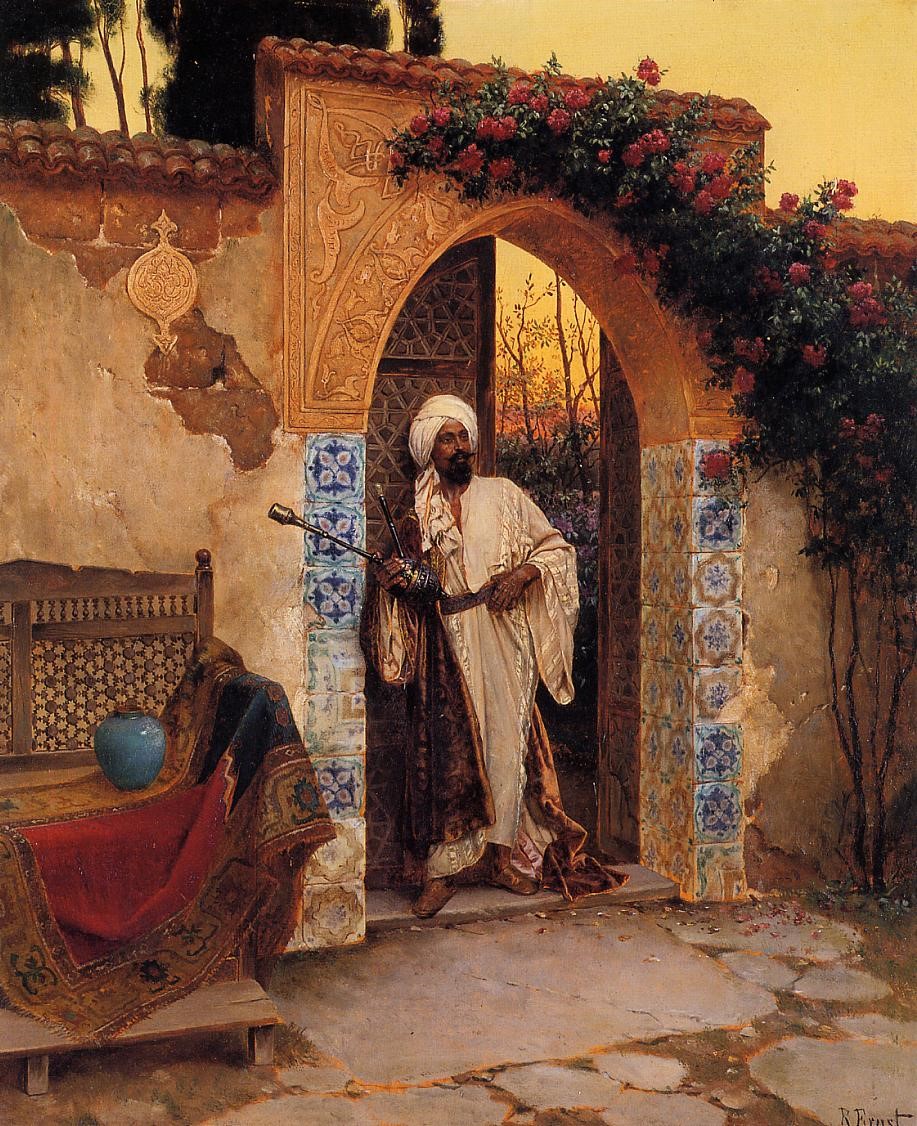
wonderful Austrian-French-Orientalist artist: Rudolf Ernst

Vienna was in turmoil in the mid C19th, starting with the Octob­er Re­v­olution in 1848 when Austrian Empire troops battled in the street with work­ers fighting for democracy. By late Oct, the imperial armies had bombarded Vienna and executed many. Thus Austria suffered an ugly period that lasted until WWI

At the entrance to the palace garden

Rudolph Ernst (1854-1932) was born to arch­itect Leo­pold Ernst, a man who enc­ou­r­aged his son’s interest in the arts. In 1869 dad sent Rudolf to study at the Academy of Fine Arts, where he himself had studied architecture in the 1820s. Rudolf’s dr­awing teacher was August Eisenmenger (1830-1907), a portraitist & mural painter famous for the Wiener Musik­verein ceiling panels.

In 1869, Ernst joined the Academy of Fine Arts Vienna at 16! In 1873, Ernst also began studying under Anselm Feuerbach (1829-80) at the Academy, an artist who had trav­el­led extensively and stud­ied at the Düsseldorf Academy. Plus he studied Gustav Wappers’ romantic style at the Royal Academy of Fine Arts in Antwerp. Wap­pers was influential on many of the next gener­at­ion of painters, espec­ial­ly Lawrence Alma-Taddema and Ford Maddox Brown. 

Ernst went to Rome to study classical and romantic land­sc­apes. Ernst left the Academy in 1874 to study Old Masters in Rome, and two years later, he moved to Paris. Both of Ernst’s parents had died during his years at the Ac­ademy, which must have made his decision to leave Austria easier.
 
1876 was a great year for a young art­ist to arrive in a city that was now the centre of avant-garde art. In Paris Ernst Frenchified his name, Rodolphe, and settled in Montparn­asse as both his home and studio. From 1877, he exhibited at the Salon of Fr­ench Art­ists every year, then opted for French nat­ionality, per­haps because of the increasing polit­ical tensions be­tween France and the Austrian Empire. [This was lucky; as a Fr­ench cit­izen, Ernst could remain in France during WWI while oth­ers had to leave]. In those early years in France, Ernst was exp­osed to Impress­ionism to academic art, from Barbizon painters to Realists.

Ludwig Deutsch (1855-1935) was another Viennese artist who arrived in Paris in 1878 to study with Carl Muller, genre painter special­is­ing in peasant scenes from Hungary, Italy and North Africa. Deu­t­­sch and Ernst met in Paris and remained close friends forever.

What caught Ernest’s attention was Orientalist art, peaking in the C19th and de­pict­ing the imagined repr­es­entation of the East by European artists. This movement blur­red the line bet­ween fantasy and reality, largely because the scenes were­n’t painted by locals. Ernst’s Orientalist era began in 1885 when he travelled to Spain, Morocco, Tunis and Turkey. There he was able to sketch and ph­oto­graph the lo­cals’ daily life so that these im­ages could later tr­ansformed into colourful canv­as­es and int­er­iors. The trip mark­ed a sig­nificant turning point for the artist; he was del­ight­ed to focus on colourful, exotic Orient­alism, espec­ially Islamic scenes eg the interiors of mosques and harem scenes.

After the Prayer
 
Back at home Ernst used gen­uine Orientalist artefacts that he had gath­ered, to create out­standing fantasy eg tiles, lamps, pottery, silks, satins and kaftans. His C17th Persian blue-white pot app­eared in Per­fume Makers. The C19th Sy­r­ian bronze lamp near the Chieftain app­eared in After the Pr­ayer and The Wedding Day. The red-gold emb­roid­ered silk Dam­ask curt­ain was used in Smoking the Hookah, and the Moorish octagonal blue-green tiles were used in Reading the Koran. The C19th Syrian in­laid table near the Chief­tain was seen in The Refreshment. And the Alhambra-style back­gr­ound was a favourite set­ting that Ernst reprised: Wedding Day, Moorish Harem Guard and Alhambra.

In the Alhambra
 
Ernst successfully submitted Orientalist paintings to the Salon beginning in 1887, and in 1889, he received a bronze medal at the Exposition Un­iverselle. Winning a medal meant that his pro­­s­pects for a successful career increased, so he con­t­inued to exhibit at the Salon for another three decades. And like many artists, Ernst also op­ened his atelier to students, probably in the 1890s.

In 1890, Ernst and Deutsch travelled to Constant­inople and Cairo, recording what they saw with photos and through buying photographs from local stud­ios. Ernst also collected quite a num­ber of objects that he sent back to Paris; these later became the props and back­grounds of his art and were often rep­eated in different canvases. See Deutsch's handsome Nubian Guard, painted in 1895 .

By 1900, Ernst added yet another medium to his oeuvre: ceramics. Incl­uded in his faience pieces were the expect­ed Orient­al­ist imag­es and eventually he branched out into the pro­duction and sale of Orientalist tiles, inspired by the Isl­amic tiles he had seen. Ern­st moved just outside Paris to a vill­age c1900 and decor­ated his new home in the exotic Ottoman style.

The war years were grim and the art sales collapsed. It imp­r­oved after the Treaty of Versailles was finalised in 1919, and Ernst again showed his work at the Salon in 1920. His friend Deutsch had returned to France by then, and had also become a French citizen.

Ernst worked at his various forms of art in the 1920s, occas­ion­ally visiting his old Montparnasse haunts. As one of the first ar­t­ists to see the advantages of living in the left bank neighbour­hood, he enjoyed the young artists, musicians and writers moving into the area. Rodolphe Ernst died in Paris in 1932 at 78.

The Flower Seller

Thank you to Wikioog.org for the images


19 April 2022

Orient Express Train, wealth, royalty, violence and sex - 1889


Fr­ancisco Maria de Borbón, Duke de Marchena, died 1923
Wikidata

Duchess of Marchena, Maria del Pilar de Muguiro, died 1926
Geneanet

By the late C19th, most European countries were connected by rail, yet train travel was often dirty, unreliable and with tricky border cross­ings. It was Belgian Georges Nagel-mackers who fell in love with the popular Pullman sleeper cars in the USA: clean, comfortable, hotel-like passenger cars designed for long trips. With the Belle Epoque starting to bloom, Nagelmackers saw an untapped demand for a new kind of travel, one that would combine glamour and luxury. So using the Pullman model, Pullman set about designing a sumptuous sleeper train in Europe.

By 1873 Nagelmackers formed his own company, Compagnie Internationale des Wagons-Lits. His huge vision was one that would sweep pass­en­gers from Paris to Constantinople in luxurious sleeper cars, without having to stop at 8 national borders. But the vision required a powerful patron, and King Leopold II of Belgium was that man. The CIWL soon provided top quality catering and accom­modation in the form of sleeper carriages, saloon carriages and dining cars. The lavish menu was matched with Bordeaux and Burgundy wines and quality French champagne. And the crystal glasses and silver cutlery impressed even the wealthy.

The Orient Express was revolutionary for the Belle Epoque cosmopolitans. A trip on the Orient Express quickly became a must for monarchs, millionaires and anyone who wanted to be part of Eur­opean high soc­iety. This was the train’s golden age! Convenient in­tercontinental transport, yes, but important for royalty, diplomacy, lux­ury and romance. Royals eg Prince of Wales and Emperor Franz Joseph of Austria, were reg­ulars. As were Kings Leopold II of Belgium & Ferd­in­and I of Bulgaria. Then mon­archs and aristocrats were joined by polit­icians, ad­venturers like Law­rence of Arabia, and famous figures from the arts. Elegance was mandat­ory, with a rigid protocol observed aboard in dress & behaviour.  

Orient Express saloon car
shared by all the guests on board, 1889
National Geographic History

Orient Express Dining Car with Lalique Inlay
Pinterest

Orient Express arrived every day at the fine Budapest’s Keleti Station. And when they chose Constantinople as the last stop in 1880s, the train left to continue on the journey eastward several times a week. Constantinople began to attract a new crowd: the ennobled and the monied classes of Europe. At first there were no hotels in the city that could meet the high standards of these Orient Express passengers. So Compagnie Inter­nationale de Wagon Lits bought Pera Palace Hotel. The Compagnie picked guests up from the train terminus in Istanbul and got them accom­modated in this, the classiest hotel. It was the first building to have electric­ity, elev­at­ors, and bathrooms with the only running hot water in the city. Tall spacious rooms were lit by magnificent chandeliers.

Agatha Christie made train-based crimes very well known & very pop­ular. This was not a problem as she based her fiction on real events; spies really did travel by Orient Express and some actual murders really did take place on board!

What I did not know of was a case involving the Spanish Duchess of Marchena, Maria del Pilar de Muguiro (1889-1981). She had married Fr­ancisco Maria de Borbón, Duke de Marchena (1861-1923) and cousin of King Alfonso XII, in 1886 in Madrid. Francisco was mentally unstable and violent, but owing to his royal status, divorce was impossible.

The Duchess, reputed to be one of the richest women in Spain, was tra­velling on the Orient Express in 1889. After leaving Paris, she app­ear­ed in the saloon with a swollen face, having been assaulted by her own husband. Another passenger, Basil Zaharoff, came to her aid and had the authorities arrest the violent Duke.

This Basil Zaharoff turned out to be a VERY wealthy, leading Greek arms dealer and a close col­league of world leaders like British Prime Min­ist­er David Lloyd George, Greek Prime Minister Ven­izelos and Ottoman Sultan Abdul Hamid II. Zaharoff had a very dodgy reputation, selling inadequate equipment to both sides of each war, at the same time. But he was rarely charged in court with bribery etc.

Duchess of Marchena married Sir Basil Zah­aroff in in 1924
 a second marriage for each of them.

Historians all agree the Duchess was married in 1924 to Sir Basil Zah­aroff, but there is no agreement on how close their friendship had been since the 1889 violent attack on the train. One view was that they had met briefly at the initial meeting, and only slowly had a love story developed, eventually ending in marriage when the Duke of Marchena died in a psychiatric as­ylum in 1923.

The other view was that the dealer and his lover had quickly been estab­lished in a Paris palace, after the Duke was firmly locked up. The Duchess had three daughters, all born in Paris and all after the entry of the Duke in the asylum. The title of Duchess of Marchena would pass to the eldest of her daughters, as promised by King of Spain Alfonso XIII before her remarriage. In any case Zaharoff acknowledged they were his daughters and always treated them as his own, so the best of both worlds for the daughters.


19 October 2021

"God sent smallpox to punish people??"

Lady Mary Wortley Montagu (1689-1762) was born in London, oldest child of the Duke and Duchess of Kingston-upon-Hull. Given access to her fam­il­y’s huge home library, this clever child taught herself Lat­in, cor­r­es­ponded with bishops, charmed her social circle, and quickly decided to become a writer. And she was independ­ent enough to reject her fat­h­er’s ch­oice of husb­and, eloping instead with a new Whig pol­it­ic­ian, Edward Wortley Montagu (1678-1761). She threw herself into London society and began writ­ing.

In 1715, this aristocratic young woman was struggling to breathe as her skin sprayed with deep, festering pustules. She was in an in­fl­amed and even violent delirium. Her husband prepare for her death because small­pox, the most deadly disease in the early C18th, had wip­­ed out more people than the Black Plague.

Mary Montagu with her son Edward (born 1713),
painted by Jean-Baptiste van Mour in c1717
National Portrait Gallery

Jo Willett's book, published 2021
Portrait by Godfrey Kneller, 1715

Smallpox was very in­fec­tious and killed one in four of the people who were infected. Sur­vivors were most often marked for life with deep, pitted scars. Mary threw off her infection but her once-flawless skin was scar­red, her eyelashes were gone and the skin around her eyes remained forever red and irritated. Ac­ross the centuries, smallpox has killed millions and disfigured many more.

After she recovered from smallpox, husband Edward Montagu was made ambas­sador to the Ottoman empire. Mary in­sisted on travelling with her hus­band and bringing their toddler abroad! She tur­ned the long trip into a series of let­ters home, collected into a volume of fine trav­el writing. She noted that the Turks had almost no scarring from the pox!

It was during her family’s 15 months in Constantinople that Lady Mary was introduced to a radical medical treatment, and in a 1717 letter home, she explained the process. It had long been recognised that people could only get small-pox once. If they surviv­ed, they were immune for life. Rather than take their chances with a natural infection and high fatality rate, older Turkish women in­d­uced a slight case in children by ingrafting. Smallpox caused blisters on the skin of pat­ients so the women took the pus from one patient’s blister and scrat­ched it into a cut made on a healthy person’s arm. This would lead to mild symptoms, followed by lifelong protection. These were inoculations.

When her husband heard that they were being recalled home, Mary made a secret decision. Her son, the first Englishman to undergo smallpox inoculation, never got the disease! She was determined to bring the technique home, In 1721, there was a smallpox epidemic at home, and Wortley Montagu asked the embassy doctor, who had come to London with her, to engraft her young daughter daughter Mary (1718-94), who had not been inoculated. Alas Lady Mary's enthusiasm for smallpox inoculation was ridiculed by the medical community as being dangerous and exotic.

The reasons were:
1. religious (Mus­lims cannot teach Christians);
2. medical (an untrained aristocrat lecturing physicians?);
3. sexist (a female changing the thinking of men?) or
4. economic (physicians profiting from useless treatments).
Mary believed the medical establishment opposed her for economic reasons!

Lady Mary sent out servants daily to gather the names of those who died from the dis­ease.  Then a proper experiment was carried out on 6 pris­on­ers at Newgate gaol, before the King’s own physician. Prisoners were inoculated and pr­omised their freedom, if they survived. Yet when the proc­ess proved safe, newspapers opposed inoculation. And clerics preach­ed against what they saw as Meddling with God's Will. Of course the pro­cess soon became politic­is­ed, with the Whigs in favour, and the Tories against.

Mary’s daughter recov­er­­ed, thrived and later married Earl of Bute, British Prime Minist­er. Faced with public proof of medical success, friends wanted their own children treated.

Edward Jenner administering a smallpox vaccine. 
He'd been inoculated as a child by doctors following Lady Mary’s ideas.
Guardian

Even Caroline Princess of Wales lobbied her father-in-law George I re inoculating the Royal heirs. He said no grand­children of his would be end­angered until more was kn­own about this strange Eastern cure. The king wanted proper tests! When the 6 New­gate pris­oners all did well, a second test was run on Lon­don orphans, Eur­ope’s best clinical trials to test safety and eff­ectiveness. The roy­al grand­daug­hters were inoculated and the pract­ice spread. Mary won; her work in­vited others to make advances.

Mary lived a good life, writing, travel­ling and mixing with intellectual colleagues. Only when her marriage to Edward failed in 1736 did Mary fall in love with a brilliant a 24-year-old Ve­n­etian Count, Francesco Algarotti. Al­g­arotti was the lov­er of her friend Lord John Hervey, so the rel­at­ionship soon ended. Mary never saw her hus­band again.

Jenner’s 1801 book that summarised his cowpox inoculation cases
Des Moines Uni Library

Being a woman meant Mary was barred from the Royal Society, England’s famous academy of sciences, fur­th­er dashing her efforts to gain official support for in­oculation. In­stead she spread the word among her friends and spent years trav­elling between aristocratic house­holds over the coun­try, in­oculating whoever consented. 

Decad­es later, Edward Jenner (1749–1823) showed that cowpox could be substituted for the more dang­er­ous smallpox. (Vacca, Latin for cow, gave the word vacc­in­ation). Jenner achieved all the fame; Lady Mary’s efforts laying the groundwork for smallpox eradication in the 1970s, faded.