Showing posts with label Brisbane. Show all posts

21 April 2026

Brisbane's noble 1886 Synagogue/shule

The first Jews in Brisbane were convicts in Moreton Bay penal colony in 1824 - home to repeat offenders who moved from larger NSW convict colonies where c1% of Moreton Bay convicts were Jewish. When Brisbane’s penal colony closed, a free settlement opened in 1842 with no ex-convicts. Instead some families came north from Sydney, seeking new prospects with Qld’s 1859 separation from NSW.

Byzantine minarets & circular stained-glass window 
Beautiful white building, the twin towers soared above the nearby buildings in 1906. 
Brisbane Synagogue in State Library’s collection 

In 1859 there were just enough Jewish men to form a 10-man minyan for worship but by early 1865, services were so popular that private homes were needed. More settlers came and the community needed a proper synagogue/shule. Most of the new Jewish residents settled around North Quay, meeting in each other’s homes on Sabbaths and holy days.

Ads Brisbane Courier, Mar 1865 said: All members of the Jewish community are requested to attend a meeting at Mr B Benjamin’s Queen St to form a Congregation. A committee was created, to find a fitting site and to recruit members. For 10 years the new group used a leased rooms in Queen St business buildings each Sabbath. Bulcock’s Building Queen St even has a historical wall plaque.

Congregation leaders approached the colony’s Surveyor General to secure land but unlike many Christian neighbours, Jews lacked the infrastructure & land holdings of Anglican and Catholic churches; Jews needed to raise building funds. But young Qld colony’s economy was unstable in the 1860s, closely tied to UK banking investments and agriculture. From mid-1866, a Depression caused financial disaster for many members who returned to Sydney bankrupt; the building fund ended. The other Jews used in rented rooms, buying ritual objects and helping fellow Jews who’d suffered in the Depression. However worship in a rented hall was uncertain eg women needing to sit upstairs.

Men's seating downstairs, women upstairs
 
Rev Jonas Myers moved to Brisbane in late 1865, as President, Treasurer, teacher and kosher butcher. A George St cottage in 1867 served as a synagogue and minister’s home, plus he travelled far up north in the Qld colony to serve their needs. But members who lived in central city liked Adelaide St while members settled in a commercial district Fortitude Valley didn’t. A long weekly journey by horse-cart was too long, so Rev Myers sold Adelaide St. Another man, business man Samuel Davis, built a small shule hall in the grounds of his big North Quay home in 1870, now Mater Misericordiae Hospital. But the Committee needed a permanent site.

In the 1860-70s many churches went up in Brisbane as part of the civilising role of the new colony’s architecture. Mean-while Jewish members renovated the Masonic Hall in 1876 and stayed until the new synagogue opened. Most early gentlemen’s social clubs excluded Jews from membership; only freemasonry’s universal outlook gave the chance for Jews to socialise widely. These men from Brisbane rose in the Freemasons’ ranks, incl President Adolphus Hertzberg.

To find a architect, some men offered design proposals. But the Building Committee’s decisions led to conflicts. The official Qld Government heritage register for the shule listed British Arthur Morry, engineer-architect-parliamentarian as designer in 1884.

Alas financial struggles continued when the Shule Building Committee asked for ambitious plans. Their minutes showed plans for a schoolroom, board rooms and upper Ladies’ Gallery, plus seating for 600 people within a budget of £3,000. Morry assured the committee that he could deliver their financial requests, but by Jan 1885 when the tenders were returned, the cost blew out. Using an image of the sh-ule’s planned design to raise subscriptions, they advertised in Jewish Chronicle newspaper in London and in the British Empire. The congregation was eventually able to raise £6,450 in private donations from local and overseas Jewish donors, incl from London’s Rothschild and Mocatta banking families. In July 1885 the Building Committee led by Rabbi AP Phillips laid the foundation stone to commence building, in a grand public ceremony reported in local papers. The Brisbane Courier newspaper discussed R’ Phillips speech about the importance of a fixed shule to the Jewish community, esp for the lonely immigrants.

In July 1886 the shule was finally consecrated in Margaret St. In the history of Qld Jewry, there was no more brilliant function than the historic opening of the new synagogue. It was full to capacity with congregants and public dignitaries, including the colony’s Chief Justice, Attorney General, Mayor and members of the Qld Legislative Assembly.

Raised platform & reading table holding Torah scroll while facing the ark.
Surrounded by prayer books for congregants to read in their seats

Holy Ark, the most sacred part of a synagogue,
resting place for Torah scrolls
 
Brisbane was an ornate & exotic marker of Jewish presence. The structure’s elegant design was referred to in reports as Byzantine style, like the public architecture across Europe deriving from C13th–14th Islamic design elements eg Spanish Alhambra. See a pair of minaret-style turrets out front, octagonal columns & horseshoe-shaped buttresses supporting the Ladies’ Gallery. The exterior had a Romanesque style ornate gable & circular tracery, while the interior had a Gothic cathedral style. The members belonged both as Jews and British Subjects in the colony.

As the community grew, school rooms were added in 1906; in 1920s a newly-built hall with a retractable roof was used for Sukkot harvest festivals. Then as time passed, a large new group of Russian Jews, culturally distinct from the older Anglo-German Jews, arrived in the early C20th. They had different identities, speaking Russian and Yiddish, and not feeling comfortable in Margaret St Synagogue. So they created South Brisbane Hebrew Congregation, their own timber shule in Woolloongabba, 1915.
 
When German Nazism rose in 1930s, some cultured artistic & religious Jewish refugees fled to Brisbane. Their experiences had a profound effect on the community, esp when Brisbane became the epicentre of WW2’s S.W Pacific campaign. Hundreds of American Jewish servicemen flooded into Qld and sought the comfort of Jewish religious practice in shule.

Stained glass

In 1955 a grand 2-storey Memorial Hall opened for social events and learning. In 1986 new and elegant stained-glass windows were based on Torah stories; and a Star of David behind the Rabbi. The shule remains a testament to the early pioneers who dedicated themselves to Brisbane’s community. Thanks to Morris Ochert for History of the Brisbane Hebrew Congregation, 1984


02 August 2025

Remembering WW1 in Queensland


ANZAC Day dawn service, 2022

    
After years of pandemic lockdowns, crowds were again free to at­t­end Anzac Day dawn services & ex-servicemen marches on 25th April 2022. And thousands did!! 

But ANZAC/Australian & New Zealand Army Corps Day may have ch­anged over the decades; critical debate and political controversies are being raised now. The divisiveness is about the compulsion to be pa­t­riotic and stand by the historical massacres at any cost. Many think we sh­ould commemorate Armistice Day instead, when world peace was dec­lared at the 11th hour on the 11th day of the 11th month. Note however that Remembrance Day never had the nation-building dimension in Australia that Anzac Day has.

The memorials erected in or after WW1 became Austr­al­ia’s first monum­ents, recording the devastating impact of WW1 on a young na­tion. Australia lost 60,000 from only 4 million people. Even before the war ended, memorials became a vis­ible expression of national grief. To those who created them, they were as sacred as grave sites i.e graves for the Austral­ians whose bodies still lay in European and Midd­le Eastern battle­fields. Brit­ish policy decreed its bodies were to be bur­ied where they fell and never taken home.

The Melbourne Shrine was very big and impressive, taking years to complete, and it wasn't officially dedicated until 11th Nov 1934 by the Duke of Gloucester. 300,000 people met to watch that 1934 event, and there was a commitment that the shrine would al­ways have an unimpeded and uninterrupted view from the city.

What about Queensland?  The most prominent building is the circular Shrine of Remembrance and the Eternal Flame which stands proudly and solemnly at the top of the Gardens. It is 10 metres in diameter and consists of a Grecian Doric circular colonnade of 18 columns representing the year of peace, 1918. Written around the top of the structure are the names of the major battles in which Australian units figured prominently such as ANZAC, Cocos Isupoli and Villers-Bretonneux.

Shrine of Remembrance in Anzac Square, Brisbane

Boonah War Memorial (pop 2000) was in a town in South Qld where the foundation stone was laid in May 1920; it was unveiled in July 1920 as part of the visit to Boonah by the Prince of Wales-later King Edward VIII. The marble and granite memor­ial was designed/made by Ipswich masonry firm Williams & Co, honouring local men who served in WW1.

The £600 cost was raised by public subs­crip­­t­ions, organised by a mem­orial committee. Memorial Park in Boonah was enclosed by a brick and wrought iron fence, with wrought iron gates at the front and rear cor­ners, flanked by pillars with ball fin­ials. A central con­crete path led to the memor­ial which was surround­ed by tier­ed garden beds. A flagstaff was located on the south western side. The specifically des­igned memorial park and fence were opened on Anzac Day 1922 by war hero-politician Capt Arnold Wienholt.

ANZAC Day Service, Boonah Memorial, 1924.
State Library Qld.

Australian war memorials were distinctive in that they commemorated the dead lads AND also the survivors. Australians were proud that their first great nat­ional army, unlike other battling armies, was composed ent­ir­ely of vol­unt­eers, men worthy of honour. Many memorials honoured those who served from a local area, providing valuable evidence of community in­volvement in the war. [In my generation, conscription for the Vietnam War was hated].

WW1 soldier statue, 
Boonah Qld

Australian war memorials also displayed imperial loy­al­ty; the skills of local stonemasons, metalworkers and architects. In Queensland, the soldier statue (above) was the pop­ul­ar choice of memorial, whereas the obelisk (below) prevailed in the south­ern states, ? because of Queensland's larger working-class pop­ulace. The soldier embod­ied the ANZAC Spirit and the qualities of the ideal Austr­alian man: loyalty, courage, youth, informal­ity.

Immediately following the 1918 Armistice, a grateful Com­mon­wealth Gov­ern­ment brought captured machine guns to Aust­ralia, and distributed them to towns and cities. A local display of captured weapon­s was esp­ecial­ly import­ant for this young country, far removed from the Europ­ean battle fields. It was also a nation that had suffered the highest per capita casualty rate of any combatant nation in WW1! After a long public debate, the State War Trophy Committee dec­ided that troph­ies would be allocated on the basis of population, rather than on enlist­ments. For Queensland, this meant that only lar­g­er towns could apply for larger, more valuable guns. Note the Commit­tee believed Boon­ah’s popul­ation to be too small to apply.

Trophy gun from WW1, 
Boonah Memorial park

Great War guns trad­ed on the open market would have been a controver­s­ial process back then, when emotions were still raw and when the dist­rib­ution of war trophies was strictly controlled by State and Commonw­ealth agencies. Thus Boonah be­came the only Australian town ever to buy a privat­ely-owned trophy gun on behalf of community.

The Boona memorial was made of coarse marble, a pedestal surm­ounted by an obelisk and a digger statue, and sitting on a marble base. The columns were surmounted by four marble corner urns, and in the centre of the columns see the marble plates with the names of the 374 local men who served in WW1. The 69 locals who died were named on the front and the rear recorded the names of nurses and chaplains. Projecting from the centre of the pedestal was the tapered marble ob­el­isk, 6 m high. Surmounting the obelisk was the digger stat­ue, the Australian soldier standing at ease with his head bow­ed and his hands resting on his reversed rifle. Queensland War Mem­or­ials provided evid­ence of an era widesp read Australian patriotism & nationalism in WW1.

Boonah Memorial park
Facebook


06 May 2025

Hobart Town Hall fine architecture 1866.

When Hobart Town Hall had its 150th birthday, spouse and I sailed on the Spirit of Tasmania, from Melbourne to Devonport, to join in the celeb­rations. Joe lay on the bunk, seasick, for the ent­ire journey – I went to a concert, a film and a restaurant on the ship, and had a great trip. After he rejoined the human race, we drove to Hobart, to inspect the Town Hall and other significant 19th century architecture. Thank you for Municipal Magnificence by Peter Free­man, a great book docum­enting the history of Town Hall and its place in the City’s life.

Front portico and columns, Town Hall

Henry Hunter (1832-1892) was born in Nottingham, younger son of architect Walter Hunter. Educated at a parish school in Wolver­ham­pton, he studied at the Nottingham School of Design. Henry and his siblings migrated to South Australia in 1848 with the parents and, after their parents died, to Hobart. Next Henry went to the Bendigo goldfields and then back to Tasmania to work in the timber trade. He moved to Hobart to work in a shop but in 1856, encouraged by the Catholic Bishop Robert Willson, he began to practise as an architect. Hunter was one of the few Roman Catholic professional men in Hobart.

The architect’s admiration for Augustus Pugin, leader of the English Goth­ic revival movement, influenced his work in the many chur­ches he designed around Tasmania. The architect for the new St David’s Cathedral was George Bodley, a British leader of Gothic Revival in church architecture. So in Hobart itself, Hunter became the supervising architect for St David's Cathedral.

Hunter's commission came in Sept 1860 when Bishop Willson laid the foundation stone of St Mary's Cathedral Hobart, adapted from British architect-Melbourne resident William Wardell's design . Bishop Murphy opened the cathedral in 1866, but the con­struction was faulty - the pillars of the central tower moved, and stone fell from the ar­ch­es. Hunter examined the work and recommended that the cathedral be rebuilt. A public meeting in Feb 1876 decided that the central tower, aisles & walls be demolished and rebuilt according to the original plan. Hunt­er, now Hobart's Town’s most successful arch­itect, supervised the demolition and later laid the stone for the cathedral’s new incarnation.
              
   Long gallery, Town Hall  
             
By 1862, Hunter was very busy. He designed and built Derwent & Tamar Assurance Offices, Masonic Hall, Australian Mutual Provident Society's Building, and Hobart Museum. He planned wards and offices for the General Hospital, designed schools for the Board of Education, warehouses, Marine Office and Elwick race-course grandstand.

And now, his master piece!  The Municipality of Hobart held the early Council meetings in temporary premises and the streets defining the site of the Town Hall were completed following demolition of the old Government House in 1858. Henry Hunter prepared plans and was awarded an hon­our in a compet­it­ion conducted by the Hobart Municipal Council for their new home. His Gothic design was acclaimed as “a fine composition of unusual breadth and unity of line” yet his first plan was not accepted. I am assuming that Gothic architecture was either too Catholic for the good public servants, or was too old-fashioned for a new, modern city. 

So Hunter was given 6 months to submit a new Italianate model, this time based on the Palazzo Farnese in Rome. Construction on Hobart Town Hall created part of the now-historic Macquarie St stretch of sandstone. The found­at­ion stone was laid in April 1864, a day that was de­c­l­ar­ed a public holiday and celebrated with a parade. It was completed two years later in Sept 1866, complete with its large windows and symmetrical portico with columns. Once again the day was celebrated with another public holiday and a gala ball.

From the start, the Town Hall was designed to house the City’s coun­cil chambers, police offices,  municipal court and State Lib­rary of Tasmania. And the organ has been in use since 1870. In 1871 a stone wall was erected around the boundary, with trees obtained from the Botanical Gardens for landscaping.These facilities remained in use for c50 years after the town hall first opened.

WW1 Honour Roll, Town Hall

Macquarie Manor was originally built as a home for surg­eon Dr Richard Bright. In 1870 Dr Bright commissioned Henry Hunter to design and oversee the construction of a residence perfect for a gentleman. It was!

On a visit to Queensland, Hunter formed a partnership with his son and a former pupil, and settled at Brisbane in 1888. Although spec­ial­is­ing in domestic architecture, his firm did design some larger Queensland institutions. Henry was still in Brisbane when he died, in 1892. 

By 1925 the state of the Town Hall’s prominent portico had degener­ated to the point it was declared unsafe and major restoration work was re­quired. Only then were the building's famous chandeliers instal­led in the ballroom,  each having 84 gas jets that were imported from the UK.

Macquarie Manor, Hobart
Architect: Henry Hunter built 1875
On the Convict Trail

Henry Hunter had left behind one of the nation's oldest council build­ings, in Australia's second oldest city. Today Hobart’s Town Hall is an ideal venue for exhibitions, balls, concerts, large meetings, citizenship ceremonies and cocktail func­t­ions. The main hall now seats 600 and the gallery seats 675 more. On The Convict Trail is excellent.
                                             
jam factory built 1869
now Henry Jones Art Hotel, Victoria Dock Hobart
Walk Into Luxury


04 July 2023

Is Cremorne the most beautiful Queenslander home in 2023?


Cremorne House in Hamilton Brisbane
built in 1905, expanded since
news.com.au

Queenslander Houses were built in an architectural style very popular throughout Queensland, from Brisbane in the south to the tip of Cape York. The style was common from the 1840s until the post-WW2 era and was mainly used in residential build­ings. Plus I have seen some very beautiful Queenslander Pubs with gorgeous wrought iron lace work/filigree wrapped around the balconies.

Two elements best differ­entiated the Queenslanders from homes in the southern, cooler states: a] they had wide and long verandas, and large double doors which opened onto these verandas. And b] they were typically raised on vertical timber stumps. The use of timber stumps went into disfavour in the post–WW2 era bec­ause any new stumps or any replacements for old stumps must now be steel or concrete. Being built on stumps prevented the homes being inundated in flood prone areas, particularly in the older suburbs.

In pre-air conditioning days, Queenslander Homes made the most of passive climate control. Any breeze that arrived in the summer ev­enings blew underneath the raised houses and increased the ventil­ation. Internally the large doors and windows were lined up inter­nally, once again to increase any natural ventilation, and windows were often louvered to allow for air circulation. The breezeway fretwork design, above the doorways, allowed for moving breezes

Roofs were generally made of corrugated iron or tin, and external walls were clad with timber. The verandas were as wide as possible, to protect against the over­head summer sun and to increase shade. Very often subtropical trees were planted close to the outer walls. The space under the house, raised high on stumps, created space for children to use on days when it was too rainy to go out­side.

The biggest building boom was after soldiers return­ed from WW1. By the time they had returned to civilian life in 1919, then entered studies and marriage, many new houses were needed thr­oughout the 1920s-early 1930s. Families with money built more extr­avagant Queenslanders, still with the wide verandas and under house playing space, but with gazebos, corner bays and exotic roof lines.

Queenslanders were not identical in shape. Asymmetry could be used and the gable could be placed to one side of the main roof. There were usually 2 ver­andas but they too could be asymmetrical; one was at the front, and the second ran down one side of the home.

Overlooking the beautiful Brisbane River
Real Estate Conversation

Now let me look at a luxury Queenslander I'd never seen before, in the very affluent Brisbane suburb of Hamilton and in one of the city’s most expensive streets. Cremorne is a heritage-listed mansion that was designed by Eaton & Bates, and built in 1905-6 for Brisbane publican James O’Connor. The original home fea­tured Colonial-era architecture, including a veranda complete with octag­onal rotundas, beautifully overlooking the Brisbane River with am­azing 180-degree views from up on Hamilton Hill.

Brisbane's architectural history was might have been destroyed in the 1960s-80s with the demolition of important cultural build­ings and the removal of c1000 Queens­lander homes per year. I clearly re­member the Nov 1982 crisis when the destroyers moved in to wipe out Brisbane’s iconic Cloudland. I won­d­ered back then if there was any heritage overlay for surviving Queenslanders but fortunately Cremorne was added to the Register in Oct 1992.

Luckily Cremorne survived and for three generations it remained in the family. In 1998 former Bretts Wharf restaurant co-owner Genny Nielson bought it. During her tenure, Nielson lovingly restored the home to its former glory and added a modern extension with archit­ect Brian Donovan, retaining the charm and character of the Queens­lander but adding modern luxury essentials eg a wine cellar.

Then it was bought for $6.6 mill by Fonezone co-founder David Mc­Mahon in 2015 and was ren­ovated  and ext­ended to re-create a glam­orous residence. Set on 2400 sq m, the property spans two lev­els, has many large livingrooms, 3.8m high ceilings, intricate cornices and ceiling roses, stained-glass windows, original fire­places and chandeliers.

A loungeroom with original ceiling decoration, stained glass windows and fireplace.
Real Estate Conversation

 Then Galen and Lynda Gunn paid $6 mill for the pro­p­erty in 2017. Ga­l­en came from a Qld gr­azing dynasty; grand­father Sir William Gunn was a ren­owned wool and cattle identity. La­t­er the Gunns co-founded an av­iat­ion company that uses technology to prov­ide aerial survey serv­ices to the pow­erline and utility sec­t­ors ac­ross the country. The grand colonial resid­ence has a very recent con­temporary archit­ectural extension and ...did I say the views from the sweeping ver­an­das are incredible?

This historic house sold for $8m in June 2023.


10 December 2022

At least Australia had no Trump or Bolsonaro! Oh really???


Joh and Flo Bjelke Petersen
Courier Mail, 1996

The STATE politician Johannes Joh Bjelke-Petersen (1911-2005) ser­ved as Queensland Premier for 20 years. He was born in New Zealand and immigrated with his Dan­ish Lutheran pastor fam­ily in 1913. In Qld Joh left school at 13, remaining a peanut farmer at his Kingaroy home where he pioneered aerial spraying and seeding

Joh entered Parliament as a Country Party-National Party member in 1947. He first entered the Cabinet as Min­ister for Works & Housing in 1963, and became Premier in 1968. The controver­sial Bjelke-Petersen dominated Qld politics for 20 years, an out­spoken reactionary with clear hostility to civil rights, environment, soc­ial wel­fare, org­anised unions and land rights for Aborigines.

His favouritism towards big business in Qld was even clearer and like many pop­ul­ists, he was impatient and con­fron­t­ational with parl­iam­en­tary proced­ur­es: he abused parl­iam­entary ar­rangements, denied the Opposition its le­gitimate access to facilities, suppres­sed deb­ate, denied in­form­ation to the media and often for­ced ill-conceived, hastily drafted legis­lat­ion through Parliament.

Queensland was the only Australian state that didn’t have an Upper House; its unicameral parliament meant the normal checks and bal­an­ces were absent. Worse still were: the weak Labour Party opposit­ion; Bjelke-Petersen's total control over his Conservative Liberal Party coalition partner; and his dominat­ion of the Cabinet room.

In the tradition of agrarian populist politicians, Joh did­n’t worry about his inability to articulate. His fav­our­ite answer to ANY question: Now, don't you worry about that

Among crises that brought him to attention at a national le­vel, in 1971 he declared a state of emergency in Queensland as a re­action to demonstrations against touring South African Rugby Union Springboks.

In 1972-5, Bjelke-Petersen clashed with the Federal Labour Prime Minister Gough Whitlam. Joh established himself as a maj­or political figure and a strong voice for states' rights, ded­icating himself to one cause: the obstruction and destruction of the first Federal Labour government since 1949. In 1975 he played a key part in under­min­ing that Labour government; in defiance of est­ab­lished tradition, Bjelke-Petersen selected his own candidate to fill a cas­ual Senate vacancy in the Federal Parliament, thwarting Labour's at­tempt to gain a Senate majority. His plot was crit­ical to the events leading to Gough Whitlam being sacked as Prime Minister in Nov 1975.

Police dragged protesters into gaol
"How far with Bjelke-Petersen go?"
Nation Review, 1977

Bjelke-Petersen continued his tough right-wing policies. In Sept 1977 he banned political protests, leading to cl­ash­es with uranium protesters, unionists, students, liberals and mostly women. He showed little concern for heritage and environmental is­s­ues, attracting public fury over the 1979 dem­olition of Brisbane's hist­oric Bellevue Hotel, and favouring oil drilling IN the Great Barrier Reef. He revealed a mor­alistic stroke, ban­ning Play­boy magazine, opposing school sex educ­ation and condom ven­d­ing mach­ines, and trying to ban women flying interstate for abortions 1980. He tried to ban gay teachers from being employed in schools.

Bellevue Hotel Brisbane
built 1885, demolished 1972
State Library Qld

His wife Florence/Flo was seen as an integral part of Joh's polit­ic­al life. As an extension of his political perf­orm­ance, Flo was un­wav­ering in her partisanship. She was elected to the Federal Senate in 1980 as a National Party member for Queensland, commanding resp­ect in her own right while being seen as Joh's “Federal rep”.

He also rel­ied on corrupt­ police to prop up his govern­ment. Dissenters faced police brutality in the streets. Repressive laws that banned protests meant tak­ing to the streets could result in im­prisonment for protesters and the media. In 1980, despite crit­ic­ism by lawyers and civil lib­er­t­ies groups, Joh’s new Pol­ice Act further empowered the police.

In 1983 Bjelke-Petersen led his National Party to a vic­tory where he formed a one-party state government, rather than gov­erning in coal­ition with the Conservative Liberal Party. Owing to Qld’s electoral gerrymander, small populated rural el­ect­orates dominated highly pop­ulated urban ones i.e the National Party won with 39% of the vote, while Labour lost on 44%. This biased system, a Bjelke-mander, oper­ated in total def­iance of the principle of one person one vote.

In 1986 Bjelke-Petersen sensed a loss of direction at the Federal level among the con­servatives. He led a campaign, Joh for PM, to have himself elected to Federal Parliament. But Jo’s bid for pow­er split the Federal Coal­ition.

In May 1987, ABC tv prog­r­amme Four Corners aired the first public allegations of organised crime and police corruption in Qld. Cap­it­alising on the Conservat­ive’s internal dissent, Labour’s Bob Hawke easily won the 1987 Federal election!

The story didn't end for Bjelke-Petersen. In Sep 1991, he was tried for corruption and perjury, but a hung jury set Joh free. [The jury foreman, a member of Bjelke-Petersen's National Party, had assisted in fund-raising for Joh’s legal expenses]. Soon the Qld government amended the Jury Act and set up a permanent criminal justice commission.

The media announced the resignation of premier Sir Joh Bjelke-Petersen 
and police commissioner Terry Lewis.
Courier-Mail, 1987

Summary
Bjelke-Petersen’s reign as Queensland’s premier began in 1968 and ended ingloriously in 1987 with the Fitzgerald Inquiry in­to pol­ice corruption. Over 2 years, they un­cov­ered a deep web of corr­upt­ion implicating many at the high­est levels of government and police.

Joh was certainly guided by a shrewd politic­al aw­are­ness. He styled himself as a defender of a unique Qld sens­ib­il­ity and scorned the pro­g­res­sive states, using fear and prejud­ice for el­ec­toral gain. Qu­een­s­l­and’s longest-serving premier left a difficult, undemocr­at­ic leg­acy.

Many thanks to Your DictionaryABC News and The Conversation 


01 November 2022

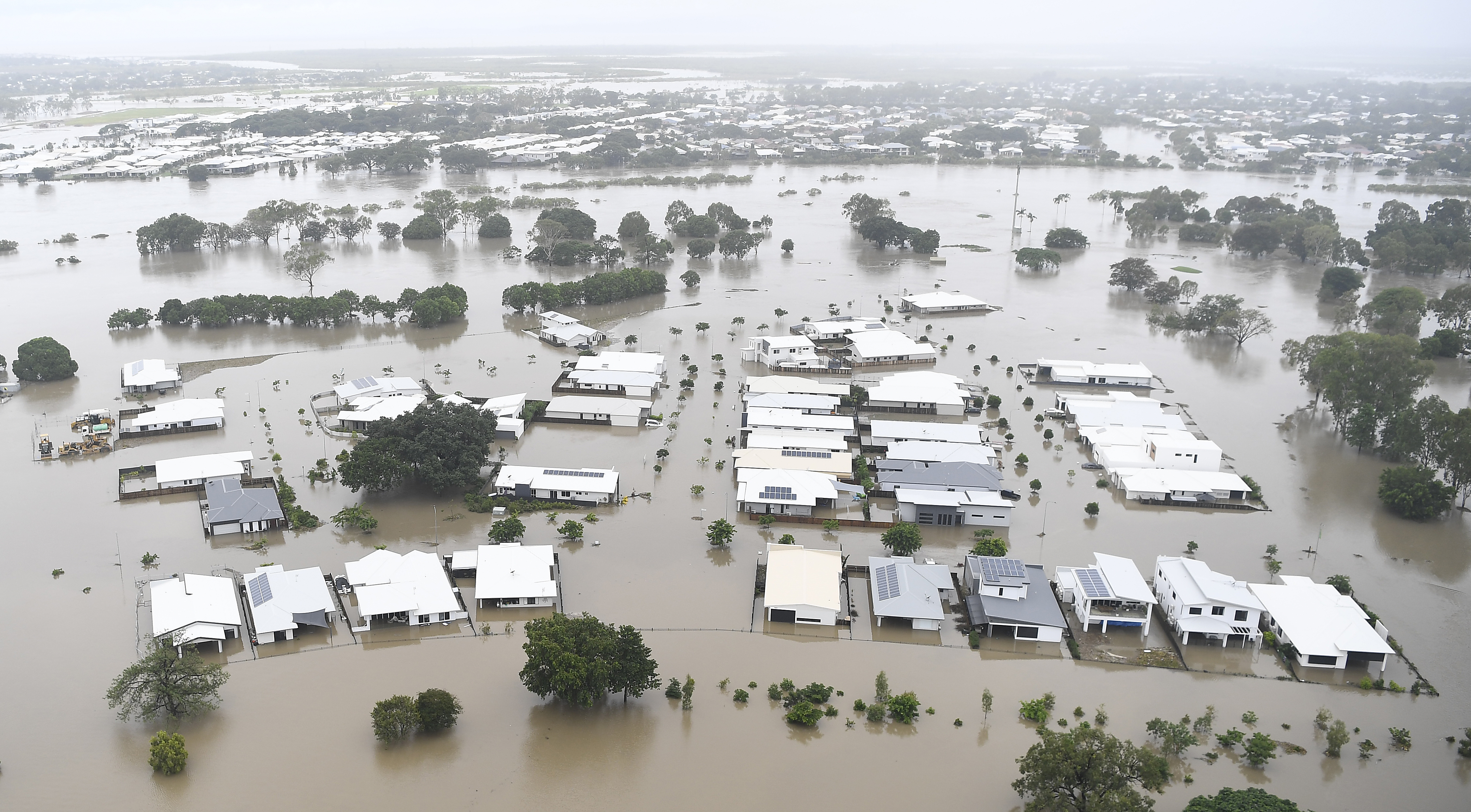
Australia's deadly floods, October 2022

Australia is a continent that is arid over 70% of the land. Even in the 30% with rivers and trees, it is mostly known for its constant, very dangerous bush fires. But now we have to examine the three main types of flooding Australia has had.

 Townsville, Qld
npr

Maryborough, Queensland
Floodlist

1.Riverine floods are the most common form. The two main contrib­ut­ors to riverine flooding are heavy rainfall and the land’s capacity to absorb water. When the land is satur­ated, the excess water flows into river systems and pushes the overflow onto the adjacent low-lying areas.

2.Flash floods occur from short intense bursts of rainfall, as during a thunderstorm. They can be particularly dangerous in ur­ban areas where drainage systems cannot cope with the amount of water. As the water rises quickly, the drainage system may have insuffic­ient capacity or time to cope with the downpour. Alth­ough flash floods are generally localised, they may pose a signif­icant threat because of their short duration and unpredictability.

3.Coastal floods happen when a low-pressure system or strong onshore winds force sea levels to rise above normal levels, creating a storm surge that floods low-lying areas. All type of floods can be class­if­ied as minor, moderate or major bas­ed on their impact on communit­ies and infrastructure.

Floods occur all over Australia, however different types of floods are common in different regions. Location determines what type of flooding is likely to experienced: river, flash or costal flooding or a combination. In the extensive flat inland regions, floods may spread over thousands of square ks and last sev­eral weeks.

The damage from floods can be varied, extensive and far reach­­ing. The immediate impacts of flooding include loss of human life, long term damage to property, crop destruction and loss of live­stock. The ongoing emotional impact is often terrible, as are the em­otional st­ress and physical illness from waterborne diseases. Floods also dam­age power transmission and sometimes power gener­at­ion, which then has knock-on effects caused by the loss of power.

The 2022 flooding was caused by a low pressure system over Queens­land's southern coast that dragged in moisture from the Coral Sea in the north, raising it over the Queensland coastline. The low press­ure trough delivered the rainfall but an area of colder air higher in the atmosphere was drifting in, making the atmosphere unstable and permitting moisture to be lifted up and dropped as heavy rain. 

Hawkesbury River, New South Wales
Desdemona Despair

Lismore, NSW
 
The 2022 eastern Australia floods were one of the nation's worst re­corded flood disasters that occurred in S.E Queensland and in­to coast­­al NSW. Brisbane suff­ered major flooding, as did the cities of Maryborough, Sunshine Coast, Gympie, Cab­oolture, Too­woomba, Ips­wich, Logan City, Gold Coast, Murwillumbah, Mullum­bim­by, Grafton, Byron Bay, Ball­ina, Lis­more, Central Coast and Sydney. Clearly as the system headed south, it turned into an East Coast Low near New South Wales/NSW’s Central Coast and Sydney. It will not surprise anyone that Sydney received more rainfall this October than any other October total in almost 170 years of record-keeping.

22 people so far have died in the 2022 floods. Across S.E Queens­l­and, 1000 schools were closed in response to the flood­ing, evac­uat­ions were urgent and the public had to avoid non-essential travel. Food shortages occurred across the region due to the ensuing supply chain crisis in outback Queensland. The flooding caused the ground across S.E Queensland and Northern NSW to become saturated and vul­nerable to even small amounts of rain.

While the amount of rain was less than the huge volumes seen in eastern states earlier in the year, the situation in the southern state of Victoria was made worse by the ground already being sat­ur­ated. Victoria had experienced its wettest Aug since 2010, and Sept rainfall was above average across most of northern Victoria. 

Residents in Echuca, Victoria
building sandbag levees to protect their properties
theguardian

Shepparton, Victoria
NYTimes

Shamrock Hotel, Rochester Vic
Watoday

A low pressure system travelled east over the nation, bringing the rain which hit southern Australia throughout Oct. As torrential rain swelled many of Victoria's major waterways to flood level, tran­­s­port routes were cut, homes were inundated and communit­ies were isolated. Victoria's floods were particularly severe along the Goulburn, Loddon and Campaspe Rivers, and on the Murray River. The third yearly La Niña event in a row was an important driver of rain in spring and summer. But the Indian Ocean electric dipole was really the main cause of the recent inland crisis.

La Trobe, Tasmania
weatherzone

South of the mainland in Northern Tasmania, some of the most signif­icant flooding that they’ve had for years have subsided. But the wea­th­er system that pushed through in October has again lifted some of the northern river levels. And many of the catchments that were affected weeks ago have already received warnings that more rain was coming. Tas­manian residents in regions hit by recent floods are now preparing again as storm fronts move over the island state. Moderate flood warnings are in place to northern towns near Launceston, places already flooded.

Flooded areas across Australia, 2022
phys.org


06 June 2020

3rd luxury train Aus: Great Southern Rail

My goal years ago was to travel on every long, luxury rail trip in the world. And to write each experience up in this blog, achieved so far for Australia, Canada, USA, Japan, Southern China, Singapore, India, Spain, France and Britain.

Since then, I read and loved the book Night Trains: the Rise and Fall of the Sleeper by Andrew Martin, 2017. Now is a great time to review the 2 historical luxury train services in Australia and to introduce our newest luxury train.

1] Australia's most famous train, The Ghan, started in 1929. Or­iginally known as the Afghan Express after the C19th Muslim camel­eers who helped pioneer Austr­al­ia's red interior, it first moved north from Adelaide on its inaugural jour­n­ey to Alice Springs. The track extended to Darwin in 2004, stopping in Katherine and Alice Springs.

The modern journey takes 3 days/2 nights northbound and 4 days/3 nights southbound, including a stay in Coober Pedy. The fares range from $1,049 pp to platinum from $2749 pp.

Australia's 3 luxury train trips

2] The first Indian Pacific, one of the world's few transcontinental rail adventures, first set off from Sydney to Perth in 1970. Thous­ands of well-wishers were gathered a few days later to welcome the Indian Pacific's safe arrival in the capital of Western Aust­ralia. It was the first time one train had been able to complete the 4,352 ks journey from ocean to mighty ocean, using a common rail gauge.

The long trip stopped at Broken Hill, Adelaide, the South Austral­ian wine regions, Nullarbor Plain and Kalgoorlie. But the off-train excursions differ, depending on whether the visitors are travelling eastward or westward. The gold single starts at $1789 pp while the Platinum starts at $3799 pp.

Both the Indian Pacific and The Ghan include great food and wine. While travelling on board, visitors can focus on local foods and wines from the regions the train passes through.

**

Thank you to Steve Meacham for the history and photos. Since 2004, when the previously unprofitable Ghan line was expanded north to Darwin, it and the Indian Pacific have been in the fore­front of a renewed global interest in luxury rail travel. The slow train connected to the human psyche; being on the train was wond­er­ful, and so were the off-the-train activities. The two long Aust­ralian train journeys were very popular and there was a nine-month waiting list for the Ghan and Indian Pacific! Other luxury oper­at­ors in Canada, Europe, South Africa and Chile reported similar suc­c­ess rat­es. People loved the romance of luxury train trips, transformed into high-value, more experiential adventure.

3] More than a year of negotiations with the Nation­al Rail Freight Corporation went into planning Australia’s newest route. Now Aust­ralia has got its third epic, luxury, multi-day rail adventure - the Great Southern Rail. Dec 2019 was the start, but Australia was diverted within a couple of months by coronavirus. Great Southern Rail will again be one of the world's great new generation of railway journeys, from Adelaide to Brisbane and return, with multiple experiential stops in between.

Each trip takes 218 guests. Both gold and platinum accomm­od­at­ion is provided in single or twin cabins, with on-board dining, beverages and off-train excursions.

A 3-day/2-night adventure from Adelaide to Brisbane has stops en route. The trip leaves Adelaide in time for lunch on board. Most meals on the Great Southern's rail adventures are eaten in the train’s dining cars: watching the scenery go by is part of the rail exper­ience. At Victoria's Grampians, the train stops so pass­eng­ers can explore a lovely part of Australia. Walk to MacKenzie Falls after lunch, where the steep trail shows water cascades over huge cliffs into a deep pool. Or perhaps an hour or two at Brambuk, one of Austr­al­ia's greatest Indigenous interp­ret­ative centres.

The Grampians

Passengers are welcomed back on the train with cocktails. Appropr­iately the livery of the diesel engine pulling the Great Southern train is burnt orange, matching the Australian bush and hot beaches

The Brisbane-Adelaide return is a 4-day/3-night trip, with a Hunter Valley stopover. After departing Brisbane, enjoy lunch on board and a rel­axing aft­ernoon settling in a private cabin before arriving at the coastal town of Coffs Harbour. Visitors can choose to meander through the historic vineyards of the Hunter Valley, sampling wines from bout­ique cellar doors and enjoying a sumptuous lunch.

Or visit Newcastle with amazing coastal views and historical Fort Scratchley. Finish the day with a visit to Strzelecki Lookout and stroll along the Newcastle Memorial Walk.

Or explore beautiful Port Stephens. Travel to Nelson Bay for a relaxing cruise spotting dolphins and taking in the beauty of the Bay before a fresh seafood lunch at the Marina while the waves lap at the shore nearby. Next stop is exploring the Stockton Bight Sand Dunes in 4WD vans. Then return to the train for dinner.

Cocktail lounge

The cabin during the day

The cabin at night

The dining room

Great Southern train from Adelaide to Brisbane: Australia's new luxury train unveiled noted that Sydney and Melbourne were not included in the trip. Next day after bunch aboard, visit Moorabool Valley and wan­der along the Geelong water­front, discover public art on the fore­shore and enjoy the Pier, Eastern Beach and Baywalk Bollards. Then set off on a coach trip through regional Victoria to the Great Ocean Road to see unforgettable highlights eg the Twelve Apostles, Loch Ard Gorge or the majestic London Bridge. Finally journey through the charming Adelaide Hills and enjoy the last breakfast on board before arriving into Adelaide.

Post coronavirus, fares will restart from $1649 per person for Gold service and $3899 per person for Platinum service.


28 January 2020

the amazing Anna Pavlova in Australia - 1926 and 1929

The Russian ballerina Anna Pavlova (1881–1931) was initially believed to be too tall and not athletic enough to succeed at ballet, yet still graduated from the Imperial Theatre School in St Petersburg in 1899. In 1906 she was promoted to prima ballerina. Although she performed in the opening season of Serge Diaghilev’s Ballet Russes in Paris in 1909, she did not join the avant-garde outfit. Instead, in 1911, she form her own company which toured until her death in 1931. This star had my three most important qualities, being Russian, a great artist and an independent, strong woman.

Pavlova and her own company of dancers made two tours to  Australia in 1926 and 1929 when they toured for the famous JC Williamson organisation. During her first tour in 1926 Pavlova and her 45 dan­cers visited Melbourne where His Majesty’s Theatre was the venue for the first season. Pavlova and her own company of dancers made two tours to  Australia in 1926 and 1929 when they toured for the famous JC Williamson organisation.

During her first tour in 1926 Pavlova and her 45 dan­cers visited Melbourne where His Majesty’s Theatre was the venue for the first season. Her partners were Laurent Novikoff and Algeranoff. The debut performance attracted a packed audience of thousands. The Fairy Doll was to be performed first. Algeranoff recalled that while climbing the steps to take up her position as the Fairy Doll, Pavlova said to him, “Perhaps they like, perhaps not, who can tell?” And he recalled that friends of his in the audience told him that people were bewildered because, at first, she merely stood still: but from the time she started dancing, the success was amazing. The Melbourne Argus (15th March 1926) noted in its massive, enthusiastic two column review that Australians had never seen such art.

Anna Pavlova
by Harold Cazneaux,  March 1926
gelatin silver photograph, 20.4 x 15.5 cm
National Portrait Gallery, Canberra

The final night in Melbourne surprised the company with an Australian custom, the throwing of paper streamers, which flowed from every part of the theatre. The success of the Melbourne season had been beyond all expectations. Australasia Films had planned to make a movie of the company while they were in Melbourne, and a number of short films were made in the grounds of Sir George Tallis’ home in Toorak. The stills were printed in newspapers and magazines.

Anna Pavlova at Central Railway Station Sydney, April 1926. 
From left: Laurent Novikoff, Victor Dandré, Lucien Wurmser (musical director), J.C. Williamson rep
National Library of Australia

So famous was she that ten thousand people welcomed her on arrival by train at Sydney's main railway station. [No-one other than King George V himself received such large and welcoming crowds]. Later they presented about 15 ballets and 39 divertissements (short pieces like The Dragonfly and The Swan, for which she was particularly renowned). She presented 15 ballets where a teenage Robert Helpmann (1909–86) was one of the extra Australian dancers, hired for the event. Finally she continued on this section of the company’s world tour in Brisbane, Adelaide and New Zealand, again to rapt acclaim.

For her second Australian tour in 1929, Pavlova travelled thousands of ks in Queensland, on a special train that was proudly provided by the Queensland state government. They visited the rural cities of Rockhampton, Mackay and Bundaberg prior to her Brisbane opening in the newly completed His Majesty’s Theatre. This was followed by more star appearances in Sydney, Melbourne, Adelaide and Perth.

Who did the photography? Harold Cazneaux (1878–1953) came to Australia from his native New Zealand when he was 11. The family settled in Adelaide, where Harold began working as a photo retoucher in 1897. In 1904, he moved to Sydney; five years later he held his first solo photographic exhibition, which happened to be the first solo photographic exhibition in Australia. He was the leading photographer for the Home Magazine from the early 1920s onward, and his photographs of Sydney over a number of decades have become key images of aspects of Australian history.

Apart from Anna Pavlova, his portraits of other famous artists (eg Hans & Nora Heysen, Lionel and Norman Lindsay, Nellie Melba, Yehudi Menuhin, Margaret Preston) also became famous. National Library of Australia has c200 Cazneaux photos; National Gallery of Australia has c400.


18 December 2018

Women's domestic labour, in Edwardian art

Frances Vida Lahey (1882-1968) studied painting at the Brisbane Technical College. In her early 20s (1905–09), she travelled south to Melbourne and studied at the National Gallery School with Bernard Hall. It was conventional training for a young Australian artist in the Edwardian era. And like everyone else, Vida Lahey travelled to Europe in 1915 where she spent four years, studying art in Paris at the Académie Colarossi and doing her bit during WW1. But her stay in Paris came after the painting I want to discuss.

Lahey, Monday Morning, 1912, 
153 x 123cm, 
Queensland Art Gallery

The Queensland Art Gallery says that the painting Monday Morning 1912 launched Vida Lahey's career when it was exhibited at the annual exhibition of the Queensland Art Society in Brisbane, in 1912. Monday Morning was apparently following the tradition established at the National Gallery of Victoria School in Melbourne, where students were encouraged to produce a large narrative painting to compete for the triennial travelling art scholarship.

Esme, Vida’s younger sister, was the model for the woman at the wash tub. She worked alongside Flora Campbell, a family friend, doing the washing at the Lahey family home in Indooroopilly in Brisbane. The painting depicted the women doing the weekly wash with copper tubs and bar soap ― once a common sight in Australian households. But if it was such a common sight, why was it a rare subject in Australian art? Why were women's lives generally depicted in art in a more genteel fashion and how was it that their hard labour in and around the house disappeared from public discussion?

My assumption is that male artists were at work during the day and never saw laundry being done. As far as they were concerned, the laundry washed and dried itself, ironed itself and miraculously entered itself into the linen cupboard. Was it hard labour? Any viewer of this painting could see the relentless steam and the heavy, wet loads, but only Queenslanders would have recognised the unbearable sub-tropical heat and humidity.

World War One changed everything for Vida Lahey (and everyone else). Though there is a suggestion that in England she was romantically involved with a friend of one of her brothers who was subsequently killed in action, there is no evidence to suggest that Vida ever considered marriage. Back in Australia, Lahey maintained her strong commitment to painting as a professional career.

This painting was a fine work by the artist and remains her only surviving large-scale work. What can we compare it to?  Not C17th Dutch interiors where that the women were well dressed, elegant and totally removed from the day to day grime of running a household. Dutch servants helped the mistress of the house but were not labouring in the paintings. 17th century Dutch paintings idealised the domestic sphere and saw it as a place for teaching the values of the Dutch Protestant Church - cleanliness, order, how to handle staff, how to model good behaviour for children, female virtue.  How different Lahey's Monday Morning was; less sentimental and more gritty.

Southern, The Old Bee Farm, 1900
69 × 112 cms
NGV

Southern, The Country Washhouse, c1905,
39 x 60 cm
private collection


If I had to compare Lahey's theme with that of other Australian artists, I would select Clara Southern (1860-1940). Southern's small works, The Old Bee Farm 1900 and The Country Washhouse c1905 depicted women at work in the bush landscape, not inside in a laundry shed. Southern specifically painted in a range of colours that hel­ped the models blend in, almost as a natural part of their rural landscape. Was it heavy work? Were the women lonely?

When South­ern first moved to War­r­an­d­yte, the country washhouse was a common sight, with the hot water boiled over an open fire & copper tubs full of clothes. It might not have been an epic national task, like shearing sheep, but it was a quiet and laborious task. And like her colleague & close friend Frederick McCubbin, Southern painted women at work inside the home eg The Kitchen 1912. By the time this tiny painting was painted, Southern was living in her beloved Warrandyte, on the rural fringes of pre-WW1 Melbourne.

Rutherston, The Laundry Girls, 1906
Oil, 92 x 117cm 
Tate

British artist Albert Rutherston’s early scenes of domestic life used sharply contrasting outlines to de­scribe the positions the young women worked in and the draped fabrics they dealt with. In Laundry Girls 1906, the Tate said the two women in this paint­ing were shown marking laundry with thread, before it was sent out to be clean­ed.  The laundry of a middle class Edwardian household would either have been done at home by young working-class domestic servants. Or it could be sorted by the servants and sent out to a local washerwoman. It showed none of Clara Southern's women working outside in the bush landscape, but at least the women in this painting laboured in company.

Orpen, The Wash House, 1905
Oil, 91 x 73 cm, 
National Gallery Ireland.

Irishman William Orpen met Lottie Stafford, the model for the main figure in this 1904 painting while she was working as a washerwoman in slum cottages in Chelsea. Lottie, the working class model, might have shown confidence and naturalness but I bet she was bored witless with the tasks. This painting, The Wash House, 1905 drew universal acclaim when exhibited in London in 1906 to middle class audiences.

I recommend you examine a painting by the Belgian artist Georges van Zevenberghen called La repasseuse, 1907. The ironing work was long and repetitive, but the view through the window to the cityscape outside was a delight. I will ask Art Contrarian which gallery has the painting now.