31.5.11

The Old Masters - Berenson and Duveen

Joseph Duveen (1869-1947) was from a Dutch-English family. He loved pictures and knew a lot about British art, but he was not an academic. Lithuanian-Italian art scholar and critic Bernard Berenson (1865-1959) was not a smart businessman, but he had a very expensive lifestyle. So it was sensible that the two men should get together in a professional partnership, as I noted in an earlier post. Berenson found and authenticated pictures for Duveen, and Duveen paid him a share of his firm’s profits.

The Old Masters opened up in New Haven with an American cast, 2010

Clearly the Jewish contribution to the European art world was in part a function of specific historical and sociological circumstances. Consider the major art dealers and scholarly art connoisseurs of the early C20th: Alfred Flechtheim, Herwath Walden and Paul Cassirer in Berlin, Joseph Duveen in London, Jacques Seligman, Daniel-Henry Kahnweiler and Berthe Weill in Paris. Heinz Berggruen and Daniel Wildenstein came a decade later. Every single one was Jewish! Even Bernard Berenson, a convert to Catholicism decades earlier, was still thought of as having a fine Jewish brain.

I wonder how much interaction there was between this amazing group. I also wonder how much opposition they faced, given they were at the forefront of the avant-garde, especially French modernism.

"The Old Masters" is the name of a play that was first performed at the Birmingham Repertory Theatre in June 2004, then at the Comedy Theatre London from July 2004. It was written by Simon Gray and directed by Harold Pinter. The play opened in Bernard Berenson's gardens, Villa I Tatti near Florence, one summer night in 1937. Berenson, the famous art critic, was increasingly anxious about the state of his finances. His wife, Mary, was in poor health while he continued to have an affair with his secretary.

Joseph Duveen's assistant Fowles arrived to deliver a copy of a painting, and to tell Berenson that Duveen would like him to reconsider his attribution of a painting, The Adoration of the Shepherds. Berenson had already declared it to be by Titian, but Duveen wanted him to change his mind and attribute it to Giorgione. Duveen was keen to sell the painting to the American art collector, Mellon, who specifically wanted a Giorgione. Other art critics had already decided it was a Giorgione, but Berenson, whose reputation was pre-eminent, refused to change his mind. Fowles left.

Berenson examining a painting

Duveen on a cruise to the USA with wife and daughter

Later that evening Duveen arrived, unannounced, to convince Berenson to change his mind in person. From there, the intense nature of their long and largely satisfying working relationship unfolded. The timing in 1937 was not coincidental. They were two Jewish intellectuals with anti-Semitic chaos gathering around them, particularly worrying with the rising power of Mussolini and fascism.

I hadn’t read or seen the play, so my class here in Melbourne had to rely on one of our art history students who had seen the play in Britain. She said the play tackled the confusing world of the art market, raising questions of taste, provenance, financial values, the honesty or otherwise of private interests in the marketplace, and the historically documented relationship between Duveen and Berenson. At the end of the play, the student was still not sure what was most important - professional connoisseurship, popular taste (which changes from generation to generation) or realistic financial valuations.

The play is of particular interest to American audiences because Duveen truly did help wealthy Americans (eg Mellon, Rockefeller, Frick, Huntington, Morgan and Kress) to amass great collections of Renaissance, early modern and modern art. Simon Gray’s The Old Masters opened in New Haven Connecticut in 2010 and will move onto Broadway this year (2011).

28.5.11

Child migrants/deportees from Britain to the Empire

“On Their Own - Britain’s Child Migrants” is a collaborative exhibition that came out of the Australian National Maritime Museum in Sydney and the National Museums Liverpool in the UK.

Under the Empire Settlement Act of 1922 and 1937, the British Government assisted private organisations to help people who wanted to settle in His Majesty’s Overseas Dominions. Most were adults. But some 130,000 children were also sent from Britain to Canada, Australia and other Commonwealth countries through child migration schemes.

The child migrants were largely lied to; they were told their parents were dead so that they were being sent on holiday to a place where the sun always shines and fruit can be picked off the trees. But few of the children were true orphans; many had originally been placed in the British orphanages because their parents had been unable to care for them, temporarily or for the long term.

Child migrants from Fairbridge, setting out for Australia, 1938.
Photo from Merseyside Maritime Museum, Liverpool

Child migrants were sent abroad without passports, social histories or full birth certificates. Thus it was easy to tell the children that their parents had died and that there was no member of the family who could ever care for them or adopt them. And as the majority of the transportees were only between seven and ten years of age, they were in no position to have argued with the authorities.

The British government thought that they would offload their needy families and save the British economy a fortune. But the charitable and religious organisations in Britain often had a more moral and less financial motive. The Fairbridge Plan for caring for British child migrants originated with Kingsley Fairbridge’s “vision splendid”. He was truly appalled at the conditions of the thousands of under-privileged children with no future other than poverty. He wanted to transplant such children to the wide-open spaces in the colonies; the orphanages agreed and were very happy to send their charges overseas.

For their part, the Australian and other British Empire governments hoped these schemes would supply them with much needed population and labour. They could have imported cheap labour from any country, but they wanted sound, British stock. “Stock” was always the word that was used. In 1913 the first children arrived in Western Australia to take up residence on The Fairbridge Farm near Pinjarra, south-east of Perth. In 1937, The Fairbridge Farm Schools were opened in New South Wales.

The Britain’s Child Migrants Exhibition’s own documentation notes that the lives of these children changed dramatically and fortunes varied. Some succeeded in creating new futures for themselves. Others suffered lonely childhoods, brutalised and exploited by the church organisations that were supposed to protect them. All experienced disruption and separation from their families and from the British towns they grew up in.

Exploitation and misery were not exclusively the fate of those children sent to Australia. The Child Migrants Trust said that while children in New Zealand were often placed with foster parents, those in Canada could be entrusted to the care of farmers, often without sufficient supervision. Some Canadian farmers were charged with manslaughter, such was the extent of their cruelty. Very few children were legally adopted in Canada and the vast majority spent their entire childhoods in large, impersonal institutions or farm schools which accommodated up to 350 children.

These child migration schemes received poor publicity from the outset, yet they continued until the 1960s. So why didn’t the schemes attract the critical attention of historians and welfare workers until the 1980s? And even then it was accidental. Margaret Humphreys was a social worker in Nottingham, specialising in child protection. One day an Australian woman contacted her, saying she had been taken from a children’s home in Nottingham and sent as a toddler to Australia by boat after WW2. Could Humphreys help her find her mother?

Humphrey’s pursuit of the scheme took her all over the British Commonwealth. To her very great credit, Humphreys also founded the Child Migrants Trust, to help those who suffered under the policy. What seems improbable to me was that Margaret Humphreys was the first concerned professional to raise the issues of involuntary child migration. Perhaps she was just the bravest. Or perhaps the others had been turned away by obdurate government officials.

Fairbridge Farm children on the SS Ormonde, 1950
Photo from the State Library of WA

Even so, it took until 1999 for the British government to set up and endow a travel fund to be spent on onetime visits for family reunions. Unfortunately there were so many restrictions that only 300 of the 10,000 post-WW2 migrants to Australia were able to go back home. The travel fund expired in 2002, but in any case, how many mothers and fathers who placed their children in care in 1938-46 would still have been alive in 2002? Formal apologies from the Australian Government in 2009 and British Government in 2010 were late, but were welcomed by the transportees.

The Australian National Maritime Museum has suggested the following reading list:

Bean, Philip & Melville, Joy Lost children of the Empire. London; Sydney Unwin Hyman, 1989.
Coldrey, Barry M Good British stock: child and youth migration to Australia.  National Archives of Australia, 1999
Gill, Alan Orphans of the Empire: the shocking story of child migration to Australia. Milsons Point Vintage, 1998.
Humphreys, Margaret Empty Cradles. London Corgi Books, 1995.
Sherington, Geoffrey & Jeffery, Chris Fairbridge: Empire and child migration. University of Western Australia Press, 1998
Wagner, Gillian Children of the Empire. London Weidenfeld and Nicolson, 1982.

Months after writing this particular post, I saw the film Oranges and Sunshine, starring Emily Watson as the Nottingham social worker Margaret Humphreys and directed by Jim Loach. The film, which opened in Britain in April 2011 and in Australia in June 2011, focuses on the individuals' experiences of Britain's semi-secret child migrant programme to Australia. I say semi-secret because, although the relevant government ministers and church authorities thought they were doing the best thing for the unfortunate children, they destroyed the children's paperwork on purpose and lost the children's true identities. The film skilfully depicts the impact of this loss of identity, 50 years or more after the children had been deported from their homeland.

Young migrant children put out to labour in the fields,
Australian National Maritime Museum, Sydney

24.5.11

What was/is a Winter Garden?

By 1800, doctors had already began to extol the virtues of drinking spa water and bathing in sea-water. Royalty loved their sea holidays and so set a trend for more average families. For residents of Bristol and Bath, Weston-super-Mare was the nearest coastal village within easy reach of a road. In the early 19th century, Weston-super-Mare was still a very small Somerset town, yet it became a thriving Victorian seaside resort of 20,000 people.  So we can confidently propose that Weston’s success came out of the growing Victorian era passion for holidays by the sea.

Construction of Weston’s first hotel, now the Royal Hotel, started as early as 1808. And Howe's spa baths opened in July 1820, complete with lodgings built for the invalids, a refreshment room and reading room. But it wasn’t until the opening of the railway in 1841 that thousands of visitors came to the town from Bristol and beyond, on work outings and bank holidays.

As with other coastal resort towns, Weston needed a pleasure pier, and like the piers at Hastings and Eastbourne, Birnbeck Pier was designed by Eugenius Birch. Birnbeck Pier was completed in 1867, offering everything a holiday maker might want - amusement arcades, tea rooms, rides and a photographic studio.

Weston's Winter Garden Pavilion

The town's Seafront Improvement Scheme of the 1880s developed the sea walls and long promenade that are still in use today. But local businessmen wanted tourists to come right into the centre of town. Business must have been brisk - 15,000 passengers arrived on the steamers on each summer bank holiday! Soon it was decided to build another pier, closer to the town centre; the Grand Pier opened in 1904, offering a large theatre rather than more low brow amusements.

After the devastation of World War I, the town decided they needed new and exciting facilities i.e a Winter Garden and Pavilion complex. What is a winter garden? I don’t think many Australians would have heard of it.

The winter garden dates back to the early modern era where European nobility liked to build a large conservatory. An outside buiding, the conservatory was attached to the main palace, usually featuring large windows and a glass roof. It had two functions: to house luscious plants that wouldn’t normally grow in that climate and to become an extension of the sociable living space.

By the later Victorian era, winter gardens were no longer restricted to private residence; many were built for the wider public, for social gatherings. The Crystal Palace opened in 1851, for example, full of  iron and shaped glass. The gardens still sustained semi-tropical plants and birds through the colder months but they could now include theatres, tea rooms and other commercial outlets.

By the late 19th century, winter gardens had three defining factors:
1. they continued to grow warm-climate plants in a cool country;
2. they had space for music, pleasure and strolling inside the building; and
3. they were made of vast areas of glass to maximise the natural light and the natural views.

So Weston needed a venue specifically designed to provide entertainment and greenery all year round, regardless of the weather. The popular architectural style for seaside facilities in the 1920s was the classical or neo Georgian, and Weston-super-Mare wanted lots of classical pillars. The front façade had to be striking.

In July 1927 the Winter Gardens and Pavilion were officially opened in a very grand ceremony by Ernest Palmer, deputy chairman of the Great Western Railway. The complex could not have been placed in a better location: along Royal Parade, next to the Town Square Gardens and in a prominent position at the heart of Weston's seafront. UK Historical Photos shows how extensive the planted grounds behind the Winter Garden building were.

The gardens behind Weston's pavilion in 1927

These Winter Gardens were expanded and refurbished in 1989. The balls and tea dances still take place, but now the conference market is more important. The piers in Weston were not so fortunate.

Weston-super-Mare was not the only British town that had a winter garden. Sunderland Museum and Winter Gardens opened in 1846 as a museum. In 1879 the Museum moved to a new larger building that included a library and winter garden based on the model of the Crystal Palace.

The People's Palace and Winter Gardens in Glasgow is a complex that was opened in 1898. The ground floor  contained reading and recreation rooms, while the upper floors had a museum and an art gallery. The Winter Gardens are in a glass confection at the back of the building.

Morecambe Winter Gardens Lancashire, which were built as the Victoria Pavilion Theatre in 1897, were extended to a grand Winter Gardens complex complete with baths, bars and a ballroom.

People's Palace and Winter Gardens, Glasgow, opened 1898

The Southport Winter Gardens was a Victorian entertainment complex, built under impressive glass domes, in Merseyside Lancashire. The original winter gardens had every entertainment facility possible, a theatre, aquarium, zoo, conservatory, music halls and walk ways. The Winter Gardens were opened in the late summer of 1874, being made up of two connected sections: a] The huge Pavilion and b] the huge, glass Winter Garden. Ever flexible, the Winter Garden was later converted into a ballroom and roller skating rink, and the Pavilion became a cinema.

The Winter Gardens complex in Blackpool was officially opened in July 1878. The original intention was "to place on the land a concert room, promenades, conservatories and other accessories calculated to convert the estate into a pleasant lounge, especially desirous during inclement days". Building went on apace. The Pavilion Theatre came first, then the Opera House Theatre opened in 1889 and the Empress Ballroom was built in 1896. Even during the Inter-War years, bars and halls were being added.

These pleasure complexes, and others, have been greatly changed since their heyday in the late 19th century. Southport might have been Britain’s first seaside Winter Garden, but it didn’t prevent demolition. The Winter Gardens were razed just before WW2 (1933) and the Pavilion after WW2 (1962). The splendid Rothesay Winter Gardens on the Isle of Bute were built in 1924 when Bute was popular with tourists. After decades of dereliction, Rothesay's winter gardens were redeveloped in the 1990s; at least people can use the 90-seat theatre/cinema now.

Southport Winter Gardens, opened 1874

21.5.11

Stolen art treasures claimed in court: Herzog's collection in Budapest

I have written quite a few times about art stolen from Jewish families during WW2, and I have examined various stages of the repatriation process: stolen art that has been identified, exhibited and compensated.  But I have never focused on Hungary before.

Hungary, a wartime ally of Nazi Germany, was the country that eventually organised the deportation and extermination of its own Jewish citizens. In May 1944, relatively late in the war, the Hungarian Ministry of the Interior issued a decree requiring Jews to register all art objects that they owned. And despite years of negotiations and international appeals for repatriation of this art, Hungary still has those paintings and sculptures.

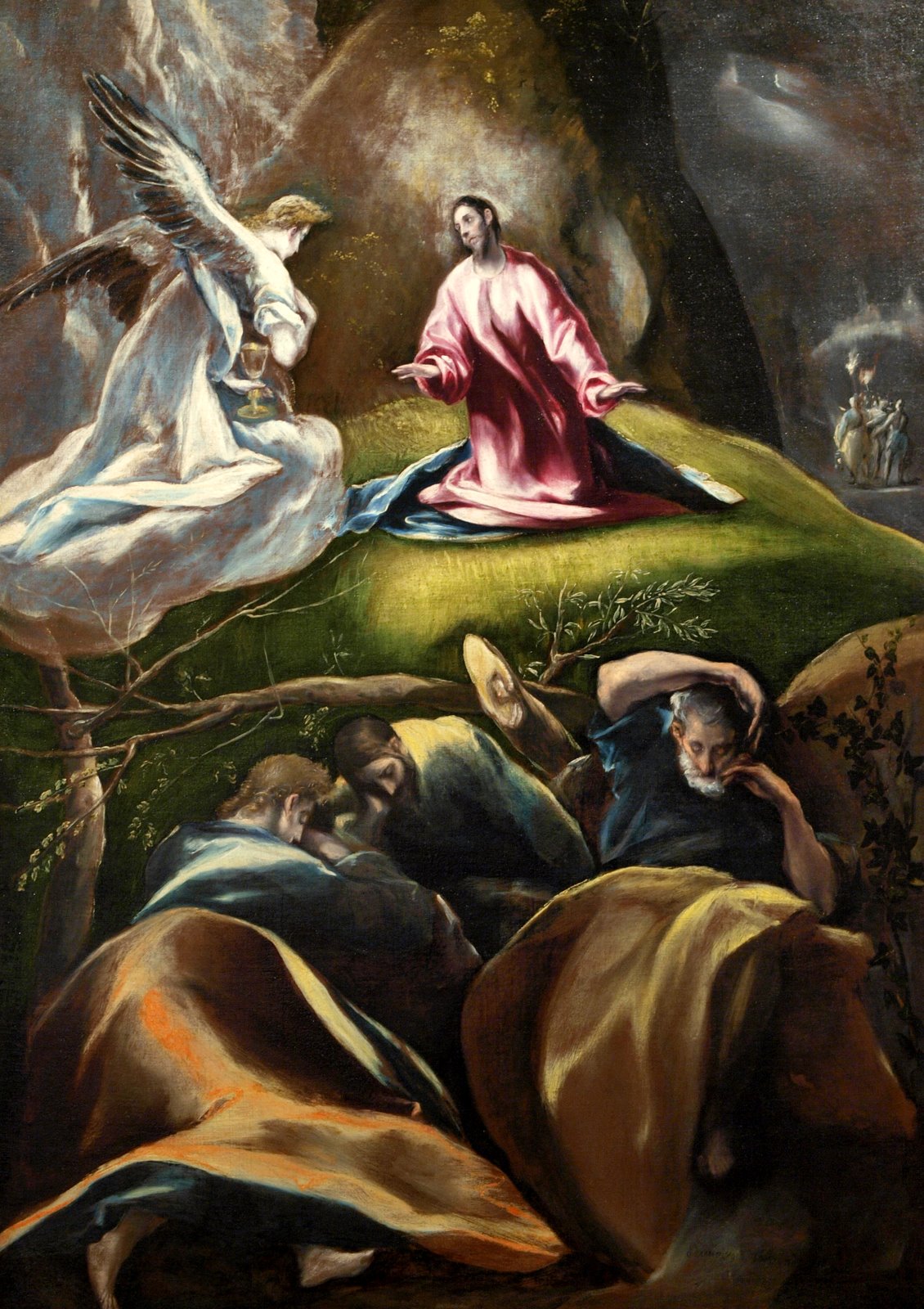
El Greco, Agony in the Garden, c1595

The works I want to examine today come from the collection of Baron Mór Lipót Herzog, a banker and an avid pre-war art collector in Hungary. Heirs to the Herzog Collection, possibly the largest private art collection in Hungary prior to WW2, filed suit in the USA District Court in DC for the return of their grandfather’s artworks. These art objects are currently in the Museum of Fine Arts Budapest, the Hungarian National Galley and the Museum of Applied Arts in Budapest.

Before his death in 1934, Baron Mór Lipót Herzog had bought a total of c2,500 paintings, sculptures, Renaissance furniture, jewellery, silver and other art objects for his collection. They included unbelievable masterpieces by El Greco, Velázquez, Lucas Cranach the Elder, Corot, Renoir and Monet, the best known being being: The Agony in the Garden by El Greco, The Annunciation to Saint Joachim by Lucas Cranach the Elder, The Spring by Gustave Courbet and Portrait of a Woman by Camille Corot.

I have also chosen to show a painting by Francisco de Zurbarán who was born in Spain in 1598. Zurbarán's works were almost all of a religious nature, but his spirituality seemed deeper and more austere than most 17th century artists. Zurbarán's mastery was best seen in his portraits, which I loved, but this all begs the question of why Spanish Catholic Zurbarán appealed so deeply to the urbane, Jewish Hungarian Baron Mór Lipót Herzog.

Lucas Cranach the Elder, Annunciation to Saint Joachim, 1516

After Baron Mór Lipót Herzog's widow died in 1940, the collection was passed to her three children. The three Herzog children  attempted to save their artworks from confiscation by hiding it in the cellar of one of the family’s factories. Nonetheless the Hungarian government and their Nazi collaborators discovered the hiding place, and an art historian carefully inventoried the art objects as they were taken away. Blogger Les cahiers d'Alain Truong says that the seized artworks were taken to Adolf Eichmann, who selected some of the best pieces of the collection, and shipped others to Germany. The rest was handed over by the Hungarian government to the Museum of Fine Arts for safekeeping.

One Herzog son (András) died during the war, but István and Erzsébet survived and there are heirs from all three branches. In fact András’ daughters, who fled to South America in 1944, are very much part of the litigation.

The family has the support of an American organisation called The Commission for Art Recovery, a body focused on ensuring that governments comply with the Washington Principles for Holocaust-era looted art. Fortunately the works have been assessed by the International Foundation for Art Research as being of museum-quality, comparable to the Frick Collection in New York and Wallace Collection in London.

Francisco Zurbarán, St Andrew, 1631

It is fascinating for me to hear that the Germany and Austria governments already returned artworks from the Herzog Collection to the heirs, without need for legal action. So far, the Hungarian government’s view remains that the case is a matter for the courts, not for individual galleries to negotiate.

The Hungarian government also wants to know why the family is only going after masterpieces in Hungarian galleries and not Herzog art works in other nations' galleries. Mainly it is because the 1947 Treaty of Peace between Hungary and the Allies was very specific -  ownership rights to the Herzog Collection in Hungary remained with the children and grandchildren (and if they wait much longer, with the great grandchildren).

But I suspect there was another factor. It was the Hungarians who most devastated Jewish family life in 1944 and 1945, sending two of the three Herzog children to camps, along with 500,000 other murdered Hungarian Jews. The Italians, Czechs, Romanians and Dutch, on the other hand, tried as best they could to protect their Jewish citizens.

Baron Herzog's study in Budapest, in 1934

It may surprise readers to find that the stunning gold and silver art from the original Herzog collection is being sold off at auction this month (May 2011) by Christie's New York. Who officially owned this gold and silver art, and who consigned the lots to the auction house? Who will receive the proceeds from the auctioned art objects?

Interested readers should find The Rape of Europa 2008 by Lynn H. Nicholas and The Monuments Men by Robert Edsel.

17.5.11

Mary MacKillop, Australia's first saint

Sister Mary MacKillop

Penola is one of the oldest towns in south-east South Australia, some 5 hours drive from Adelaide. Although the population is tiny (1,400), the town has become famous for its association with Mary MacKillop (1842-1909), a nun who in 1866 established Australia's first school to cater for all children, regardless of their family's income or religion.

Why does Penola in particular celebrate the MacKillop connection and not Melbourne (where Mary was born and raised), Portland (where she worked as a teacher) or Sydney (where she died)? Penola was the place where Mary, in conjunction with Father Julian Tenison Woods (1832–89), founded the Josephites in 1866, the first religious order to be established by an Australian. Father Woods wanted the Sisters of St Joseph to teach in rural Catholic schools.

Penola is the black dot at the south of mainland Australia

A new stone building, St Joseph’s schoolhouse, was commissioned in 1866 by Father Woods. He had arranged a building loan through a local bank with parishioners putting their own names on the loan. One local parent designed the building; tenders were called; and a local builder got the nod. Too soon Father Woods had to leave Penola for the state capital, to become the inaugural Director-General of Catholic Education in Adelaide. Mary MacKillop remained to oversee the building programme.

In 1867 Mary and some sisters finally moved into the spacious, well-lit schoolhouse with pupils who were thrilled to have decent facilities. Sisters of St Joseph taught and lived in the schoolhouse, and by the end of 1869, the sisters were educating children at 21 schools in Adelaide and in South Australia's country towns.

In December 1869, MacKillop and several other nuns travelled to Brisbane to establish the order in Queensland. The Josephite Congregation expanded rapidly and, by 1871, 130 nuns were working in more than 40 schools and charitable institutions in both states (South Australia and Queensland). In 1872, Mary travelled to Rome to have the Sisters of St Joseph officially approved. While in Europe, Mary visited many schools; she was keen to study their teaching techniques.

When the new St Joseph's School opened in Penola 1936, the old schoolhouse became a parish hall. In 1989, following a lengthy restoration process, it was rededicated as the Woods-MacKillop Schoolhouse by Archbishop Faulkner.

Woods-MacKillop Schoolhouse, Penola

The new St Joseph's Church in Penola, which was consecrated in 1924, stands on the exact site of the first St Joseph’s church, completed by Father Woods in March 1859. Apart from the Woods-MacKillop Schoolhouse and St Joseph’s Church, visitors can see the main display in town that relates to the new saint's story. The Mary MacKillop Penola Centre is a modern museum that tells the story of Mary MacKillop and Father Julian Woods through photos, memorabilia and displays. The only religious relic, a strand of Mary’s hair, is housed in a reliquary in the church.

Brendan Shanahan suggested that the Josephites appealed to Australians because they were pragmatic. The Josephites were a specifically Australian response to specifically Australian conditions. They moved independently, free of the bishops in distant Adelaide, and were given a fair bit of personal flexibility. It is no surprise to the Josephites that Sister Mary MacKillop was beatified by Pope John Paul II in 1995. Last year (2010) she was canonised by the Vatican, making her the first Australian to be declared a saint – St Mary of the Cross.

Although this post has been about Penola (in South Australia), I need to mention another important site. Since 1995 there has been a hotel called Mary MacKillop Place in North Sydney (in New South Wales) where guests can walk the journey of her life in the Museum and celebrate Mass in the Mary MacKillop Memorial Chapel. The chapel itself is quite historic since it was built in 1913 in memory of the nun who had died in 1909 in the nearby Josephite convent of North Sydney.

The chapel’s stained glass windows were installed in the Memorial Chapel in 1913 in memory of Father Julian Tenison Woods, co-founder of the Sisters of St Joseph. Mary's remains were placed in the tomb next to the altar in 1993.

Mary MacKillop Place hotel (L) and chapel (R), North Sydney

14.5.11

Benito Mussolini: The Italian Stallion

Ida Dalser (1880–1937) was born in a village near Trento, an Italian speaking region in what was then part of the Austro-Hungarian Empire. As a young adult, she opened a beauty salon in Milan.

Ida Dalser first met young Benito Mussolini (1883-1945) in Trento, where he was journalist in 1909 and the two of them definitely  started an affair. Ida seemed committed to the relationship and was even prepared to sell her beauty salon to help Mussolini, who was then a leftwing journalist, establish his own newspaper. Ida clearly thought Mussolini shared her romantic  feelings. But to a young and ambitious Mussolini, Ida was just a pest, particularly after she told him she was pregnant.

According to Ida, they got married in 1914. And in 1915 she gave birth to his first child, Benito Albino Mussolini. No records of the marriage survive but Mussolini did accept the boy as his son, and paid monthly child support.

Ida Dalser and young Benito Albino Mussolini

The reasons why Mussolini and Dalser separated after their marriage and the birth of their son remain unclear, but perhaps he was becoming closer to another of  his long term mistresses Rachele Guidi. Or perhaps Ida was too emotionally demanding. Anyhow when WWI broke out in 1914, Mussolini rushed to join up. In December 1915, while recovering in a hospital from wound caused by a grenade launcher, the hospital priest married Mussolini to Donna Rachele Guidi at the bedside. When Ida Dalser heard about the second marriage, she was outraged. There had been no divorce!

Immediately after his second marriage, Mussolini left Italy to rejoin his army unit. Ida constantly wrote to her husband, and complained of her situation to the military and civil authorities. Two pieces of evidence from this period suggest that Ida was still considered a legitimate wife. Firstly while he was on service, the Kingdom of Italy regularly paid Ida a war pension. Secondly when Mussolini was injured by a mortar shot in 1917, she received a visit from the police notifying her that her husband was wounded in action.

In 1917, Mussolini came back from the war. His political career took off but his passion for socialism was over. He organised the Italian Combat Squad (WW1 ex-servicemen) in 1919, founded the National Fascist Party in 1921 and was soon elected to the Chamber of Deputies. In October 1922, Mussolini and the Black Shirts marched on Rome, intending to force King Victor Emmanuel III to set aside the old prime minister. The military could have easily controlled  Mussolini and his Fascists, had the king asked them to, so the king has to take a great deal of responsibility for Mussolini's rapid rise to power. 

Mussolini now had power and was officially recognised by the then ruling House of Savoy. But even a dictator needed papal approval, something that may have been withheld, had the church known about his pre-marital affair, his possibly illegitimate son and his possibly bigamous second marriage. Furthermore his five children with Rachele Guidi had to be protected.

That didn't mean for a moment that Mussolini now saved himself for his second wife. Michael Day and Peter Popham noted that the ambitious young leader demanded sex in industrial quantities from beloved mistresses and call girls alike. But it did mean that Ida Dalser and her son were watched very carefully by the police. She told everyone about her marriage to Mussolini, but noone believed her… or they didn’t want to get involved with her. Eventually she was certified and locked up in a psychiatric hospital in 1926. Still certified, she was later isolated in a psychiatric prison on the Venetian island of San Clemente, where she died in 1937. By the time of her death, after 15 years of being called a liar and a traitor, she really was insane.

Benito Mussolini,  Il Duce.

His son Benito Albino Mussolini was removed by government agents at 11 years of age, told his mother was dead, and was adopted out. He enrolled in the Italian Royal Navy, and always remained under close scrutiny by his father's fascist government. Rather unwisely, as it turned out, he also persisted in stating Benito Mussolini was his father. So he too was eventually certified, locked up in an insane asylum in Milan and was given mind-controlling medical treatments. There he died in 1942, aged tragically young (26). Both Ida and Benito junior were placed in unmarked graves.

The story of Benito Mussolini's first marriage was totally hidden during fascist rule in Italy. In particular Mussolini's officers erased all paper traces of Benito's and Ida's relationship. They overlooked only one thing according to the documentary Mussolini’s Secret: a certificate by Milan city council ordering Mussolini to make maintenance payments and referring to his wife Ida Dalser and their child.

It is not 100% certain that Mussolini’s first wedding was legal. However it is not too much of a stretch to say that the Italian dictator drove his first woman and son to early deaths in lunatic asylums; public knowledge of their existence might have somehow compromised his rise to power. Perhaps Mussolini should have been more worried about Margherita Sarfatti, Claretta Petacci and all his other mistresses.

All the information for this inglorious part of Mussolini history was finally discovered and published in 2005 by Italian journalist Marco Zeni.

11.5.11

"A railway station with a town attached".. in the gold fields.

The town of Maryborough’s history had emerged in the Gold Rush days of 1851-1854 when gold mining was becoming the predominant industry in the region. But it wasn’t until the railway lines were being laid down across the state of Victoria in the late 1860s that travel to rural cities became easy.

When the railway line first arrived in Maryborough, the tender specified a station building that was made from red brick with significant bluestone foundations. The building had to provide a platform for the trains, a flat for the station master, waiting rooms for travellers, offices, a dining room and verandas. So it was to be expected that one of the most significant events for Maryborough was the grand opening of the working railway station in July 1874. Everyone in central Victoria turned up.

But by the 1880s, Parliamentarians were already asking for a new station since extra trains were going to Geelong or were linked to the Ararat and Warrnambool areas. Maryborough may have been a small rural city (pop in 1854 was 25,000; now 8,000), but it was seen as a very important central junction, 165 ks from Melbourne.

Second version of Maryborough Railway Station, completed 1891

The new station was built for four times the budget of the original station. Red bricks came from a nearby kiln; roofing slates were shipped in from England; plate glass for the skylight came from Melbourne. The stucco trimming, I assume, was just for contrast. A goods shed and goods platform were built last of all.

Veranda covered platform on cast-iron columns

This second station was built over the top of the old station and was completed in August 1891. It was HUGE – 25 rooms and a gorgeous clock tower that was added just before WW1 started. I am not sure how to describe the architecture; the station’s own history page says the distinctive roofline and offset tower display the Anglo-Dutch style. Even now the viewer can see the different types of Dutch gables with tall faceted rendered chimneys. On the business side of the station, the very long platform covered by a veranda with a hipped roof stands out. The veranda is partly cantilevered and is supported by cast-iron ribbed columns. Locals were very proud of the fact that their platform was the longest single platform outside the capital city (1010 ms under cover).

Inside, visitors notice the impressive, carved ticket box windows, a very interesting tessellated floor, a lovely timber ceiling and quality iron gates at the entrance.

Novelist Mark Twain visited Maryborough in the 1890s. He wrote "you can put the whole population of Maryborough into it, and give them a sofa apiece, and have room for more. You haven’t fifteen stations in America that are as big, and you probably haven’t five that are half as fine. Why, it’s perfectly elegant". He described Maryborough as 'a railway station with a town attached'. I hope he really did say that - it was very clever. And true.

Cafe and wine centre, opened in the Maryborough Railway Station in 1993

The station is listed on the Victorian Heritage Register, but it could have sunk into quiet oblivion anyhow. Trains still operate regularly from Maryborough to Ballarat (to connect to the Ballarat-Melbourne line). But the line that was opened in 1874 from Maryborough to Castlemaine (to connect with the Bendigo- Melbourne line) is not used by regular traffic any longer. And the Mildura line, that was opened from Ballarat to Maryborough in 1874, was closed in 1993. Rural cities suffered badly as a result.

Fortunately in 1993 a local business sub-leased the southern half of the station from the town council and established an antique emporium, regional wine centre and café, open daily. A $2 million restoration of the station was carried out in 2006-7, making the visitor’s experience both historically and aesthetically pleasing.

Old waiting room with tessellated floor, high timber ceiling and beams, stained glass.

9.5.11

Small Canadian art treasure in a rubbish skip

The Earthly Paradise blog described a super 2011 exhibition at the Art Gallery of Alberta which focused on the Nature and Spirit: Emily Carr's Coastal Landscapes. In response, I admitted that my total knowledge of Canadian art was limited to The Group of Seven (originally Franklin Carmichael, Lawren Harris, AY Jackson, Franz Johnston, Arthur Lismer, JE MacDonald and Frederick Varley), Emily Carr and some World War One artists who overlapped membership with the Group of Seven.

Only three weeks later I was watching an antiques programme on tv called Flog It (I know, I know *sigh*). One of the experts, James Lewis, was discussing a Canadian artist who had been establishing his art career straight after WW1 and was associated with the Group of Seven. I pricked up my ears and squinted at the small oil painting that had been found in a rubbish skip in Scotland. The painting was by Robert Wakeham Pilot (1898-1967) and despite its deplorable storage site, seemed to be in good condition.

James Lewis examining the Robert Pilot painting, presented at the Flog It programme, 2009

So who was Robert Pilot? He was born in Newfoundland in 1898 and moved to Montreal with his mother when he was just a lad. Despite there being no money in the family, he was able to study figure drawing at the Royal Canadian Academy and landscape painting with an experienced artist.

After serving in the army overseas in WW1, Pilot returned to Montreal and was invited to participate in the first Group of Seven exhibition in 1920. This was his first opportunity. His second opportunity came when some generous soul paid for the young artist to study in Paris. There he studied at the Academie Julian in 1920, was elected a member of the Salon National des Beaux-Arts and exhibited in the Paris Salon in 1922. It seems very likely that if he wasn’t a convinced impressionist before 1920, the Canadian impressionist style that Pilot preferred was moulded by his French experience.

I cannot find the name of the painting presented at the Flog It programme, nor its date. Canadian Impressionists are famed for the depiction of snow with the light shimmering on ice and snow. Perhaps a viewer closely examining the small painting would be able to see the Chateau Frontenac in the distance in Quebec City, the city lights reflected in the ice and water. Perhaps not.  In any case, I have given another example of Robert Pilot's work (Twilight at Levis, 1933) in the photo below.

Back home in Canada Robert Pilot joined the Royal Canadian Academy, giving the public more opportunities to see his work. These days he is described as a close contemporary/colleague of the Group of Seven, but I would be interested to know how much Pilot shared studios, exhibitions, sales and publications with the more famous Group back in the 1920s and 30s.

The second half of his career was successful, artistically, academically and organisationally. He was elected president of the Royal Canadian Academy in 1952. Pilot died in 1967, and within a short time, the Montreal Museum of Fine Arts mounted a fine retrospective exhibition to honour Pilot’s life.

Pilot, Twilight at Levis, 1933, 76 x 102 cm. The painting was first exhibited at the Royal Canadian Academy and was then bought by the National Gallery of Canada

Skips are, by definition, full of waste products. Nonetheless people can often find useful material in them, suitable for recycling. However who knew about post-WW1 Canadian oil paintings? The successful bidder at Flog It bought the Robert Pilot painting for £1900!

7.5.11

Chaim Soutine's expressionist landscapes

Chaim Soutine was born in 1893 and spent his first 20 years in/near Minsk and Vilna, before he left for Paris in 1913. I have written about his sad life and productive times before, focusing almost entirely on his portraits.

Soutine, Landscape with Figures, c1922, private collection

Barry Schwabsky tried to locate Soutine on an art continuum from traditional primitivism to Paris-based expressionism to the foundation for modern abstraction. What Schwabsky could say was that by the early 1920s, the more exuberantly aggressive paint-heavy manner we now associate with Soutine was in place - canvases that exhibited an extreme pleasure in their writhing, tortuous substance. What other painter, he asked, has given permission to so much adolescent wallowing in undisciplined expressiveness? Well I can think of some, but that isn’t the point.

Soutine, Street of Cagnes-sur-Ner, c1924, 65 x 78 cm, University of Haifa.

Soutine did many writhing, tortuous landscapes. Consider Landscape with Figures c1922 which came from Soutine’s visit to Ceret. This might have been the era when his work reached its most abstract and its most expressionist level. The modern viewer, thinking of Soutine's poverty, romantic failures and lack of a family support system, might be tempted to focus on the formless swirls and the strange blotches of colour. And not just that. The figures seem stretched and the furniture seems out of shape. Also consider Street of Cagnes-sur-Ner c1924 which is now in the University of Haifa and View of Cagnes 1924, now ? in the Tate.  Soutine's Cagnes scenes certainly look French. As does Chartres Cathedral c1934, now in The Museum of Modern Arts in New York.

I was looking for some trace of the first 20 years of Belarusian life in Soutine’s work. BellaBelarus recognised that there were almost no nostalgic memories of the motherland. This was totally different from, for example, Chagall’s paintings which were painted in Paris but looked as if they were firmly set in the Jewish Russian countryside.

Soutine didn’t seem eager to leave any trace of "home". Only in one of his last works, Return from School after the Storm c1939, might the viewer trace those distinctive tones of simple and soft  landscape of what was then Russia and is now Belarusia. This painting was previously totally unknown to me, a Soutine fan. So it was very interesting that it held a mysteriously quiet power, less frenetic than his usual landscapes.

It took some time before the Belarusians saluted their own son. A permanent exhibition “Spaces of Chaim Soutine” was opened in the small Belarusian town of Smilavichy near Minsk. After years of wandering, Belarusian-born painter Chaim Soutine's story came back to the place where he was born. The exhibition is divided into 2 parts of the artist’s life. The first part of the exhibition is called At home: Smilovichi-Minsk-Vilnia. His early life was shown using old furniture and displays, with information about Soutine’s family and his studies in Minsk and Vilnia. The Paris part of his life was styled on a typical Parisian coffee house with a bar counter, tables and chairs. Paintings were hung on the walls, from Soutine of course, but also his Jewish contemporaries who also left for Paris as young men: Marc Chagall, Michel Kikoine, Pinchas Kremegne.

This Jewish artist died, tragically, in 1943. He was hiding in the forests near Paris, avoiding the Gestapo.

Soutine, Return from School After the Storm, 1939, 43 x 50 cm
Phillips Collection, Washington D.C.
 
If I had assumed the Belarusians didn’t know the value of Soutine paintings these days, I was wrong. The Smilavichy gallery noted that Soutine’s paintings L'Homme au Foulard Rouge c1921 and Nature Morte à la Ray c1923 sold for huge amounts: £8,756,000 and £5,392,000 respectively at the Sotheby's auctions in 2007. I bet the Belarusians are now sorry that they disregarded their own son for so many decades. Perhaps we can ask Bella Belarus, a good online art gallery that displays 20th century Belarusian art.

3.5.11

Church of England, Zurbaran and cashing in on heritage

Bishop Auckland is a small town in County Durham, only 19 kms from the city of Durham, so it will not surprise us that much of the town's early history seems to have been influenced by the Bishops of Durham and their estate. But it wasn't until 1832 that Auckland Castle, which had been their medieval home, was totally rebuilt for the Bishops. The old banqueting hall became the chapel.

In the interim, in 1756, Bishop of Durham Richard Trevor bought a series of portraits of Jacob and his 12 sons, painted in 1640-45 by one of my favourite Spanish  artists  Francisco de Zurbaran (1598–1664). According to ARCAblog, these paintings were looted. In 1756 an English ship seized cargo from a Spanish vessel, including the 13 Zurbaráns. The captured paintings were offered for sale in England and the only one of the 13 portraits not bought by Durham was that of Benjamin. I have no idea why Benjamin was sold separately to the Duke of Ancaster, but it can be seen in Grimsthorpe Castle Lincs to this day.

Delighted with these superb works, Bishop Trevor naturally placed his treasures in Auckland Castle. In fact he specifically had the long dining room redesigned in 1760 so that the viewer would be able to concentrate on these deeply religious pictures without distraction. This is fascinating. For the early decades of Zurbaran's career, his works had been very popular with Spanish churches, monasteries and religious colleges. But in his later years, tastes changed. His rather austere and severe Mannerist Baroque style, a la Caravaggio, became old fashioned and the commissions dried up. By the time he died in 1664, the Zurbaran family was impoverished.

Zurbaran, four of Jacob's son, 200 x 100 cm each (8’ tall)

Historians have wondered why an important bishop in the Church of England would want portraits of Jacob and his sons, patriarchs of the twelve tribes of Israel. Surely these portraits represented a powerful symbol of Judaism, and worse still, they were painted by a deeply Catholic artist at the peak of his popularity. So why would they be placed in the heart of muscular Anglicanism?

According to the chairman of Bishop Auckland's Civic Society Dr Robert McManners, we must examine the timing of the Bishop's purchase. Zurbaran’s livelihood was largely derived from commissions from the established Catholic church in Spain. Yet the artist meticulously painted these symbols of Judaism at a time when the practice of the Jewish religion was outlawed by Papal Bull and enforced by the Spanish Inquisition. McManners noted that Zurbaran had sympathy for down-trodden Jewish people in his local community, and admired the great risks that Catholic artist took to his reputation and livelihood.

A century later Bishop Trevor and his fellow  bishops  sponsored the Jewish Naturalisation Act of 1753. The Act gave disenfranchised immigrant Jews, often escaping persecution in their own countries, the same rights as those born in England. Unfortunately this progressive  legislation was repealed the very next year, and within a couple of years, the Durham bishop bought the paintings!  McManners' theory was that Bishop Trevor and Francisco de Zurbaran shared something important – they were both thumbing their noses at their Establishment Churches.

Money is always short in any large organisation; as Art History Today has shown, everyone is planning or has been selling off their art. In 2001, the Church Commissioners in Durham decided to cash in on their easily sold art assets (for some £20m). People with a sense of national history and art heritage wanted to keep the collection together, in the Church, at all costs. But it took nine years of intense lobbying before the commissioners gave in, largely due to a £15m donation by investment manager Jonathan Ruffer. Jonathan Ruffer’s contribution was made through a new charitable trust, called the Zurbarán Trust, for the benefit of the people of the North East. For the moment at least, Zurbaran can rest in peace.

Auckland Castle in Bishop Auckland

Read Dr Robert McManners, The Zurbarans at Auckland Castle, obtainable from Bishop Auckland Town Hall.